

Join Our Newsletter To Be Informed When New Videos Are Posted
Hebrew Text
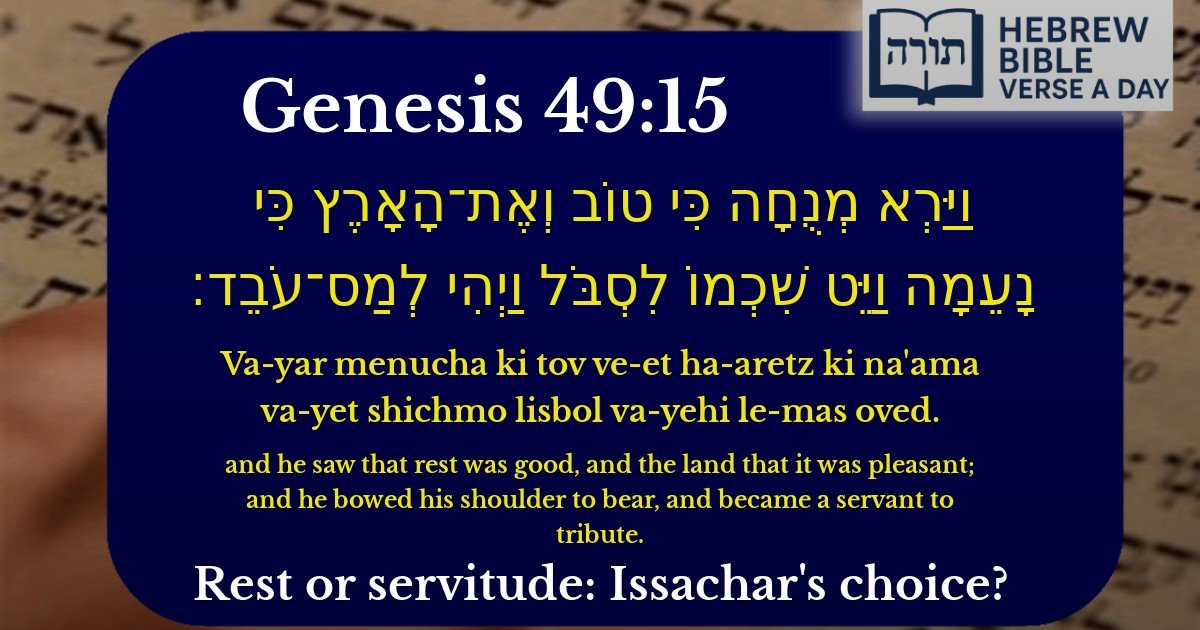
וַיַּרְא מְנֻחָה כִּי טוֹב וְאֶת־הָאָרֶץ כִּי נָעֵמָה וַיֵּט שִׁכְמוֹ לִסְבֹּל וַיְהִי לְמַס־עֹבֵד׃
English Translation
and he saw that rest was good, and the land that it was pleasant; and he bowed his shoulder to bear, and became a servant to tribute.
Transliteration
Va-yar menucha ki tov ve-et ha-aretz ki na'ama va-yet shichmo lisbol va-yehi le-mas oved.
Hebrew Leining Text
וַיַּ֤רְא מְנֻחָה֙ כִּ֣י ט֔וֹב וְאֶת־הָאָ֖רֶץ כִּ֣י נָעֵ֑מָה וַיֵּ֤ט שִׁכְמוֹ֙ לִסְבֹּ֔ל וַיְהִ֖י לְמַס־עֹבֵֽד׃ {ס}
🎵 Listen to leining
Parasha Commentary
📚 Talmud Citations
This verse is quoted in the Talmud.
📖 Megillah 16b
The verse is referenced in the context of discussing the qualities of the land of Israel and its desirability.
📖 Sanhedrin 94b
The verse is cited in a discussion about the burdens of servitude and the acceptance of hardship.
Context in Yaakov's Blessing
This verse appears in Yaakov's blessing to Yissachar (Bereishit 49:15). Yissachar is described as appreciating the goodness of rest and the pleasantness of the land, willingly accepting the yoke of labor and tribute.
Rashi's Explanation
Rashi explains that Yissachar saw the tranquility of Torah study ("menucha") as good and recognized Eretz Yisrael as pleasant. Therefore, he "bowed his shoulder to bear" – submitting himself to the toil of Torah and supporting the tribe of Zevulun (who engaged in commerce to enable Yissachar's Torah study). The "mas oved" (servant to tribute) refers to Yissachar's role in determining the Jewish calendar (Sanhedrin 12a), a sacred responsibility requiring deep Torah knowledge.
Ibn Ezra's Perspective
Ibn Ezra offers a more literal interpretation: Yissachar saw that agricultural rest (letting land lie fallow) was beneficial for the land's productivity. Recognizing the land's pleasantness, he willingly shouldered the burden of working it properly, becoming "servant to tribute" by diligently paying his agricultural taxes.
Midrashic Interpretation (Bereishit Rabbah)
The Midrash connects this verse to Yissachar's descendants who were known for their wisdom in Torah and halacha. Their "rest" was Torah study, and their "pleasant land" was the spiritual satisfaction of divine service. The "shoulder to bear" represents their acceptance of Torah obligations, while "servant to tribute" alludes to their role as teachers and judges in Israel.
Rambam's Application
Rambam (Hilchot Talmud Torah 3:10) cites this verse when discussing the ideal Torah scholar who, like Yissachar, recognizes the supreme value of Torah study and is willing to endure hardship for it, while being supported by others who handle worldly matters.
Symbolism in Kabbalistic Thought