
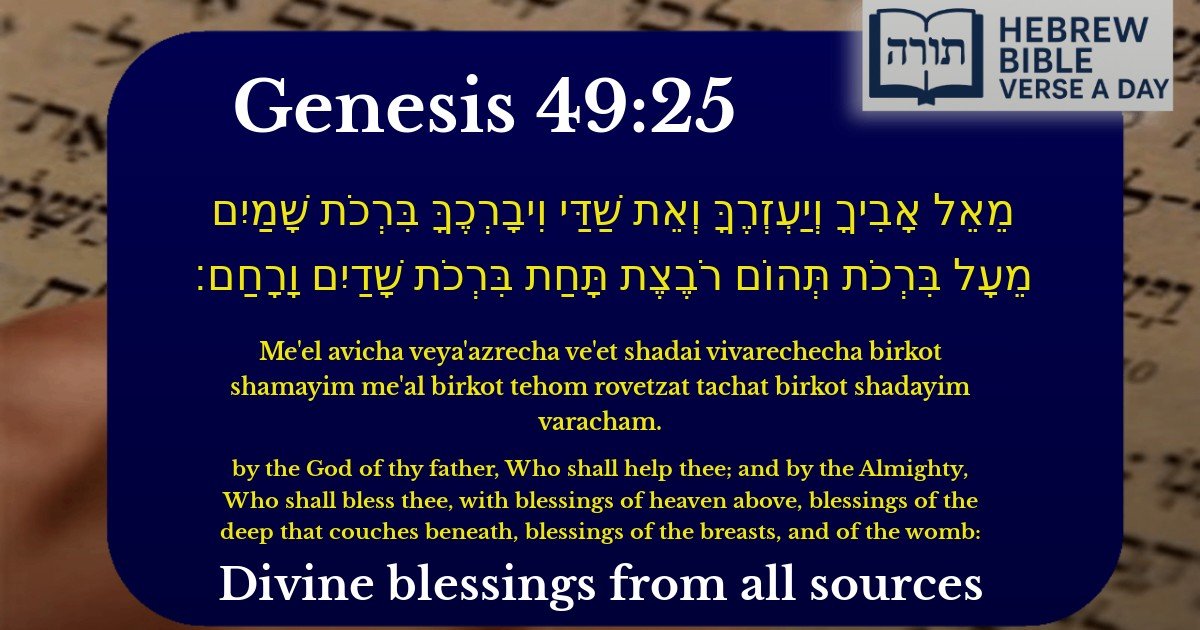

Genesis 49:25 - Divine blessings from all sources

Genesis 49:25 - בראשית 49:25

Hebrew Text

מֵאֵל אָבִיךָ וְיַעְזְרֶךָּ וְאֵת שַׁדַּי וִיבָרְכֶךָּ בִּרְכֹת שָׁמַיִם מֵעָל בִּרְכֹת תְּהוֹם רֹבֶצֶת תָּחַת בִּרְכֹת שָׁדַיִם וָרָחַם׃

English Translation

by the God of thy father, Who shall help thee; and by the Almighty, Who shall bless thee, with blessings of heaven above, blessings of the deep that couches beneath, blessings of the breasts, and of the womb:

Transliteration

Me'el avicha veya'azrecha ve'et shadai vivarechecha birkot shamayim me'al birkot tehom rovetzat tachat birkot shadayim varacham.

Hebrew Leining Text

מֵאֵ֨ל אָבִ֜יךָ וְיַעְזְרֶ֗ךָּ וְאֵ֤ת שַׁדַּי֙ וִיבָ֣רְכֶ֔ךָּ בִּרְכֹ֤ת שָׁמַ֙יִם֙ מֵעָ֔ל בִּרְכֹ֥ת תְּה֖וֹם רֹבֶ֣צֶת תָּ֑חַת בִּרְכֹ֥ת שָׁדַ֖יִם וָרָֽחַם׃

🎵 Listen to leining

Parasha Commentary

Context of the Verse

This verse (Bereshit 49:25) is part of Yaakov Avinu's blessings to his sons before his passing, specifically directed toward Yosef. The blessings emphasize divine protection, sustenance, and fertility, drawing upon the names of Hashem ("אֵל אָבִיךָ" and "שַׁדַּי") to highlight different aspects of divine providence.

Explanation of Key Phrases

  • "מֵאֵל אָבִיךָ וְיַעְזְרֶךָּ" - Rashi explains that "אֵל אָבִיךָ" refers to the God of Avraham, Yitzchak, and Yaakov, who assisted them and will likewise assist Yosef. The term "וְיַעְזְרֶךָּ" (He shall help you) underscores divine support in times of need.
  • "וְאֵת שַׁדַּי וִיבָרְכֶךָּ" - The name "שַׁדַּי" (Almighty) is associated with sufficiency and blessing (as in "שדי באלקי" – "He who said 'enough' to creation"). Ramban notes that this name signifies Hashem's power to provide all forms of sustenance.

The Nature of the Blessings

The verse enumerates three types of blessings:

  • "בִּרְכֹת שָׁמַיִם מֵעָל" - Rashi interprets this as blessings from above, such as rain and dew, which sustain crops. The Midrash (Bereshit Rabbah) expands that this includes all celestial influences for prosperity.
  • "בִּרְכֹת תְּהוֹם רֹבֶצֶת תָּחַת" - This refers to subterranean waters and mineral wealth (Ibn Ezra), symbolizing hidden resources that support life.
  • "בִּרְכֹת שָׁדַיִם וָרָחַם" - These are blessings of fertility and progeny (Sforno), ensuring the continuity of Yosef's lineage.

Spiritual Significance

The Kli Yakar emphasizes that these blessings are comprehensive, covering all aspects of existence—spiritual ("heaven above"), material ("the deep beneath"), and familial ("breasts and womb"). This reflects the totality of divine benevolence bestowed upon Yosef and his descendants.

📚 Talmud Citations

This verse is quoted in the Talmud.

📖 Megillah 18a
The verse is referenced in a discussion about the blessings given to the tribes, particularly focusing on the poetic and prophetic nature of Jacob's blessings.
📖 Chullin 60b
The verse is cited in a broader discussion about the significance of blessings in the Torah and their application to the tribes of Israel.

Frequently Asked Questions

Q: What does Genesis 49:25 mean?
A: Genesis 49:25 is part of Jacob's blessings to his son Joseph before his passing. It speaks of blessings from Hashem (God), including heavenly blessings (like rain and dew), blessings from the earth (fertility and produce), and blessings of family (children and descendants). Rashi explains that these blessings encompass all aspects of life—spiritual and physical.
Q: Why is Genesis 49:25 important in Judaism?
A: This verse is important because it highlights the concept of divine blessings in Jewish tradition. The Talmud (Berachot 16b) teaches that blessings from Hashem sustain all aspects of existence. The verse also emphasizes the importance of family continuity, as seen in the blessings of 'breasts and womb,' symbolizing future generations.
Q: What can we learn from Genesis 49:25 today?
A: We learn that true blessings come from Hashem and encompass both spiritual and physical well-being. The Rambam (Hilchot Berachot) teaches that recognizing God as the source of all blessings leads to gratitude. Additionally, the verse reminds us of the importance of family and continuity in Jewish life.
Q: How does Genesis 49:25 apply to daily Jewish life?
A: This verse inspires Jews to seek and appreciate blessings in all areas of life—health, livelihood, and family. The Midrash (Bereishit Rabbah) connects these blessings to Torah study and mitzvot (commandments), showing that spiritual efforts bring divine blessings. Many recite prayers for sustenance and children based on these themes.
Q: Who is referred to as 'the God of your father' in Genesis 49:25?
A: The 'God of your father' refers to the God of Abraham, Isaac, and Jacob—the same God who made covenants with the forefathers. Rashi explains that Jacob invokes this name to remind Joseph of the divine promises passed down through generations, reinforcing faith in Hashem's continued protection and blessings.