

Join Our Newsletter To Be Informed When New Videos Are Posted
Hebrew Text
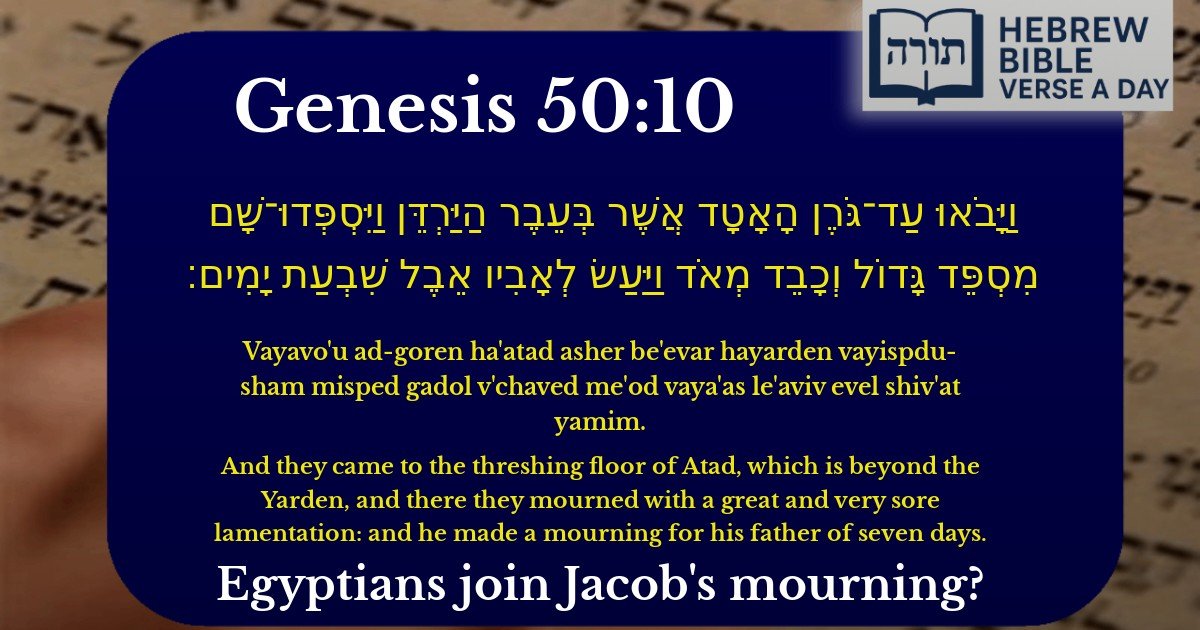
וַיָּבֹאוּ עַד־גֹּרֶן הָאָטָד אֲשֶׁר בְּעֵבֶר הַיַּרְדֵּן וַיִּסְפְּדוּ־שָׁם מִסְפֵּד גָּדוֹל וְכָבֵד מְאֹד וַיַּעַשׂ לְאָבִיו אֵבֶל שִׁבְעַת יָמִים׃
English Translation
And they came to the threshing floor of Atad, which is beyond the Yarden, and there they mourned with a great and very sore lamentation: and he made a mourning for his father of seven days.
Transliteration
Vayavo'u ad-goren ha'atad asher be'evar hayarden vayispdu-sham misped gadol v'chaved me'od vaya'as le'aviv evel shiv'at yamim.
Hebrew Leining Text
וַיָּבֹ֜אוּ עַד־גֹּ֣רֶן הָאָטָ֗ד אֲשֶׁר֙ בְּעֵ֣בֶר הַיַּרְדֵּ֔ן וַיִּ֨סְפְּדוּ־שָׁ֔ם מִסְפֵּ֛ד גָּד֥וֹל וְכָבֵ֖ד מְאֹ֑ד וַיַּ֧עַשׂ לְאָבִ֛יו אֵ֖בֶל שִׁבְעַ֥ת יָמִֽים׃
🎵 Listen to leining
Parasha Commentary
📚 Talmud Citations
This verse is quoted in the Talmud.
📖 Sotah 13a
The verse is referenced in the discussion about the mourning practices for Jacob, particularly the seven days of mourning observed at the threshing floor of Atad.
📖 Moed Katan 20a
The verse is cited in the context of discussing the laws and customs of mourning, specifically the duration of seven days of mourning.
Location of Mourning: Goren HaAtad
The verse describes the mourning taking place at Goren HaAtad ("the threshing floor of Atad"), located beyond the Jordan. Rashi (Bereshit 50:10) explains that this place was given this name because the Canaanite kings encircled (atad means "thorn") the funeral bier of Yaakov like a protective hedge of thorns, demonstrating great honor. The Midrash (Bereshit Rabbah 100:11) adds that this was a strategic location where the kings removed their crowns as a sign of mourning, showing the profound respect accorded to Yaakov Avinu.
The Great and Heavy Mourning
The phrase "מִסְפֵּד גָּדוֹל וְכָבֵד מְאֹד" ("a great and very sore lamentation") indicates an extraordinary level of mourning. Ramban (Bereshit 50:10) notes that this was not merely a personal family mourning but a national event, as the Canaanite kings and dignitaries participated. The Sforno explains that the mourning was "great" in duration and "heavy" in intensity, reflecting Yaakov's elevated spiritual stature and his impact on both his family and surrounding nations.
Seven Days of Mourning
The verse concludes with the observance of שִׁבְעַת יָמִים ("seven days") of mourning. The Talmud (Moed Katan 20a) derives from this verse the halachic principle of shivah, the seven-day mourning period observed for close relatives. The Midrash (Tanchuma, Vayechi 17) connects this to the seven days of creation, symbolizing that mourning for a righteous person is as significant as the creation of the world. Additionally, the Rambam (Hilchot Avel 1:1) cites this verse as the biblical source for the mitzvah of mourning.
Significance of the Jordan River
The location "בְּעֵבֶר הַיַּרְדֵּן" ("beyond the Jordan") holds symbolic meaning. The Kli Yakar (Bereshit 50:10) suggests that the mourning took place outside Eretz Yisrael to avoid delaying the burial, as the Canaanites would have insisted on lengthy honors if the procession had entered the land. Alternatively, the Or HaChaim explains that the Jordan served as a boundary, emphasizing that even those outside the land recognized Yaakov's greatness.