

Join Our Newsletter To Be Informed When New Videos Are Posted
Hebrew Text
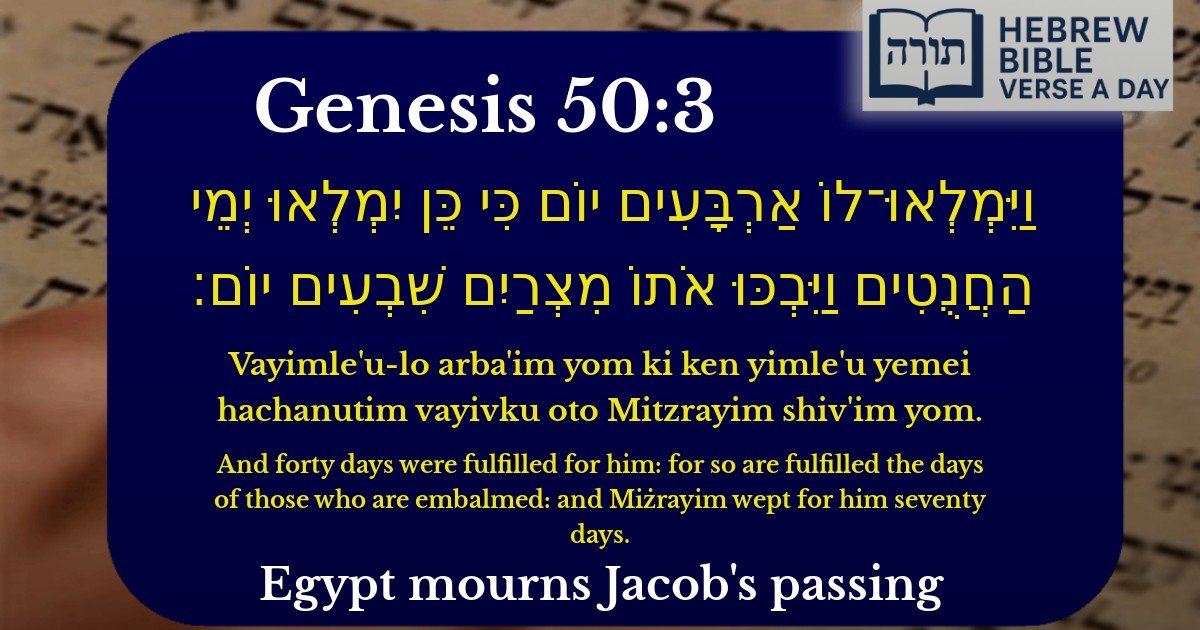
וַיִּמְלְאוּ־לוֹ אַרְבָּעִים יוֹם כִּי כֵּן יִמְלְאוּ יְמֵי הַחֲנֻטִים וַיִּבְכּוּ אֹתוֹ מִצְרַיִם שִׁבְעִים יוֹם׃
English Translation
And forty days were fulfilled for him: for so are fulfilled the days of those who are embalmed: and Miżrayim wept for him seventy days.
Transliteration
Vayimle'u-lo arba'im yom ki ken yimle'u yemei hachanutim vayivku oto Mitzrayim shiv'im yom.
Hebrew Leining Text
וַיִּמְלְאוּ־לוֹ֙ אַרְבָּעִ֣ים י֔וֹם כִּ֛י כֵּ֥ן יִמְלְא֖וּ יְמֵ֣י הַחֲנֻטִ֑ים וַיִּבְכּ֥וּ אֹת֛וֹ מִצְרַ֖יִם שִׁבְעִ֥ים יֽוֹם׃
🎵 Listen to leining
Parasha Commentary
📚 Talmud Citations
This verse is not quoted in the Talmud.
Verse Context
The verse (Bereishit 50:3) describes the mourning period for Yaakov Avinu after his passing in Mitzrayim. The verse mentions two distinct time periods: forty days for the embalming process and seventy days of mourning by the Egyptians.
Forty Days of Embalming
Rashi explains that the forty days of embalming correspond to the natural process of decomposition, as the body would typically take forty days to decay without preservation. The Torah emphasizes that Yaakov was embalmed in accordance with Egyptian customs ("כֵּן יִמְלְאוּ יְמֵי הַחֲנֻטִים"), showing respect for local practices while maintaining Jewish dignity.
Seventy Days of Mourning
The seventy days of mourning by the Egyptians reflect the high esteem in which Yaakov was held. The Midrash (Bereishit Rabbah 100:3) explains that this was an extraordinary honor, as Egyptian mourning for royalty typically lasted only seventy-two days, indicating that Yaakov was mourned nearly as a king.
Halachic and Symbolic Significance
The Gemara (Moed Katan 20a) discusses the lengths of mourning periods in Jewish law, though the Egyptian practice here is not halachically binding. The numbers forty and seventy recur in Jewish tradition: