

Join Our Newsletter To Be Informed When New Videos Are Posted
Hebrew Text
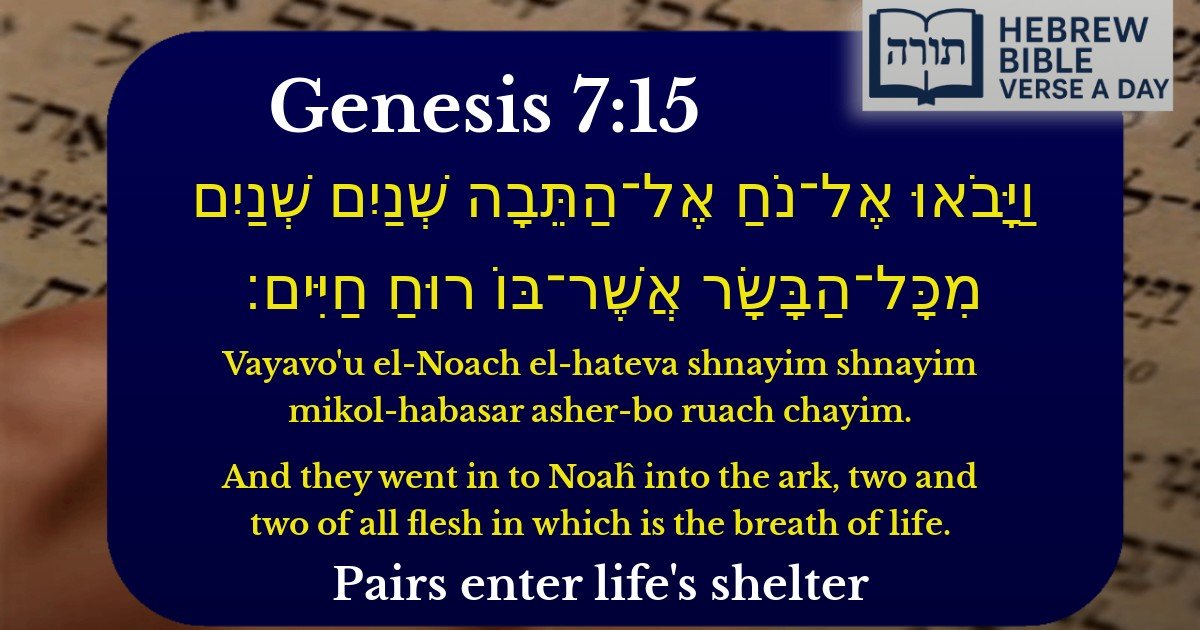
וַיָּבֹאוּ אֶל־נֹחַ אֶל־הַתֵּבָה שְׁנַיִם שְׁנַיִם מִכָּל־הַבָּשָׂר אֲשֶׁר־בּוֹ רוּחַ חַיִּים׃
English Translation
And they went in to Noaĥ into the ark, two and two of all flesh in which is the breath of life.
Transliteration
Vayavo'u el-Noach el-hateva shnayim shnayim mikol-habasar asher-bo ruach chayim.
Hebrew Leining Text
וַיָּבֹ֥אוּ אֶל־נֹ֖חַ אֶל־הַתֵּבָ֑ה שְׁנַ֤יִם שְׁנַ֙יִם֙ מִכׇּל־הַבָּשָׂ֔ר אֲשֶׁר־בּ֖וֹ ר֥וּחַ חַיִּֽים׃
🎵 Listen to leining
Parasha Commentary
📚 Talmud Citations
This verse is quoted in the Talmud.
📖 Sanhedrin 108b
The verse is referenced in the discussion about the animals entering Noah's ark and the divine providence involved in their pairing.
Verse Analysis
The verse (Bereshit 7:15) describes how the animals entered Noah's ark in pairs ("שְׁנַיִם שְׁנַיִם") to be saved from the flood. This detail emphasizes the Divine orchestration of the event, ensuring the preservation of all species.
Rashi's Commentary
Rashi explains that the phrase "שְׁנַיִם שְׁנַיִם" (two by two) refers to male and female pairs, as required for reproduction after the flood. He notes that even creatures not typically paired (like those that normally live alone) were brought together for this purpose (Rashi on Bereshit 7:15).
Midrashic Insights
The Midrash (Bereshit Rabbah 32:8) elaborates that the animals came to the ark willingly, guided by Divine Providence ("רוּחַ חַיִּים" – the breath of life). This demonstrates that even in judgment, Hashem ensures the continuity of creation.
Rambam's Perspective
Rambam (Moreh Nevuchim 2:48) interprets the orderly pairing as evidence of nature's Divinely ordained structure. The phrase "רוּחַ חַיִּים" underscores that all living creatures are sustained by G-d's will, even during catastrophic events.
Halachic Implications