Frequently Asked Questions
Q: What does Genesis 7:22 mean?
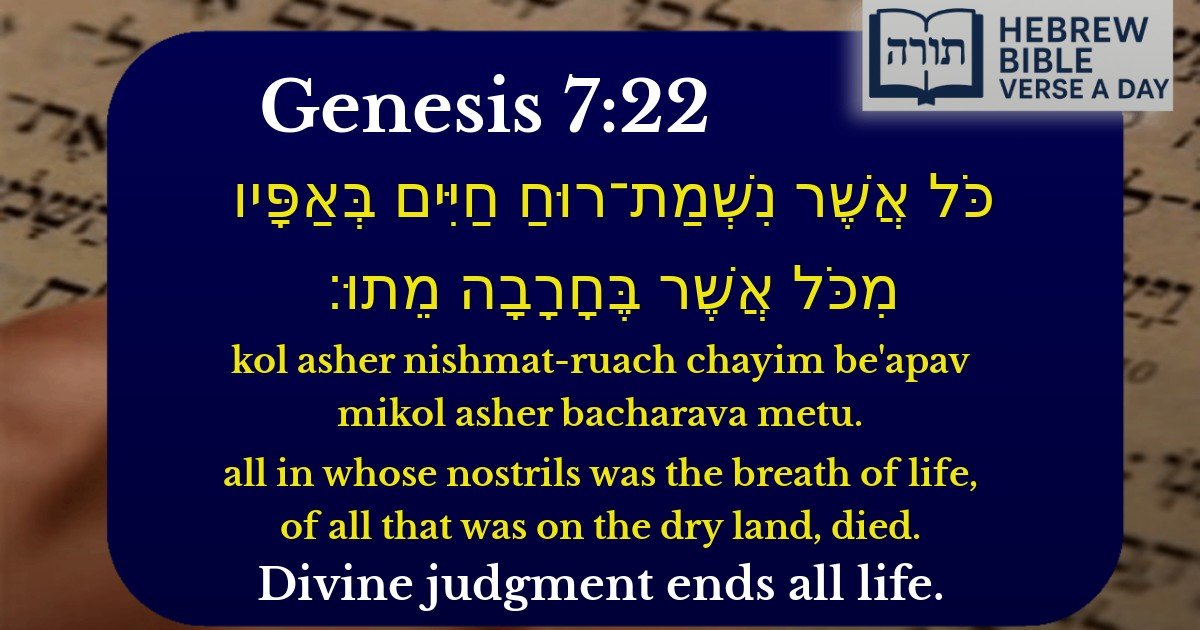
A: Genesis 7:22 describes the devastating effect of the flood during Noah's time. It states that every living creature on dry land that had the 'breath of life' (נִשְׁמַת־רוּחַ חַיִּים) perished in the flood. According to Rashi, this emphasizes the complete destruction of all land-dwelling life outside of Noah's ark, showing the severity of the divine judgment at that time.
Q: Why is the phrase 'breath of life' important in this verse?
A: The phrase 'breath of life' (נִשְׁמַת־רוּחַ חַיִּים) highlights that all living creatures—humans and animals alike—are sustained by Hashem's life-giving spirit. The Ramban explains that this phrase connects all living beings to their Creator, emphasizing that life is a divine gift. The verse underscores that when Hashem withdraws this breath, life ceases.
Q: What lesson can we learn from Genesis 7:22?
A: This verse teaches us about the consequences of moral corruption, as the flood came in response to humanity's wickedness (as described earlier in Genesis 6:5). The Talmud (Sanhedrin 108a) discusses how the generation of the flood was punished for their sins, reminding us of the importance of ethical behavior and heeding divine warnings.
Q: Does this verse imply that fish survived the flood?
A: Yes, according to traditional Jewish sources like Rashi and the Midrash (Bereshit Rabbah 32:8), aquatic creatures were not destroyed by the flood because the verse specifies 'all that was on the dry land.' Fish and other sea life, being in water, were not subject to the same fate as land animals and humans.
Q: How does this verse connect to the concept of divine judgment?
A: Genesis 7:22 illustrates the seriousness of divine judgment when wrongdoing goes unchecked. The Midrash (Pirkei D'Rabbi Eliezer 22) explains that Hashem gave the people of that generation time to repent, but they did not change their ways. This serves as a timeless lesson about accountability and the importance of repentance (teshuvah).


Context in the Flood Narrative
This verse (Genesis 7:22) describes the devastating aftermath of the mabul (flood) during the time of Noach. It emphasizes the totality of destruction for all terrestrial creatures that possessed "נִשְׁמַת־רוּחַ חַיִּים" (the breath of life), except those saved in the teivah (ark). The phrase underscores the Divine judgment while also highlighting the sanctity of life through the terminology of "breath of life."
Interpretation of "Nishmat Ruach Chayim"
Rashi explains that "נִשְׁמַת־רוּחַ חַיִּים" refers specifically to creatures that breathe through their nostrils, distinguishing them from aquatic life, which survived the flood. The Ramban expands on this, noting that the term "רוּחַ חַיִּים" (spirit of life) indicates a higher form of vitality, linking it to the divine infusion of life described in Genesis 2:7 when Adam was created.
Midrashic Insights
Halachic and Philosophical Implications
The Rambam (Hilchot Yesodei HaTorah 4:8) derives from this verse that all life is sustained by Hashem's will, and its withdrawal leads to death. The sudden extinction of life during the flood serves as a reminder of humanity's dependence on Divine mercy.
Exclusion of Aquatic Life
The Talmud (Chullin 27b) notes that fish were spared because they were not involved in the sins that provoked the flood. This aligns with the principle of "middah k'neged middah" (measure for measure), as their environment remained intact while the corrupt land-dwellers perished.