

Join Our Newsletter To Be Informed When New Videos Are Posted
Hebrew Text
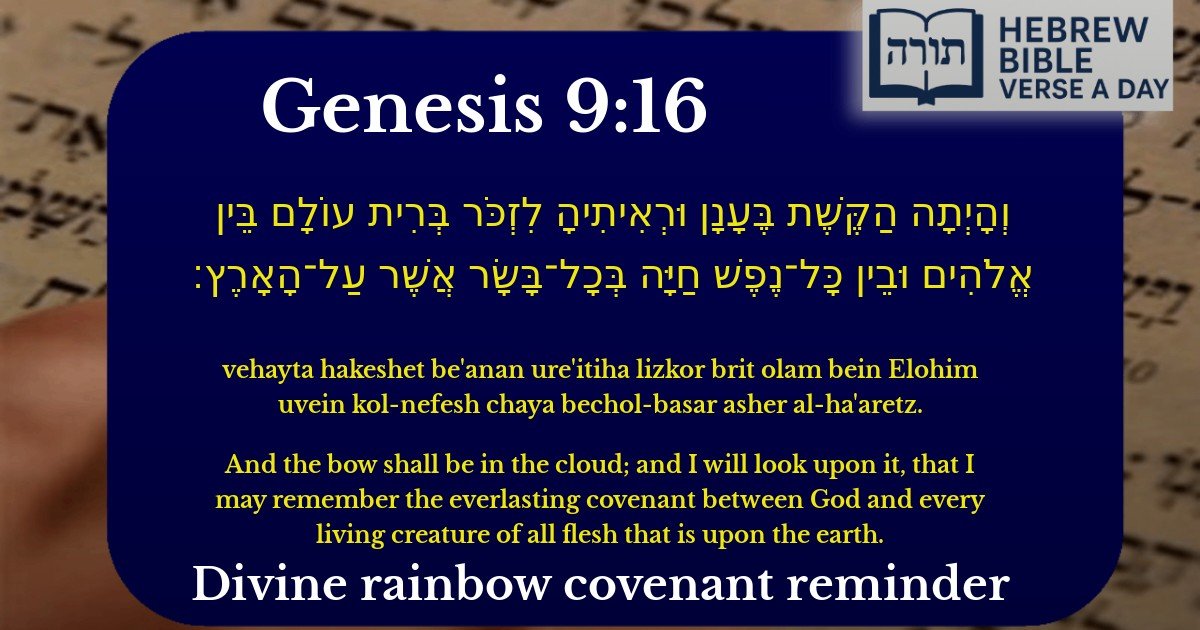
וְהָיְתָה הַקֶּשֶׁת בֶּעָנָן וּרְאִיתִיהָ לִזְכֹּר בְּרִית עוֹלָם בֵּין אֱלֹהִים וּבֵין כָּל־נֶפֶשׁ חַיָּה בְּכָל־בָּשָׂר אֲשֶׁר עַל־הָאָרֶץ׃
English Translation
And the bow shall be in the cloud; and I will look upon it, that I may remember the everlasting covenant between God and every living creature of all flesh that is upon the earth.
Transliteration
Vehayta hakeshet be'anan ure'itiha lizkor brit olam bein Elohim uvein kol-nefesh chaya bechol-basar asher al-ha'aretz.
Hebrew Leining Text
וְהָיְתָ֥ה הַקֶּ֖שֶׁת בֶּֽעָנָ֑ן וּרְאִיתִ֗יהָ לִזְכֹּר֙ בְּרִ֣ית עוֹלָ֔ם בֵּ֣ין אֱלֹהִ֔ים וּבֵין֙ כׇּל־נֶ֣פֶשׁ חַיָּ֔ה בְּכׇל־בָּשָׂ֖ר אֲשֶׁ֥ר עַל־הָאָֽרֶץ׃
🎵 Listen to leining
Parasha Commentary
📚 Talmud Citations
This verse is quoted in the Talmud.
📖 Chullin 89b
The verse is referenced in a discussion about the significance of the rainbow as a sign of God's covenant with all living creatures.
📖 Sanhedrin 108b
The verse is mentioned in the context of the flood narrative and the covenant God made with Noah and all living beings.
The Rainbow as a Divine Sign
The verse (Bereishit 9:16) describes the rainbow as a sign of the eternal covenant between Hashem and all living creatures. Rashi explains that the rainbow serves as a reminder to Hashem—not to humanity—of His promise never to destroy the world again through a flood. This aligns with the Talmud (Chagigah 16a), which teaches that the rainbow is a symbol of divine mercy, appearing when the world deserves judgment but is spared due to this covenant.
The Meaning of "וּרְאִיתִיהָ" (I Will Look Upon It)
The Ramban (Nachmanides) elaborates on the phrase "I will look upon it," suggesting that the rainbow is not merely a passive sign but an active reminder to Hashem of His oath. The Midrash (Bereishit Rabbah 35:3) adds that the rainbow represents the divine kavod (glory), as its colors mirror the radiance of the Shechinah. Thus, when Hashem "sees" the rainbow, it is an expression of His commitment to withhold judgment.
The Eternal Nature of the Covenant
The term בְּרִית עוֹלָם ("everlasting covenant") underscores its permanence. The Malbim explains that this covenant is unique because it extends to all flesh, including animals, emphasizing Hashem's universal providence. The Talmud (Sanhedrin 108b) further notes that the rainbow did not exist before the Flood, as the world’s atmosphere was fundamentally different—highlighting it as a new symbol of divine compassion post-deluge.
Halachic and Kabbalistic Insights