

Join Our Newsletter To Be Informed When New Videos Are Posted
Hebrew Text
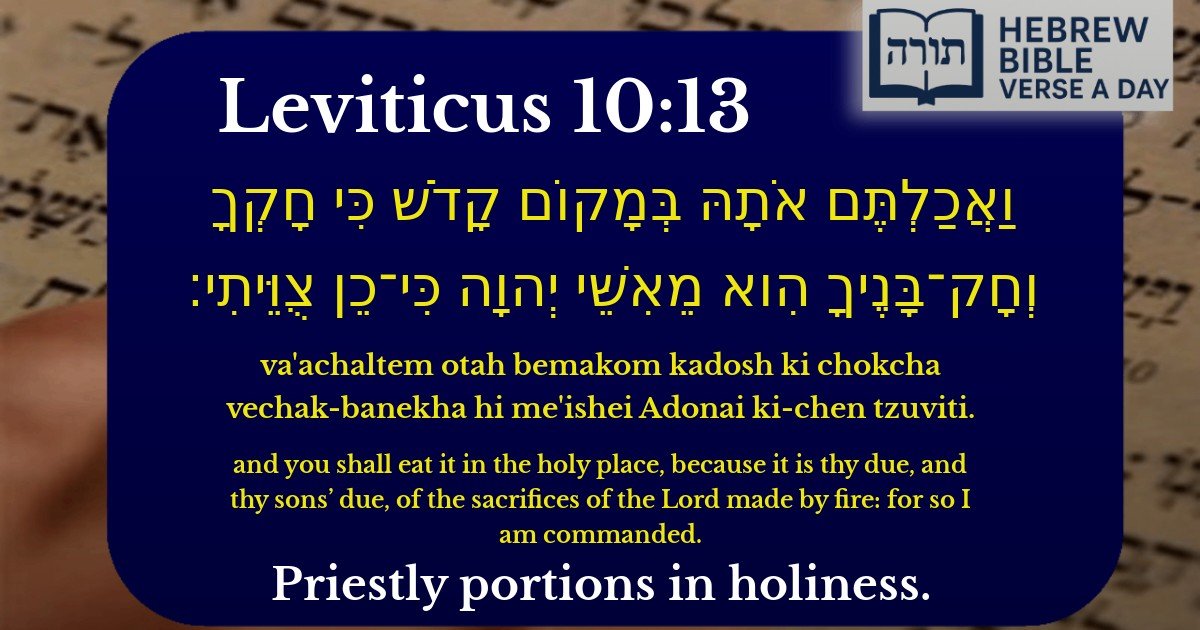
וַאֲכַלְתֶּם אֹתָהּ בְּמָקוֹם קָדֹשׁ כִּי חָקְךָ וְחָק־בָּנֶיךָ הִוא מֵאִשֵּׁי יְהוָה כִּי־כֵן צֻוֵּיתִי׃
English Translation
and you shall eat it in the holy place, because it is thy due, and thy sons’ due, of the sacrifices of the Lord made by fire: for so I am commanded.
Transliteration
Va'achaltem otah bemakom kadosh ki chokcha vechak-banekha hi me'ishei Adonai ki-chen tzuviti.
Hebrew Leining Text
וַאֲכַלְתֶּ֤ם אֹתָהּ֙ בְּמָק֣וֹם קָד֔וֹשׁ כִּ֣י חׇקְךָ֤ וְחׇק־בָּנֶ֙יךָ֙ הִ֔וא מֵאִשֵּׁ֖י יְהֹוָ֑ה כִּי־כֵ֖ן צֻוֵּֽיתִי׃
🎵 Listen to leining
Parasha Commentary
📚 Talmud Citations
This verse is quoted in the Talmud.
📖 Zevachim 56b
The verse is discussed in the context of the laws regarding the consumption of sacrifices by the priests in the holy place.
📖 Menachot 73a
The verse is referenced in a discussion about the portions of offerings that are designated for the priests and their sons.
Context of the Verse
The verse (Vayikra 10:13) is part of the Torah's instructions to Aharon and his sons regarding the consumption of the mincha (meal offering) in the Mishkan (Tabernacle). This follows the tragic incident of Nadav and Avihu, emphasizing the sanctity and proper handling of sacrificial rites.
Explanation of the Text
The phrase "וַאֲכַלְתֶּם אֹתָהּ בְּמָקוֹם קָדֹשׁ" ("you shall eat it in the holy place") teaches that certain sacrifices, like the mincha, must be consumed by the Kohanim (priests) within the boundaries of the Mishkan or later the Beit HaMikdash (Temple). Rashi explains that "holy place" refers specifically to the azarah (Temple courtyard), as derived from Vayikra 6:9.
The Portion of the Kohanim
The verse states "כִּי חָקְךָ וְחָק־בָּנֶיךָ הִוא" ("because it is thy due, and thy sons’ due"). Rambam (Hilchot Ma'aseh HaKorbanot 10:1) elaborates that this establishes the mincha as an eternal portion for the Kohanim, a chok (divine decree) that cannot be revoked. The Sforno adds that this emphasizes the Kohanim’s reliance on Hashem’s gifts rather than personal land ownership.
Connection to Divine Command
The concluding phrase "כִּי־כֵן צֻוֵּיתִי" ("for so I am commanded") underscores Moshe’s role as the faithful transmitter of Hashem’s will. The Midrash (Torat Kohanim) notes that Moshe repeatedly emphasized that his instructions were not his own but from Hashem, reinforcing the divine origin of the laws.
Key Halachic Implications