
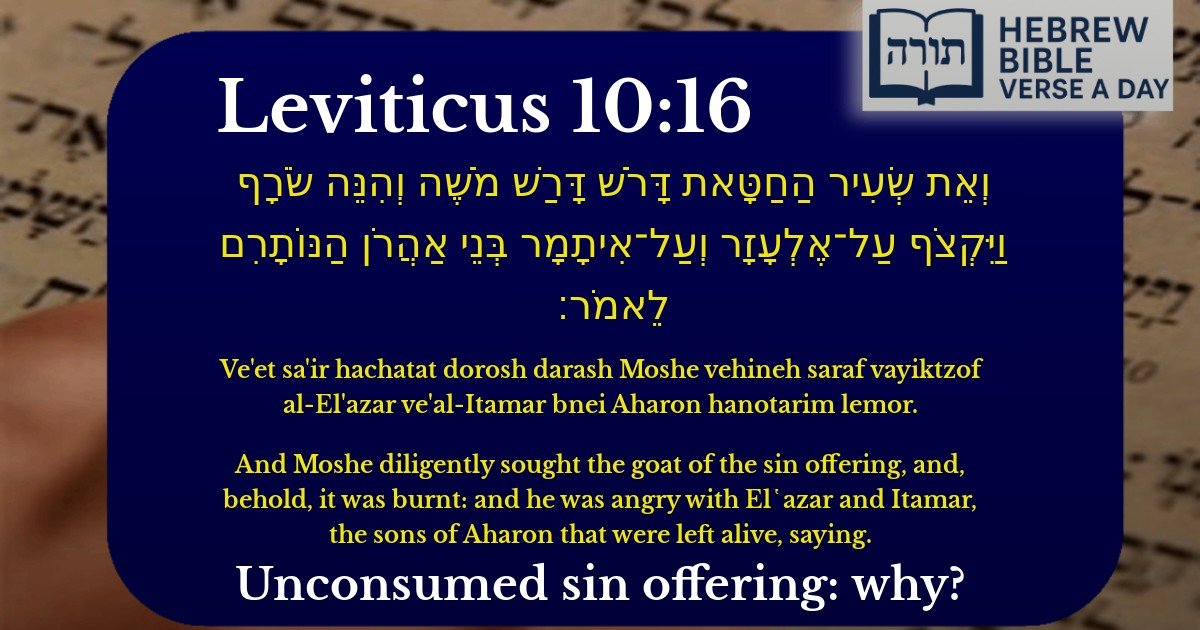

Leviticus 10:16 - Unconsumed sin offering: why?

Leviticus 10:16 - ויקרא 10:16

Hebrew Text

וְאֵת שְׂעִיר הַחַטָּאת דָּרֹשׁ דָּרַשׁ מֹשֶׁה וְהִנֵּה שֹׂרָף וַיִּקְצֹף עַל־אֶלְעָזָר וְעַל־אִיתָמָר בְּנֵי אַהֲרֹן הַנּוֹתָרִם לֵאמֹר׃

English Translation

And Moshe diligently sought the goat of the sin offering, and, behold, it was burnt: and he was angry with El῾azar and Itamar, the sons of Aharon that were left alive, saying.

Transliteration

Ve'et sa'ir hachatat dorosh darash Moshe vehineh saraf vayiktzof al-El'azar ve'al-Itamar bnei Aharon hanotarim lemor.

Hebrew Leining Text

וְאֵ֣ת ׀ שְׂעִ֣יר הַֽחַטָּ֗את דָּרֹ֥שׁ דָּרַ֛שׁ מֹשֶׁ֖ה וְהִנֵּ֣ה שֹׂרָ֑ף וַ֠יִּקְצֹ֠ף עַל־אֶלְעָזָ֤ר וְעַל־אִֽיתָמָר֙ בְּנֵ֣י אַהֲרֹ֔ן הַנּוֹתָרִ֖ם לֵאמֹֽר׃

🎵 Listen to leining

Parasha Commentary

Context of the Verse

This verse (Vayikra 10:16) occurs after the tragic deaths of Nadav and Avihu, Aharon's elder sons, who brought an unauthorized fire offering. Moshe then instructs Elazar and Itamar, Aharon's surviving sons, regarding the proper handling of sacrificial offerings. The verse describes Moshe's reaction when he discovers that the sin-offering goat was burned rather than eaten.

Moshe's Diligent Inquiry

The phrase "דָּרֹשׁ דָּרַשׁ" ("diligently sought") emphasizes Moshe's thoroughness in verifying the proper fulfillment of the mitzvah. Rashi explains that Moshe investigated the matter carefully because he suspected a deviation from the prescribed procedure. The sin-offering was meant to be eaten by the kohanim (as per Vayikra 6:19), not burned entirely.

The Anger of Moshe

Moshe's anger stemmed from his concern that Elazar and Itamar had not followed the Torah's instructions. Ramban suggests that Moshe believed the sin-offering should have been eaten, as it was brought for the entire community, not just the kohanim. However, Aharon later explains (in the following verses) that due to their state of mourning ("אנינות"), it was inappropriate for them to partake of the offering.

Aharon's Response and Halachic Justification

  • Rashi (Vayikra 10:20) notes that Aharon responded respectfully, acknowledging Moshe's authority while clarifying that their actions were justified due to their mourning status.
  • Rambam (Hilchot Bi'at HaMikdash 2:8) rules that an onen (a mourner before burial) is prohibited from eating sacrificial meat, supporting Aharon's reasoning.
  • The Talmud (Zevachim 101a) discusses this incident as a precedent for the laws of onen and priestly service.

Lessons from the Incident

The episode teaches:

  • The importance of precision in fulfilling mitzvot, as demonstrated by Moshe's scrutiny.
  • The balance between strict halachic adherence and human sensitivity, as Aharon prioritized mourning while still engaging in divine service.
  • The value of respectful dialogue in Torah disputes, as Aharon's response led Moshe to accept his reasoning.

📚 Talmud Citations

This verse is quoted in the Talmud.

📖 Zevachim 101b
The verse is discussed in the context of the laws of sin offerings and the actions of Moses regarding the burning of the sin offering.
📖 Yoma 53b
The verse is referenced in a discussion about the proper handling of sin offerings and the consequences of not following the prescribed rituals.

Frequently Asked Questions

Q: Why was Moshe angry with Elazar and Itamar for burning the sin offering?
A: Moshe was angry because the sin offering (שְׂעִיר הַחַטָּאת) was supposed to be eaten by the kohanim (priests) in the Mishkan (Tabernacle), not burned (Vayikra 6:19). Elazar and Itamar, Aharon's surviving sons, burned it instead due to their mourning state after their brothers Nadav and Avihu died (Rashi on Vayikra 10:16). Moshe initially thought they violated the Torah's command, but Aharon later explained their reasoning.
Q: What lesson do we learn from Moshe's reaction to Elazar and Itamar?
A: This incident teaches the importance of clarifying misunderstandings before reacting harshly. Though Moshe was correct about the halacha (law), Aharon provided context—that as mourners (אוננים), they were exempt from eating the offering (Ramban on Vayikra 10:19). This shows even great leaders must seek explanations with humility.
Q: Why was this sin offering different from other sacrifices?
A: Most sin offerings (חַטָּאת) were burned outside the camp if their blood was brought into the Mishkan (Vayikra 6:23). However, this was a special sin offering for the inauguration of the Mishkan (Vayikra 9:3), which the kohanim were commanded to eat (Vayikra 10:12-13). Burning it instead was unexpected, which is why Moshe questioned it.
Q: How does this verse connect to the deaths of Nadav and Avihu earlier in the parsha?
A: Elazar and Itamar acted out of mourning (אוננים) after their brothers died (Vayikra 10:12). The Torah links these events to teach that halacha sometimes adjusts for human circumstances—here, mourners are exempt from eating sacrifices (Talmud Yevamot 90a). Aharon’s response highlights balancing strict law with compassion.