

Join Our Newsletter To Be Informed When New Videos Are Posted
Hebrew Text
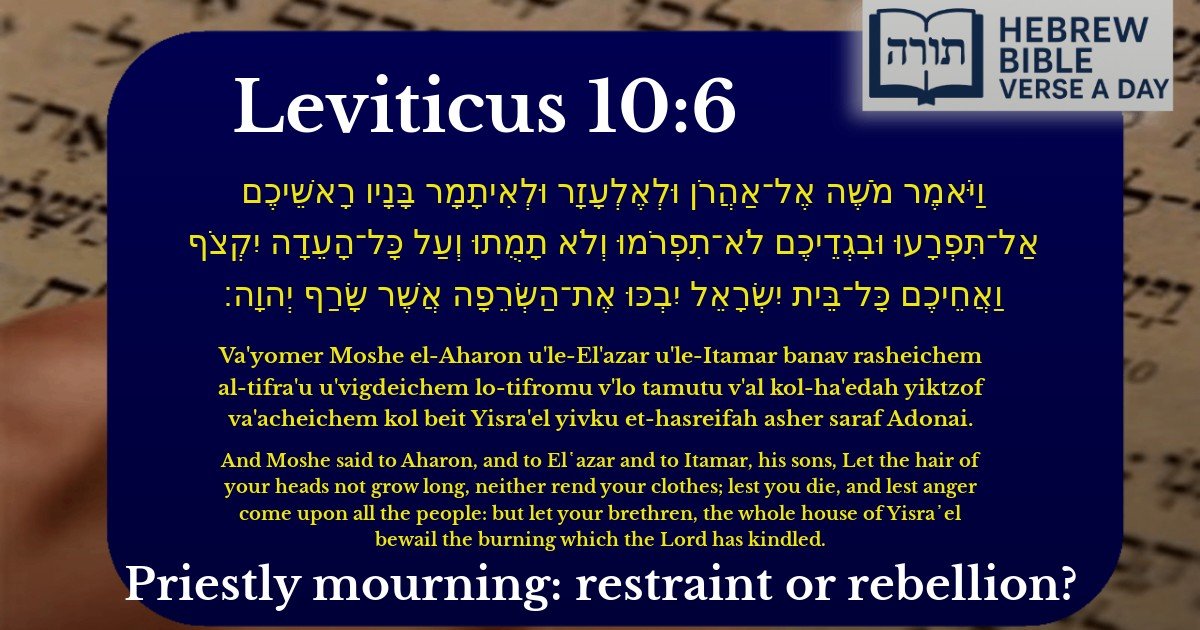
וַיֹּאמֶר מֹשֶׁה אֶל־אַהֲרֹן וּלְאֶלְעָזָר וּלְאִיתָמָר בָּנָיו רָאשֵׁיכֶם אַל־תִּפְרָעוּ וּבִגְדֵיכֶם לֹא־תִפְרֹמוּ וְלֹא תָמֻתוּ וְעַל כָּל־הָעֵדָה יִקְצֹף וַאֲחֵיכֶם כָּל־בֵּית יִשְׂרָאֵל יִבְכּוּ אֶת־הַשְּׂרֵפָה אֲשֶׁר שָׂרַף יְהוָה׃
English Translation
And Moshe said to Aharon, and to El῾azar and to Itamar, his sons, Let the hair of your heads not grow long, neither rend your clothes; lest you die, and lest anger come upon all the people: but let your brethren, the whole house of Yisra᾽el bewail the burning which the Lord has kindled.
Transliteration
Va'yomer Moshe el-Aharon u'le-El'azar u'le-Itamar banav rasheichem al-tifra'u u'vigdeichem lo-tifromu v'lo tamutu v'al kol-ha'edah yiktzof va'acheichem kol beit Yisra'el yivku et-hasreifah asher saraf Adonai.
Hebrew Leining Text
וַיֹּ֣אמֶר מֹשֶׁ֣ה אֶֽל־אַהֲרֹ֡ן וּלְאֶלְעָזָר֩ וּלְאִֽיתָמָ֨ר ׀ בָּנָ֜יו רָֽאשֵׁיכֶ֥ם אַל־תִּפְרָ֣עוּ ׀ וּבִגְדֵיכֶ֤ם לֹֽא־תִפְרֹ֙מוּ֙ וְלֹ֣א תָמֻ֔תוּ וְעַ֥ל כׇּל־הָעֵדָ֖ה יִקְצֹ֑ף וַאֲחֵיכֶם֙ כׇּל־בֵּ֣ית יִשְׂרָאֵ֔ל יִבְכּוּ֙ אֶת־הַשְּׂרֵפָ֔ה אֲשֶׁ֖ר שָׂרַ֥ף יְהֹוָֽה׃
🎵 Listen to leining
Parasha Commentary
📚 Talmud Citations
This verse is quoted in the Talmud.
📖 Moed Katan 20b
The verse is cited in a discussion about mourning practices, specifically regarding the prohibition for priests (kohanim) to let their hair grow long or rend their garments in mourning, except for certain relatives.
📖 Yevamot 114a
The verse is referenced in the context of discussing the laws of mourning and the specific prohibitions for priests, emphasizing the unique restrictions placed upon them.
📖 Zevachim 101b
The verse is mentioned in a discussion about the service of the priests and the consequences of not adhering to the specific commandments given to them, including the prohibitions mentioned in this verse.
Context of the Verse
This verse (Vayikra 10:6) appears immediately after the tragic deaths of Nadav and Avihu, Aharon's two eldest sons, who were consumed by fire after bringing an unauthorized offering in the Mishkan. Moshe instructs Aharon and his surviving sons, Elazar and Itamar, not to engage in outward signs of mourning, such as letting their hair grow wild (pera) or tearing their garments (kriah). Instead, the entire nation of Israel is to mourn on their behalf.
Prohibition of Mourning Practices
Reasoning Behind the Command
The instruction not to mourn outwardly was to prevent further divine anger (ketzef) from coming upon the entire nation. The Sforno explains that if the kohanim—who were responsible for atonement and divine service—were to publicly mourn, it might imply dissatisfaction with Hashem's decree, which could provoke additional wrath.
National Mourning
Moshe instructs that the entire house of Israel (kol beit Yisrael) should mourn instead. The Kli Yakar emphasizes that this was to demonstrate collective responsibility—the entire nation shared in the loss of Nadav and Avihu, who were leaders of the people. The mourning was not just for their deaths but also for the sereifah (burning), a term that implies a divine act of purification rather than mere punishment.
Spiritual Lessons