

Join Our Newsletter To Be Informed When New Videos Are Posted
Hebrew Text
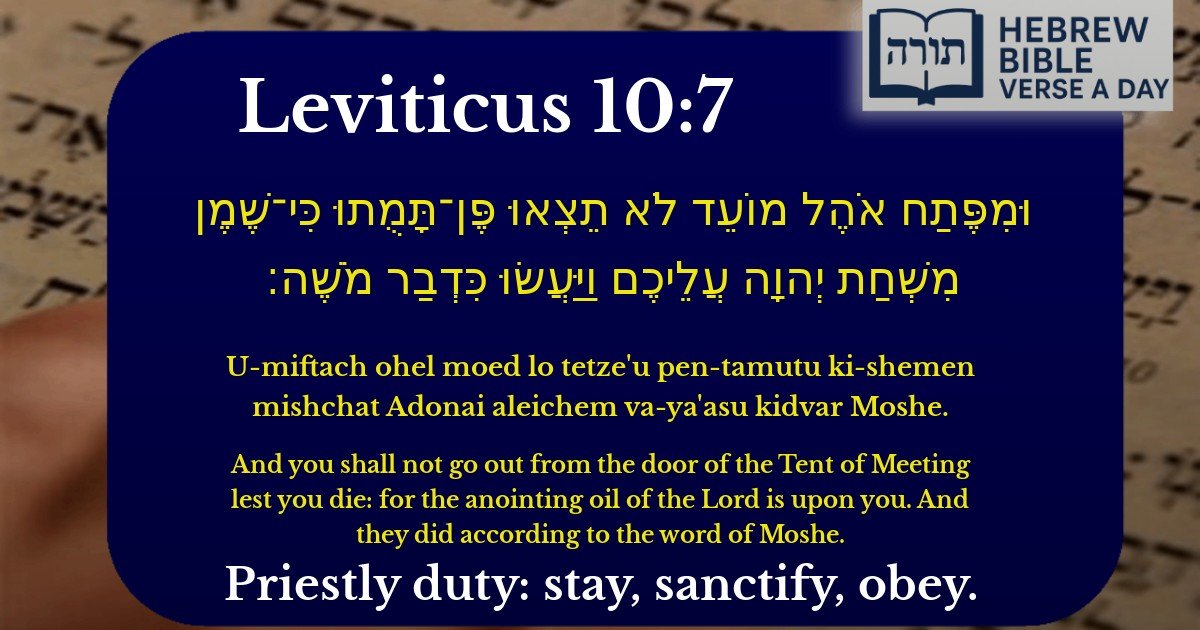
וּמִפֶּתַח אֹהֶל מוֹעֵד לֹא תֵצְאוּ פֶּן־תָּמֻתוּ כִּי־שֶׁמֶן מִשְׁחַת יְהוָה עֲלֵיכֶם וַיַּעֲשׂוּ כִּדְבַר מֹשֶׁה׃
English Translation
And you shall not go out from the door of the Tent of Meeting lest you die: for the anointing oil of the Lord is upon you. And they did according to the word of Moshe.
Transliteration
U-miftach ohel moed lo tetze'u pen-tamutu ki-shemen mishchat Adonai aleichem va-ya'asu kidvar Moshe.
Hebrew Leining Text
וּמִפֶּ֩תַח֩ אֹ֨הֶל מוֹעֵ֜ד לֹ֤א תֵֽצְאוּ֙ פֶּן־תָּמֻ֔תוּ כִּי־שֶׁ֛מֶן מִשְׁחַ֥ת יְהֹוָ֖ה עֲלֵיכֶ֑ם וַֽיַּעֲשׂ֖וּ כִּדְבַ֥ר מֹשֶֽׁה׃ {פ}
🎵 Listen to leining
Parasha Commentary
📚 Talmud Citations
This verse is quoted in the Talmud.
📖 Yoma 53a
The verse is referenced in the discussion about the High Priest's service on Yom Kippur, emphasizing the sanctity and restrictions during the service in the Tent of Meeting.
📖 Sanhedrin 83a
The verse is cited in a discussion about the severity of leaving the Tent of Meeting, highlighting the consequences of violating divine commandments.
Context of the Verse
This verse (Vayikra 8:35) appears during the seven-day inauguration period of the Mishkan (Tabernacle), when Aharon and his sons were consecrated as Kohanim (priests). The command is given to remain at the entrance of the Ohel Moed (Tent of Meeting) for the entire seven days, as part of their sanctification process.
Prohibition Against Leaving
Rashi explains that the warning "lest you die" refers to the severe consequences of violating this command. The Kohanim were in a state of heightened holiness during this period, akin to the status of a Kohen Gadol (High Priest) on Yom Kippur, who must remain in the Beit HaMikdash (Temple) throughout the day (Yoma 2a). Leaving would constitute a breach of their sanctified state.
The Significance of the Anointing Oil
The verse emphasizes that "the anointing oil of Hashem is upon you." Ramban (Nachmanides) teaches that the shemen hamishcha (anointing oil) imbued them with kedusha (holiness), setting them apart for divine service. The oil symbolized their unique role as intermediaries between Bnei Yisrael and Hashem.
Obedience to Moshe's Command
The concluding phrase "And they did according to the word of Moshe" highlights the complete submission of Aharon and his sons to Moshe's instructions. The Midrash (Sifra) notes that this demonstrates their unwavering commitment to fulfilling Hashem's will, even during the physically and spiritually demanding seven-day period.
Practical Implications