
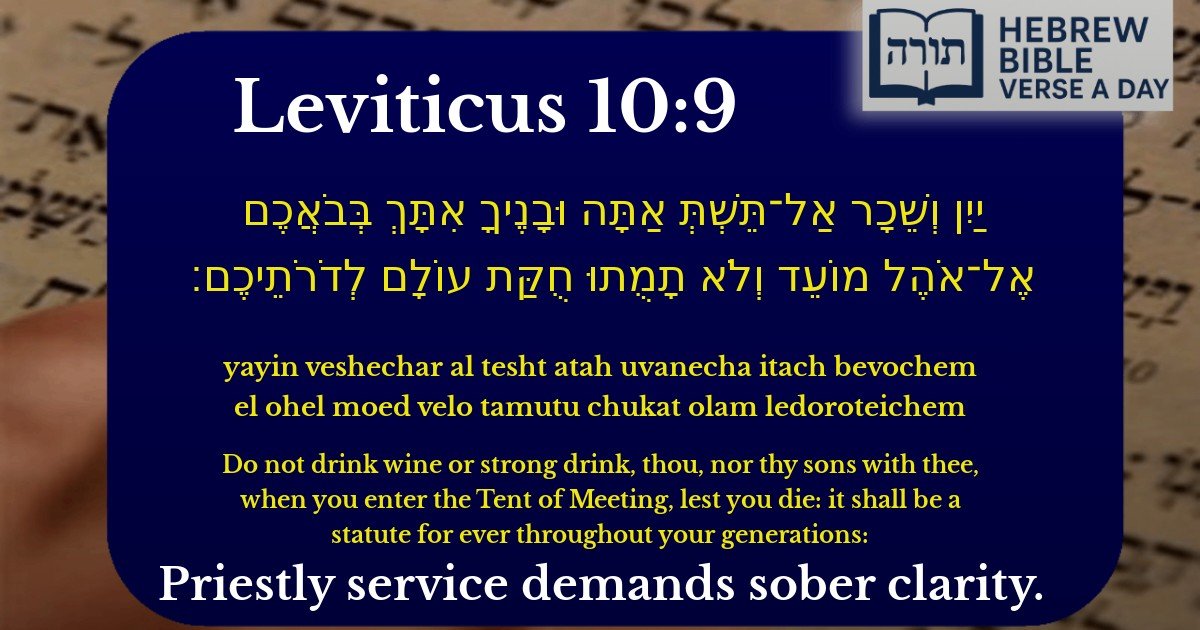

Leviticus 10:9 - Priestly service demands sober clarity.

Leviticus 10:9 - ויקרא 10:9

Hebrew Text

יַיִן וְשֵׁכָר אַל־תֵּשְׁתְּ אַתָּה וּבָנֶיךָ אִתָּךְ בְּבֹאֲכֶם אֶל־אֹהֶל מוֹעֵד וְלֹא תָמֻתוּ חֻקַּת עוֹלָם לְדֹרֹתֵיכֶם׃

English Translation

Do not drink wine or strong drink, thou, nor thy sons with thee, when you enter the Tent of Meeting, lest you die: it shall be a statute for ever throughout your generations:

Transliteration

Yayin veshechar al tesht atah uvanecha itach bevochem el ohel moed velo tamutu chukat olam ledoroteichem

Hebrew Leining Text

יַ֣יִן וְשֵׁכָ֞ר אַל־תֵּ֣שְׁתְּ ׀ אַתָּ֣ה ׀ וּבָנֶ֣יךָ אִתָּ֗ךְ בְּבֹאֲכֶ֛ם אֶל־אֹ֥הֶל מוֹעֵ֖ד וְלֹ֣א תָמֻ֑תוּ חֻקַּ֥ת עוֹלָ֖ם לְדֹרֹתֵיכֶֽם׃

🎵 Listen to leining

Parasha Commentary

Prohibition of Wine for Kohanim in the Mishkan

The verse (Vayikra 10:9) prohibits kohanim from consuming wine or intoxicating beverages before entering the Ohel Mo'ed (Tent of Meeting) to perform sacred service. Rashi explains that this prohibition applies specifically when engaging in avodah (Temple service), as intoxication could lead to errors in performing the mitzvot properly. The severe warning ("lest you die") underscores the gravity of this prohibition when approaching holy matters.

Halachic Implications

Rambam (Hilchot Bi'at Mikdash 1:2) codifies this as a permanent prohibition for all generations, applying even when the Beit HaMikdash is not standing, in preparation for its future rebuilding. The prohibition includes:

  • Any intoxicating beverage, not just wine (based on Sifra)
  • The time period before service (Talmud Keritot 13b defines this as enough time for intoxication to take effect)
  • All kohanim who might potentially serve (not just those actively performing service)

Spiritual Dimensions

The Kli Yakar offers a deeper interpretation: Wine represents physical indulgence that can cloud spiritual clarity. When approaching the Divine service, one must be in a state of complete mental and spiritual focus. The juxtaposition of this command following the death of Nadav and Avihu (in the preceding verses) serves as a warning against improper approaches to holiness.

Contemporary Applications

While primarily concerning Temple service, Orthodox halacha extends certain aspects of this prohibition:

  • Kohanim abstain from wine before Birkat Kohanim (Duchening)
  • Some poskim advise caution regarding wine consumption before prayer or Torah study
  • The principle informs general guidelines about sobriety when engaging in religious matters

📚 Talmud Citations

This verse is quoted in the Talmud.

📖 Keritot 13b
The verse is cited in a discussion about the prohibition of priests drinking wine before entering the Temple, extending the biblical prohibition to include other forms of service.
📖 Sanhedrin 83a
Mentioned in the context of discussing the severity of violating priestly prohibitions, including the consumption of wine before service in the Temple.

Frequently Asked Questions

Q: What does Leviticus 10:9 mean when it says not to drink wine before entering the Tent of Meeting?
A: Leviticus 10:9 prohibits priests (kohanim) from drinking wine or intoxicants before performing service in the Mishkan (Tabernacle) or later in the Temple. Rashi explains that this is to ensure clarity of mind when performing sacred duties. The Talmud (Eruvin 64a) warns that intoxication can lead to errors in service, which is why the Torah gives this strict commandment.
Q: Why is this law about wine important for priests?
A: This law is crucial because the kohanim (priests) must serve Hashem with complete focus and reverence. The Rambam (Hilchot Bi'at HaMikdash 1:2) states that any priest who serves in the Temple while intoxicated is liable for death at the hands of Heaven. This emphasizes the seriousness of approaching divine service with proper mindfulness and respect.
Q: Does this prohibition against wine apply to all Jews or just priests?
A: This specific prohibition applies only to kohanim (priests) when performing Temple service. However, the Talmud (Nazir 4a) discusses broader principles about avoiding intoxication, and the Rambam (Hilchot De'ot 5:3) teaches moderation in all things, including wine. Regular Jews are not bound by this exact prohibition but are encouraged to avoid drunkenness.
Q: How does this verse apply today if there is no Temple?
A: Although there is no Temple today, the principle of serving Hashem with a clear mind remains relevant. The Shulchan Aruch (Orach Chaim 99:1) rules that one should not pray while intoxicated, based on this idea. Additionally, kohanim still avoid drinking wine before performing certain mitzvot, such as duchaning (the priestly blessing).
Q: What can we learn from Leviticus 10:9 in our daily lives?
A: This verse teaches the importance of approaching sacred moments—whether prayer, Torah study, or mitzvot—with a sober and focused mind. The Midrash (Vayikra Rabbah 12:1) connects this to the idea that holiness requires proper preparation. Even today, we apply this by avoiding distractions and maintaining reverence in spiritual matters.