
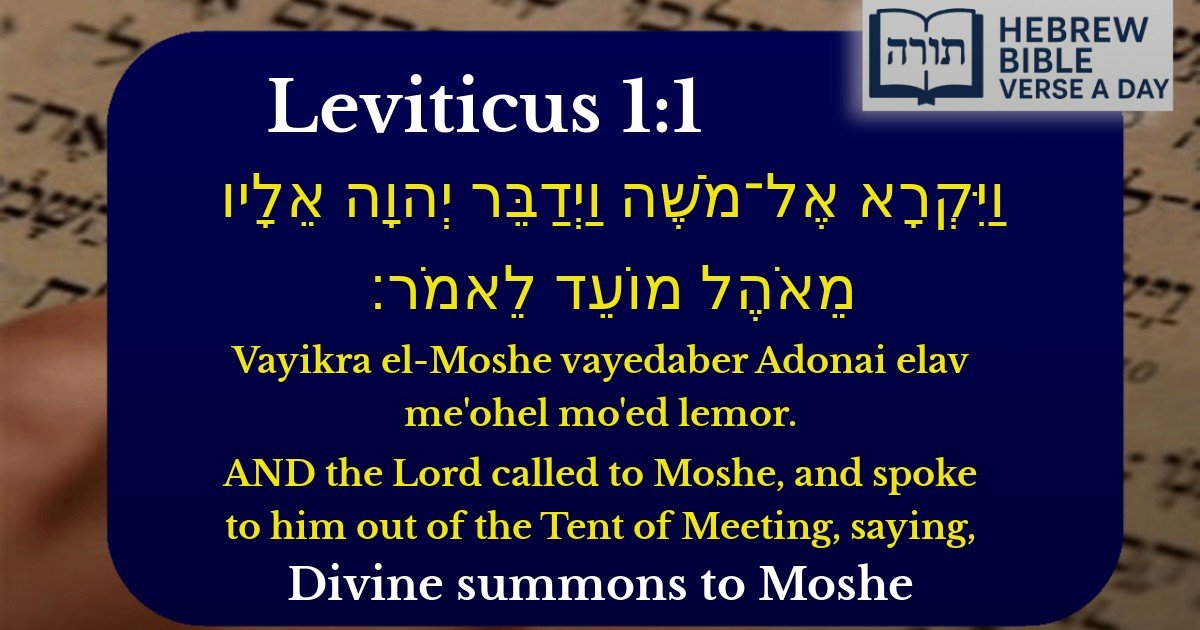

Leviticus 1:1 - Divine summons to Moshe

Leviticus 1:1 - ויקרא 1:1

Hebrew Text

וַיִּקְרָא אֶל־מֹשֶׁה וַיְדַבֵּר יְהוָה אֵלָיו מֵאֹהֶל מוֹעֵד לֵאמֹר׃

English Translation

AND the Lord called to Moshe, and spoke to him out of the Tent of Meeting, saying,

Transliteration

Vayikra el-Moshe vayedaber Adonai elav me'ohel mo'ed lemor.

Hebrew Leining Text

וַיִּקְרָ֖א אֶל־מֹשֶׁ֑ה וַיְדַבֵּ֤ר יְהֹוָה֙ אֵלָ֔יו מֵאֹ֥הֶל מוֹעֵ֖ד לֵאמֹֽר׃

🎵 Listen to leining

Parasha Commentary

The Significance of the Call to Moshe

The verse begins with "וַיִּקְרָא אֶל־מֹשֶׁה" ("And the Lord called to Moshe"), emphasizing a direct and personal summons from Hashem. Rashi (Vayikra 1:1) notes that this calling was a sign of affection, as it preceded every communication between Hashem and Moshe. The term "קריאה" (calling) is used elsewhere in Tanach (e.g., Shemot 19:3) to denote a special invitation, highlighting Moshe's unique prophetic stature.

The Location of the Divine Communication

The verse specifies that Hashem spoke to Moshe "מֵאֹהֶל מוֹעֵד" ("from the Tent of Meeting"). The Ramban (Vayikra 1:1) explains that the Mishkan was the designated place for divine revelation after its construction, replacing Har Sinai as the primary location for prophecy. The Ohel Moed symbolizes the ongoing relationship between Hashem and Klal Yisrael, as it was the center of divine service and communication.

The Structure of the Verse

  • Calling Before Speaking: The Sforno (Vayikra 1:1) teaches that the initial call was to prepare Moshe mentally and spiritually before receiving the divine word, reflecting the reverence required for prophecy.
  • Divine Speech: The phrase "וַיְדַבֵּר יְהוָה אֵלָיו" ("and spoke to him") indicates a formal transmission of halachic or ethical instruction, as "דיבור" often implies a weighty or commanding tone (see Mechilta, Yitro).

Midrashic Insights

The Midrash (Vayikra Rabbah 1:1) compares Hashem's call to Moshe to a king who summons his most trusted advisor privately before issuing a decree to the public. This underscores Moshe's role as the intermediary through whom Torah was given to Bnei Yisrael. Additionally, the Midrash notes that the small aleph in "וַיִּקְרָא" alludes to Moshe's humility, despite his unparalleled closeness to Hashem.

📚 Talmud Citations

This verse is quoted in the Talmud.

📖 Yoma 4b
The verse is cited in a discussion about the divine communication with Moses and the significance of the Tent of Meeting as the place where God spoke to him.
📖 Sotah 37b
Referenced in the context of the unique relationship between God and Moses, highlighting how God called to Moses before speaking to him.

Frequently Asked Questions

Q: Why does the verse say 'He called to Moshe' before speaking to him?
A: Rashi explains that this shows Hashem's love and honor for Moshe. Before speaking, Hashem first called Moshe by name as a sign of affection, just as the angels call to one another before speaking (based on Isaiah 6:3). This teaches us the importance of showing respect when initiating conversation.
Q: What is the significance of Hashem speaking from the Tent of Meeting?
A: The Tent of Meeting (Ohel Moed) was the portable sanctuary in the wilderness where the Divine Presence rested. The Ramban teaches that this location emphasizes the holiness of the communication - these were not ordinary instructions, but sacred commandments given in this special place where Heaven and earth met.
Q: Why does the Book of Leviticus begin this way?
A: The Midrash (Vayikra Rabbah 1:7) notes that Leviticus contains many laws about sacrifices and holiness. By beginning with Hashem calling Moshe, it shows that these commandments come from a place of divine love and closeness. The Sages say the book's opening teaches that Torah must be received with the same attentiveness as Moshe showed when called.
Q: What lesson can we learn from how Hashem spoke to Moshe?
A: The Talmud (Yoma 4b) derives from here that one should never begin speaking to another person without first getting their attention properly. Just as Hashem first called Moshe before speaking, we should practice proper communication etiquette in our relationships.
Q: Why is the word 'Vayikra' written with a small aleph in the Torah?
A: Rashi notes the small aleph shows Moshe's humility. Though being called by Hashem was a great honor, Moshe wanted to write the word as 'Vayikar' (meaning a casual encounter) to minimize his own importance. Hashem compromised by having him write it with a small aleph, teaching us about balancing recognition of our roles with proper humility.