

Join Our Newsletter To Be Informed When New Videos Are Posted
Hebrew Text
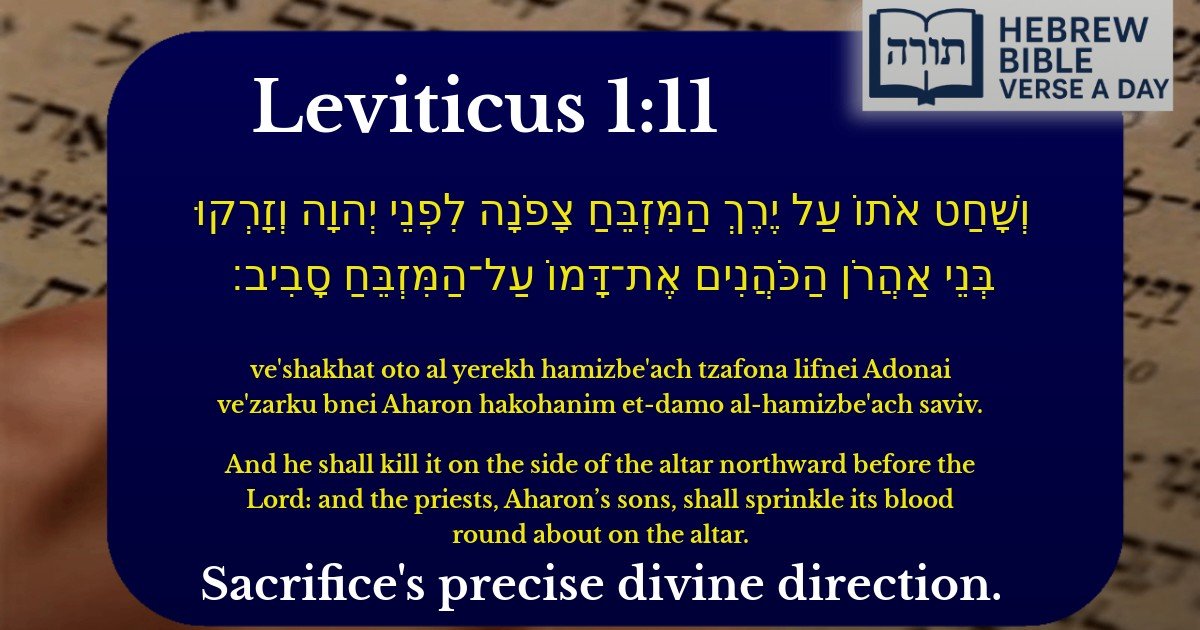
וְשָׁחַט אֹתוֹ עַל יֶרֶךְ הַמִּזְבֵּחַ צָפֹנָה לִפְנֵי יְהוָה וְזָרְקוּ בְּנֵי אַהֲרֹן הַכֹּהֲנִים אֶת־דָּמוֹ עַל־הַמִּזְבֵּחַ סָבִיב׃
English Translation
And he shall kill it on the side of the altar northward before the Lord: and the priests, Aharon’s sons, shall sprinkle its blood round about on the altar.
Transliteration
Ve'shakhat oto al yerekh hamizbe'ach tzafona lifnei Adonai ve'zarku bnei Aharon hakohanim et-damo al-hamizbe'ach saviv.
Hebrew Leining Text
וְשָׁחַ֨ט אֹת֜וֹ עַ֣ל יֶ֧רֶךְ הַמִּזְבֵּ֛חַ צָפֹ֖נָה לִפְנֵ֣י יְהֹוָ֑ה וְזָרְק֡וּ בְּנֵי֩ אַהֲרֹ֨ן הַכֹּהֲנִ֧ים אֶת־דָּמ֛וֹ עַל־הַמִּזְבֵּ֖חַ סָבִֽיב׃
🎵 Listen to leining
Parasha Commentary
📚 Talmud Citations
This verse is quoted in the Talmud.
📖 Zevachim 53b
The verse is discussed in the context of the laws regarding the slaughter of sacrifices and the proper sprinkling of blood on the altar.
📖 Menachot 27b
Referenced in a discussion about the positioning and procedures for various offerings, emphasizing the north side of the altar for certain sacrifices.
Location of the Slaughter
The verse specifies that the slaughter of the korban (sacrifice) must take place "on the side of the altar northward" (עַל יֶרֶךְ הַמִּזְבֵּחַ צָפֹנָה). Rashi (Vayikra 1:11) explains that this refers to the northern side of the Mizbeach (altar), which was designated specifically for the slaughter of most korbanot. The Zevachim (5:1) in Mishnah elaborates that this applies to kodshim kalim (offerings of lesser sanctity) but not to kodshei kodashim (offerings of higher sanctity), which had different slaughtering locations.
Significance of the North
The Talmud (Yoma 19b) and Midrash (Bamidbar Rabbah 7:8) suggest symbolic reasons for the northern placement:
Role of the Kohanim
The verse states that "the priests, Aharon’s sons, shall sprinkle its blood" (וְזָרְקוּ בְּנֵי אַהֲרֹן הַכֹּהֲנִים אֶת־דָּמוֹ). Rambam (Hilchos Maaseh HaKorbanos 5:1-2) details that the zerikah (sprinkling) must be performed by a kohen, emphasizing the priestly role in facilitating atonement. The blood is sprinkled "around the altar" (סָבִיב), which the Mishnah (Zevachim 5:4) clarifies means on the lower half of the Mizbeach for most korbanot.
Spiritual Lessons
The Sefer HaChinuch (Mitzvah 95) derives ethical teachings from this process: