

Join Our Newsletter To Be Informed When New Videos Are Posted
Hebrew Text
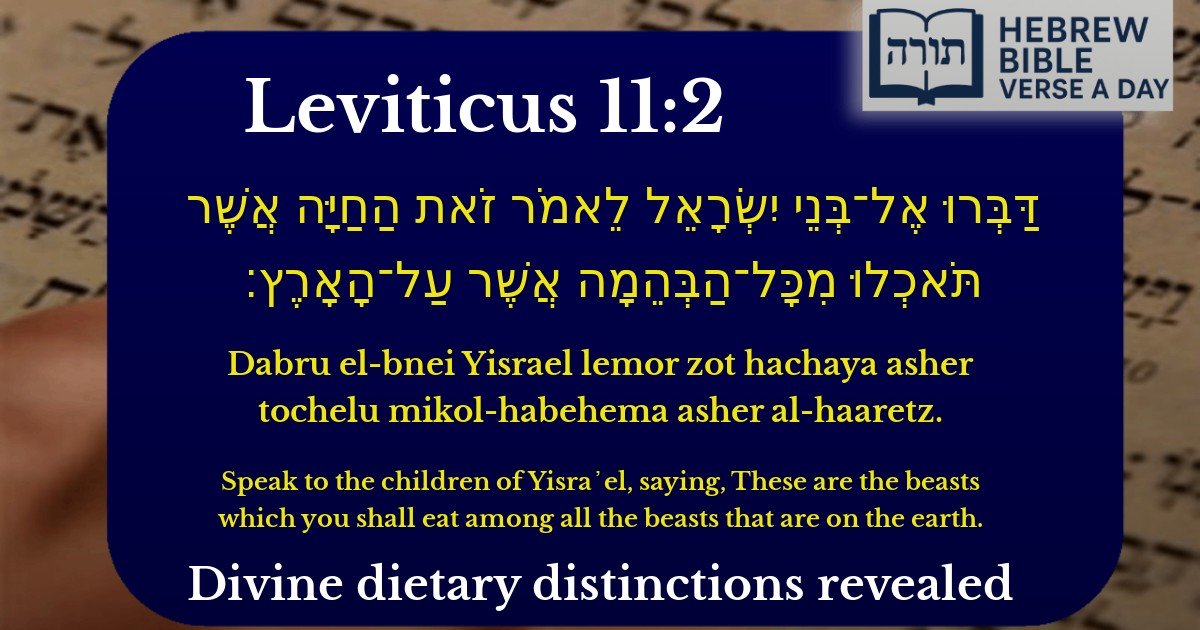
דַּבְּרוּ אֶל־בְּנֵי יִשְׂרָאֵל לֵאמֹר זֹאת הַחַיָּה אֲשֶׁר תֹּאכְלוּ מִכָּל־הַבְּהֵמָה אֲשֶׁר עַל־הָאָרֶץ׃
English Translation
Speak to the children of Yisra᾽el, saying, These are the beasts which you shall eat among all the beasts that are on the earth.
Transliteration
Dabru el-bnei Yisrael lemor zot hachaya asher tochelu mikol-habehema asher al-haaretz.
Hebrew Leining Text
דַּבְּר֛וּ אֶל־בְּנֵ֥י יִשְׂרָאֵ֖ל לֵאמֹ֑ר זֹ֤את הַֽחַיָּה֙ אֲשֶׁ֣ר תֹּאכְל֔וּ מִכׇּל־הַבְּהֵמָ֖ה אֲשֶׁ֥ר עַל־הָאָֽרֶץ׃
🎵 Listen to leining
Parasha Commentary
📚 Talmud Citations
This verse is quoted in the Talmud.
📖 Chullin 42a
The verse is discussed in the context of the laws regarding kosher animals and the criteria for determining which animals are permitted for consumption.
📖 Sifra Shemini, Parashah 3
The verse is referenced in the midrashic interpretation of the laws of kosher animals, elaborating on the specifics of which animals are permitted and forbidden.
Introduction to the Verse
The verse (Vayikra 11:2) introduces the laws of kosher animals, delineating which creatures are permitted for consumption. This commandment is foundational to the dietary laws (kashrut) given to Bnei Yisrael, emphasizing holiness in daily life through physical actions.
Rashi's Commentary
Rashi explains that the phrase "דַּבְּרוּ אֶל־בְּנֵי יִשְׂרָאֵל" ("Speak to the children of Yisrael") underscores the importance of Moshe transmitting these laws directly to the people. He notes that the term "זֹאת הַחַיָּה" ("These are the beasts") implies a specific, limited category—only those animals that meet the Torah's criteria (split hooves and chewing their cud) are permitted.
Rambam's Perspective (Hilchot Ma'achalot Asurot)
Rambam (Maimonides) discusses the broader purpose of these laws in Hilchot Ma'achalot Asurot, stating that the dietary restrictions cultivate discipline and refine the soul. By abstaining from certain animals, a Jew elevates their physical desires to align with spiritual goals.
Midrashic Insights
The Midrash (Vayikra Rabbah 13:3) connects this verse to the concept of kedushah (holiness). It teaches that by controlling what enters the body, one sanctifies their physical existence, mirroring the divine directive: "קְדֹשִׁים תִּהְיוּ" ("You shall be holy," Vayikra 19:2).
Halachic Criteria for Permitted Animals
Symbolic Meaning (Sefer HaChinuch)
The Sefer HaChinuch (Mitzvah 73) suggests that permitted animals—those that chew their cud—symbolize introspection and spiritual "digestion" of Torah. Split hooves represent a firm, separated path of righteousness, distinct from impurity.
Practical Implications
This verse establishes the foundation for kosher slaughter (shechita) and meat inspection (bedika), ensuring adherence to Torah law. The Talmud (Chullin 42a) elaborates on detailed checks for signs of treifot (imperfections).