Frequently Asked Questions
Q: What does Leviticus 11:34 mean?
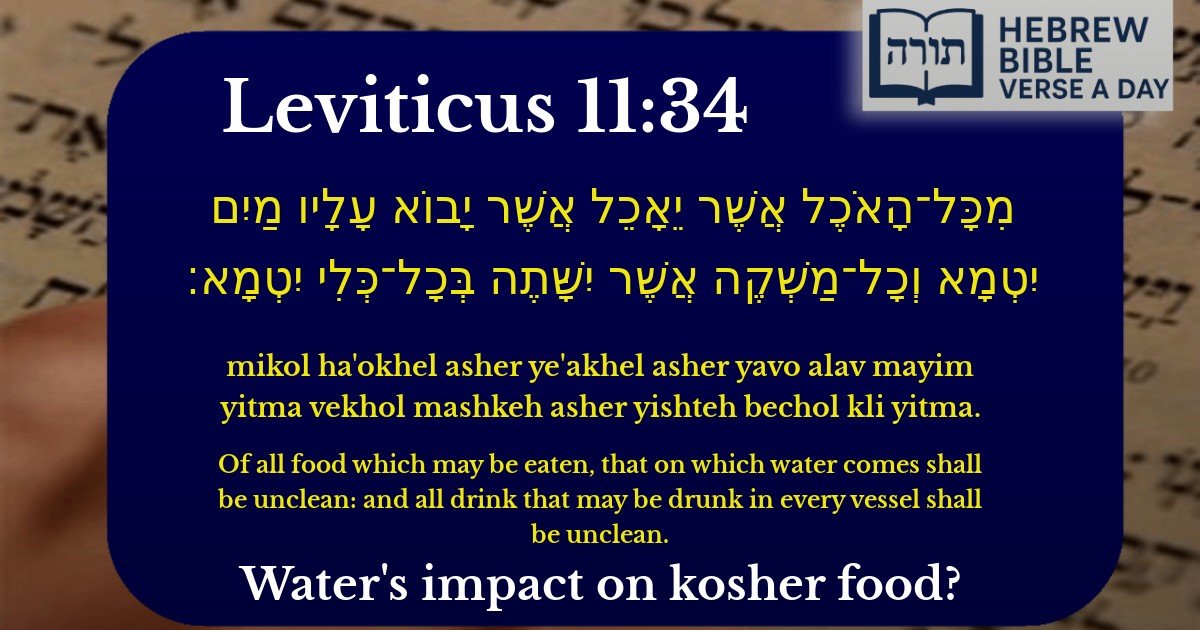
A: Leviticus 11:34 discusses the laws of ritual impurity (tum'ah) related to food and drink. According to this verse, if water comes into contact with certain types of food, the food becomes ritually impure. Similarly, any drink in a vessel that becomes impure also transmits impurity. This is part of the Torah's detailed laws about purity and impurity, which were especially relevant in the times of the Holy Temple.
Q: Why is this verse important in Jewish law?
A: This verse is important because it establishes key principles about how food and drink can become ritually impure. The Talmud (Chullin 120a) and commentators like Rashi explain that this teaches us about the conditions under which food can contract impurity, such as when it has been moistened with water. These laws were crucial for maintaining ritual purity, especially when bringing offerings to the Temple or handling sacred items.
Q: How does this apply to kosher food today?
A: While the laws of ritual impurity are not fully applicable today without the Holy Temple, the principle of being mindful about purity still influences Jewish practice. For example, the Rabbis instituted rules about washing hands before eating bread (netilat yadayim), partly based on concepts of purity. Additionally, kosher certification ensures that food is prepared in a way that aligns with Torah standards, even if the full laws of tum'ah are not in effect.
Q: What can we learn from Leviticus 11:34?
A: This verse teaches us that Judaism places great emphasis on mindfulness in eating and drinking. The idea that even water can affect the spiritual status of food reminds us to be conscious of how we prepare and consume what we eat. The Rambam (Hilchot Tum'at Ochalin) explains that these laws elevate mundane acts like eating into opportunities for spiritual awareness and connection to Hashem.
Q: Does this verse mean all food with water is impure?
A: No, not all food that touches water becomes impure. Rashi clarifies that this law specifically applies to foods that are susceptible to impurity (such as certain types of produce) and only when the water was intentionally placed on them (not accidental contact). The Mishnah (Makhshirin 1:1) further explains that the water must have been put on the food for a purpose, like washing or cooking, to transmit impurity.


Verse Context
This verse (Vayikra 11:34) appears in the Torah portion of Shemini, which discusses the laws of kashrut and tumah (ritual impurity). It specifically addresses how food and drink can become impure through contact with water and contaminated vessels.
Rashi's Explanation
Rashi explains that this verse teaches us that dry food does not become susceptible to tumah (impurity) unless it first comes into contact with water or another liquid. Once the food becomes moistened, it can then contract impurity if it touches something impure. Rashi cites the Talmud (Makkot 16b) as the source for this principle.
Rambam's Interpretation
In Mishneh Torah (Hilchot Tum'at Ochalin 1:1), Rambam codifies this law, stating that foods only become susceptible to impurity after they have been deliberately moistened with one of seven specified liquids (water, dew, oil, wine, milk, blood, or honey). This emphasizes the intentionality required in food preparation regarding ritual purity.
Talmudic Analysis
The Talmud (Chullin 120a) discusses this verse extensively, establishing several key principles:
Midrashic Insight
The Sifra (a halachic midrash on Vayikra) connects this law to the broader theme of kedusha (holiness), teaching that just as water is essential for physical life, so too is spiritual purity essential for maintaining a holy life. The requirement for water to make food susceptible to impurity reminds us that our material sustenance must be elevated through spiritual awareness.
Practical Halachic Implications
This verse forms the basis for many practical halachot regarding food preparation and storage: