Frequently Asked Questions
Q: What does Leviticus 1:15 mean in simple terms?
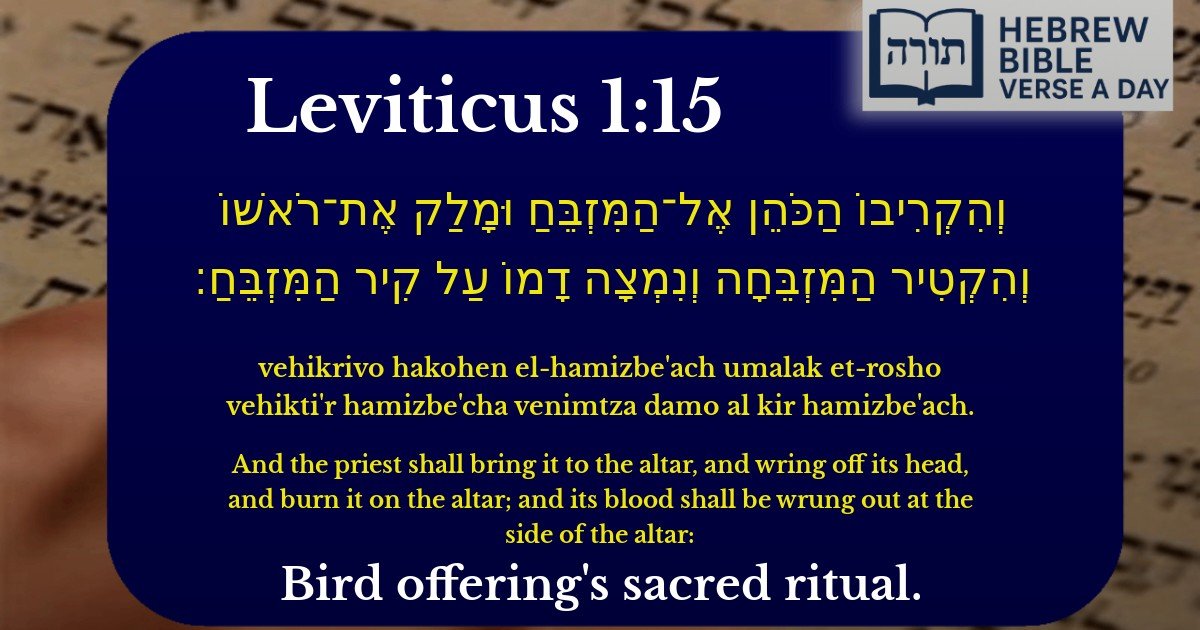
A: Leviticus 1:15 describes part of the process for bringing a bird as a burnt offering (Olah) in the Temple. The priest would bring the bird to the altar, remove its head, burn it on the altar, and sprinkle its blood on the side of the altar. This was one of the ways people could bring offerings to Hashem, showing their devotion and atonement.
Q: Why was the blood sprinkled on the altar in Leviticus 1:15?
A: In Jewish tradition, blood represents life (as stated in Leviticus 17:11). Sprinkling the blood on the altar symbolizes dedicating the life-force of the offering to Hashem. Rashi explains that this act sanctifies the offering and connects it to the Divine service. The altar, as the focal point of the Temple, was where this sacred exchange took place.
Q: What can we learn from Leviticus 1:15 today?
A: While we no longer bring physical offerings without the Temple, this verse teaches us about dedication to Hashem. The Rambam (Hilchot Ma'aseh HaKorbanot) explains that the deeper purpose of offerings was to inspire repentance and closeness to G-d. Today, we fulfill this through prayer (Tefillah), Torah study, and acts of kindness, which our Sages say are like offerings in spiritual terms.
Q: Why did the priest wring off the bird's head in this verse?
A: The method of offering a bird (melikah - wringing the head) differed from animal offerings because of its smaller size. The Talmud (Zevachim 64b) discusses this procedure in detail, noting it was done specifically with the priest's fingernail (not a knife) as a dignified way to prepare the offering. This shows how every detail of the Temple service was performed with precision and respect.
Q: How is Leviticus 1:15 connected to other parts of the Torah?
A: This verse is part of the larger system of korbanot (offerings) introduced in Leviticus. It parallels other offerings (like animals in Leviticus 1:3-9) but shows that even those who could only afford birds could participate. The Midrash (Vayikra Rabbah 3:5) emphasizes that Hashem values the intention behind the offering, whether it's an expensive animal or an inexpensive bird, teaching equality in Divine service.


Context in the Torah
This verse (Vayikra 1:15) describes the procedure for offering an olah (burnt offering) of a bird, as part of the sacrificial service in the Mishkan (Tabernacle) and later the Beit HaMikdash (Holy Temple). Unlike animal offerings, bird offerings had unique rituals, including the melikah (wringing off the head) described here.
Rashi's Explanation
Rashi (Vayikra 1:15) explains that the priest performs melikah by placing his fingernails at the back of the bird's neck and severing the head completely. He notes that this must be done specifically with the priest's fingernail, not with a metal utensil, as derived from the Torah's wording "umalak et rosho" (and wring off its head).
Rambam's Halachic Perspective
In Hilchot Maaseh HaKorbanot (6:1-3), Rambam details the laws of bird offerings, emphasizing that:
Symbolic Meaning from Midrash
The Midrash (Vayikra Rabbah 3:4) suggests that bird offerings were particularly accessible to the poor, as birds were inexpensive to obtain. This reflects Hashem's compassion, providing atonement opportunities for all economic levels. The act of melikah symbolizes complete submission to Hashem's will, as the bird's life is entirely given over to divine service.
Talmudic Discussion
In Zevachim 64b, the Talmud discusses the precise method of melikah, ruling that it must be done with the priest's fingernail rather than a knife. The blood is then pressed out against the altar's wall, unlike animal offerings where blood is sprinkled. This distinction highlights the different categories of offerings in the Temple service.