

Join Our Newsletter To Be Informed When New Videos Are Posted
Hebrew Text
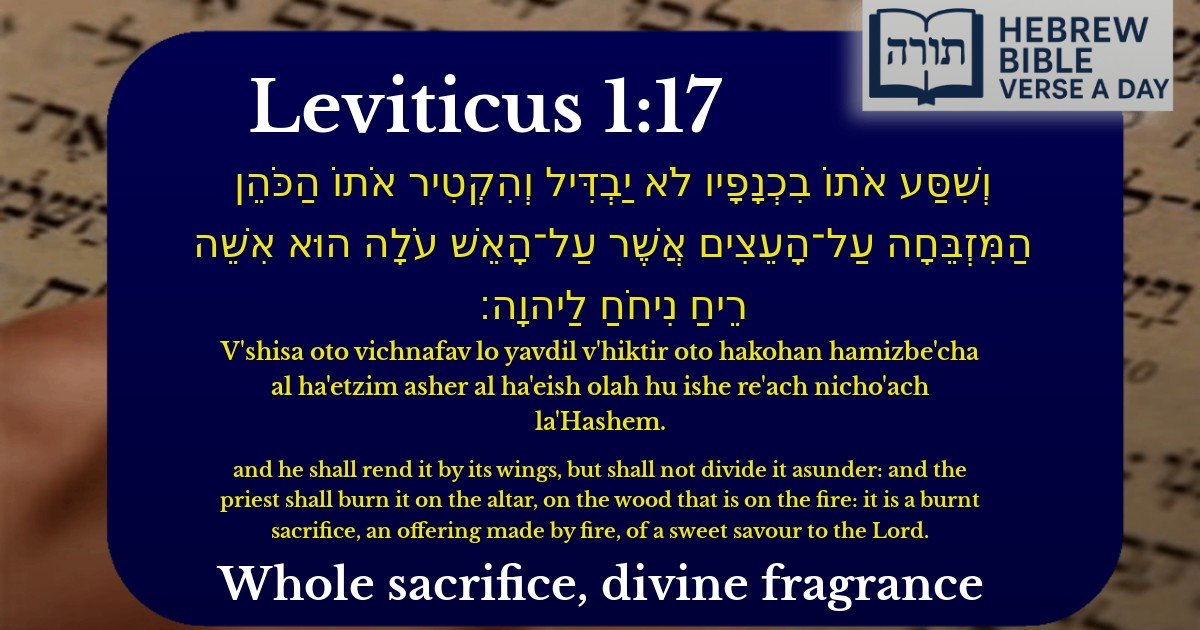
וְשִׁסַּע אֹתוֹ בִכְנָפָיו לֹא יַבְדִּיל וְהִקְטִיר אֹתוֹ הַכֹּהֵן הַמִּזְבֵּחָה עַל־הָעֵצִים אֲשֶׁר עַל־הָאֵשׁ עֹלָה הוּא אִשֵּׁה רֵיחַ נִיחֹחַ לַיהוָה׃
English Translation
and he shall rend it by its wings, but shall not divide it asunder: and the priest shall burn it on the altar, on the wood that is on the fire: it is a burnt sacrifice, an offering made by fire, of a sweet savour to the Lord.
Transliteration
V'shisa oto vichnafav lo yavdil v'hiktir oto hakohan hamizbe'cha al ha'etzim asher al ha'eish olah hu ishe re'ach nicho'ach la'Hashem.
Hebrew Leining Text
וְשִׁסַּ֨ע אֹת֣וֹ בִכְנָפָיו֮ לֹ֣א יַבְדִּיל֒ וְהִקְטִ֨יר אֹת֤וֹ הַכֹּהֵן֙ הַמִּזְבֵּ֔חָה עַל־הָעֵצִ֖ים אֲשֶׁ֣ר עַל־הָאֵ֑שׁ עֹלָ֣ה ה֗וּא אִשֵּׁ֛ה רֵ֥יחַ נִיחֹ֖חַ לַיהֹוָֽה׃ {ס}
🎵 Listen to leining
Parasha Commentary
📚 Talmud Citations
This verse is quoted in the Talmud.
📖 Zevachim 65a
The verse is discussed in the context of the laws regarding the proper way to sacrifice a bird as an offering, specifically focusing on the requirement to rend the bird by its wings without dividing it completely.
📖 Menachot 27a
The verse is referenced in a discussion about the different types of offerings and their requirements, emphasizing the procedure for burning the offering on the altar.
Explanation of the Verse (Vayikra 1:17)
The verse describes the procedure for offering a bird as an olah (burnt offering) on the altar. The Torah specifies that the kohen must rend the bird by its wings but not completely divide it, and then burn it entirely on the altar as a pleasing aroma to Hashem.
Rashi's Commentary
Rashi (Vayikra 1:17) explains that the phrase "וְשִׁסַּע אֹתוֹ בִכְנָפָיו" ("and he shall rend it by its wings") means the kohen tears the bird along the length of its body, starting from the wings, but does not separate it into two parts. This is derived from the words "לֹא יַבְדִּיל" ("he shall not divide it asunder"), meaning the bird remains intact despite the tearing.
Rambam's Explanation
In Hilchos Maaseh HaKorbanos (6:19), the Rambam codifies this halacha, stating that the kohen must tear the bird's body open along its back but not sever it completely. This ensures the bird remains a single unit when placed on the altar, fulfilling the requirement of a complete offering.
Symbolism and Midrashic Insights
Halachic Implications
The Gemara (Zevachim 65a) discusses the precise method of tearing, emphasizing that the bird must not be fully split. This ensures the offering retains its status as an olah, which must be entirely consumed by the fire on the altar.
Spiritual Message
The phrase "אִשֵּׁה רֵיחַ נִיחֹחַ לַיהוָה" ("a sweet savour to the Lord") teaches that the essence of the korban is not the physical act but the devotion behind it. The Sefer HaChinuch (Mitzvah 119) explains that the aroma symbolizes the elevation of one’s intentions, turning a physical act into a spiritual offering.