
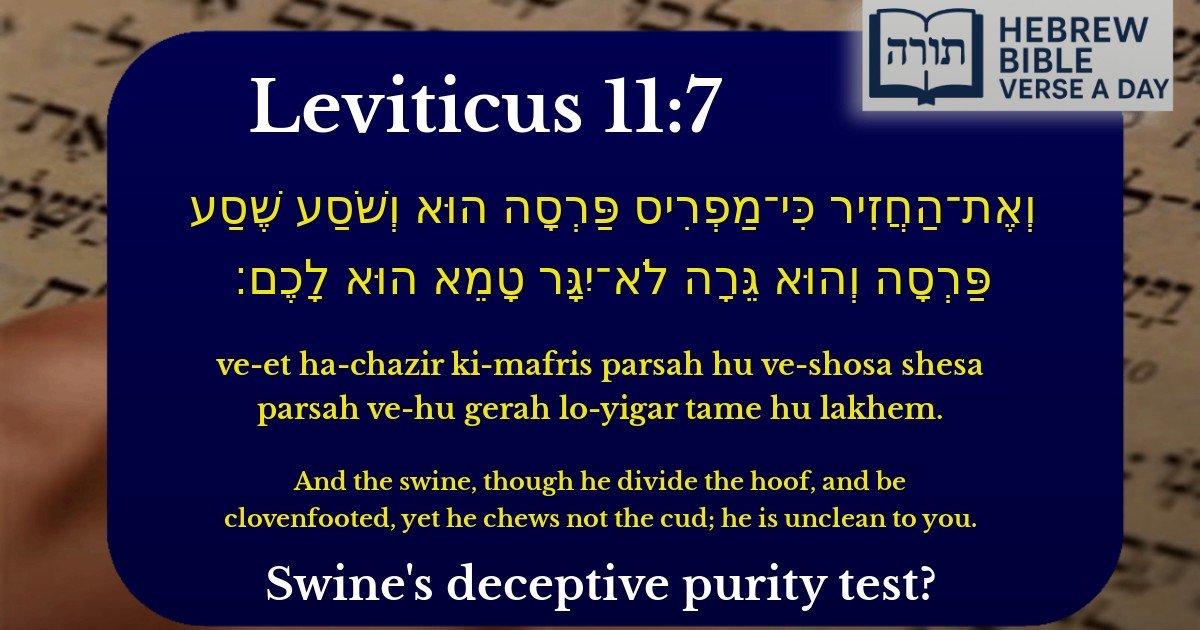

Leviticus 11:7 - Swine's deceptive purity test?

Leviticus 11:7 - ויקרא 11:7

Hebrew Text

וְאֶת־הַחֲזִיר כִּי־מַפְרִיס פַּרְסָה הוּא וְשֹׁסַע שֶׁסַע פַּרְסָה וְהוּא גֵּרָה לֹא־יִגָּר טָמֵא הוּא לָכֶם׃

English Translation

And the swine, though he divide the hoof, and be clovenfooted, yet he chews not the cud; he is unclean to you.

Transliteration

Ve-et ha-chazir ki-mafris parsah hu ve-shosa shesa parsah ve-hu gerah lo-yigar tame hu lakhem.

Hebrew Leining Text

וְאֶת־הַ֠חֲזִ֠יר כִּֽי־מַפְרִ֨יס פַּרְסָ֜ה ה֗וּא וְשֹׁסַ֥ע שֶׁ֙סַע֙ פַּרְסָ֔ה וְה֖וּא גֵּרָ֣ה לֹֽא־יִגָּ֑ר טָמֵ֥א ה֖וּא לָכֶֽם׃

🎵 Listen to leining

Parasha Commentary

Understanding the Prohibition of the Swine

The verse (Vayikra 11:7) describes the swine as an unclean animal due to its possession of one kosher sign (split hooves) while lacking the other (chewing the cud). This disqualifies it from being consumed according to the laws of kashrut.

Rashi's Explanation

Rashi comments that the swine's outward appearance of having split hooves gives the illusion of being kosher, yet it does not chew its cud internally. This teaches that the swine symbolizes deception—appearing righteous externally while lacking true internal refinement. This aligns with the Talmud's teaching (Chullin 59a) that the swine "pushes its hooves forward" as if to display its kosher sign, while its true nature remains non-kosher.

Symbolism in Jewish Thought

  • Midrashic Interpretation: The Midrash (Vayikra Rabbah 13:5) compares the swine to the wicked kingdom of Edom (Rome), which presents itself as just while oppressing Israel. This reflects the broader theme of distinguishing between external appearances and internal truth.
  • Moral Lesson: The Rambam (Hilchot Ma'achalot Asurot 1:2) emphasizes that the dietary laws train us in self-discipline and holiness. The swine, as an unclean animal, represents indulgence in base desires without spiritual refinement.

Halachic Implications

The Shulchan Aruch (Yoreh De'ah 79:1) rules that not only is the swine forbidden to eat, but even its fat, bones, and skin are prohibited unless properly processed to remove any traces of forbidden substances. This stricture highlights the severity of its impurity in Jewish law.

Kabbalistic Insight

The Zohar (Vayikra 48a) teaches that non-kosher animals, including the swine, derive from the sitra achra (the "other side" of impurity). Consuming them introduces spiritual impurity into the soul, distancing a person from kedushah (holiness).

📚 Talmud Citations

This verse is quoted in the Talmud.

📖 Chullin 59a
The verse is discussed in the context of the laws of kosher animals, specifically regarding the characteristics that make an animal unclean.
📖 Niddah 51b
The verse is referenced in a discussion about the signs of clean and unclean animals.

Frequently Asked Questions

Q: Why is the pig considered unclean in Leviticus 11:7?
A: According to Orthodox Jewish tradition, the pig is considered unclean because it has one sign of a kosher animal (split hooves) but lacks the other (chewing its cud). The Torah (Leviticus 11:7) explicitly states this disqualification. Rashi explains that the pig's outward appearance (split hooves) can be deceptive, teaching us to look beyond superficial traits.
Q: What lesson can we learn from the pig being unclean?
A: The Talmud (Chullin 59a) and Midrash teach that the pig symbolizes hypocrisy—it shows its split hooves (outwardly appearing kosher) but doesn't chew its cud (lacking the internal kosher sign). This teaches us the importance of integrity—our actions and inner values must align.
Q: Why does the Torah specify the pig's characteristics?
A: The Rambam (Hilchot Ma'achalot Asurot 1:2) explains that the Torah details the pig's traits to clearly distinguish between kosher and non-kosher animals. The pig's partial compliance (split hooves without chewing cud) makes it a unique example of a non-kosher animal that mimics kosher signs.
Q: How does the prohibition of eating pork apply today?
A: Orthodox Jews today strictly avoid pork, as the Torah's dietary laws (kashrut) are eternally binding. The Shulchan Aruch (Yoreh De'ah 79) codifies this prohibition, and it remains a fundamental aspect of Jewish observance, symbolizing spiritual discipline and separation from non-kosher influences.
Q: Are there any exceptions to the pork prohibition?
A: No—the Torah (Leviticus 11:7) and later halachic authorities like the Mishneh Torah (Rambam) and Shulchan Aruch state unequivocally that pork is always forbidden, even in small quantities or for medicinal purposes. This reflects the severity of the prohibition in Jewish law.