

Join Our Newsletter To Be Informed When New Videos Are Posted
Hebrew Text
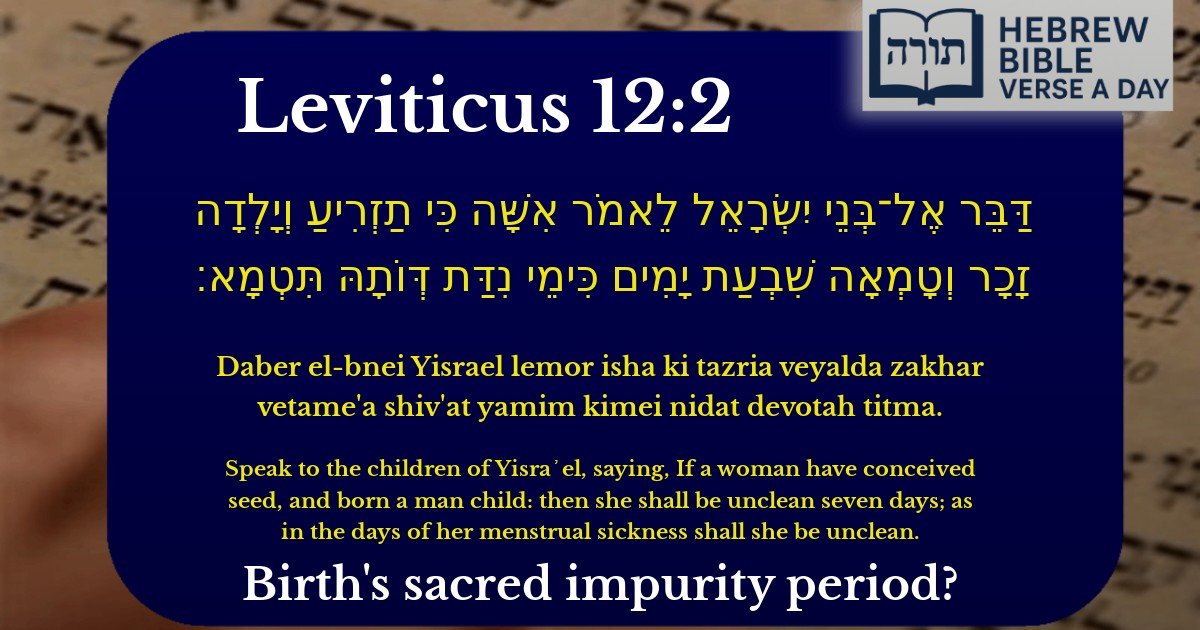
דַּבֵּר אֶל־בְּנֵי יִשְׂרָאֵל לֵאמֹר אִשָּׁה כִּי תַזְרִיעַ וְיָלְדָה זָכָר וְטָמְאָה שִׁבְעַת יָמִים כִּימֵי נִדַּת דְּוֺתָהּ תִּטְמָא׃
English Translation
Speak to the children of Yisra᾽el, saying, If a woman have conceived seed, and born a man child: then she shall be unclean seven days; as in the days of her menstrual sickness shall she be unclean.
Transliteration
Daber el-bnei Yisrael lemor isha ki tazria veyalda zakhar vetame'a shiv'at yamim kimei nidat devotah titma.
Hebrew Leining Text
דַּבֵּ֞ר אֶל־בְּנֵ֤י יִשְׂרָאֵל֙ לֵאמֹ֔ר אִשָּׁה֙ כִּ֣י תַזְרִ֔יעַ וְיָלְדָ֖ה זָכָ֑ר וְטָֽמְאָה֙ שִׁבְעַ֣ת יָמִ֔ים כִּימֵ֛י נִדַּ֥ת דְּוֺתָ֖הּ תִּטְמָֽא׃
🎵 Listen to leining
Parasha Commentary
📚 Talmud Citations
This verse is quoted in the Talmud.
📖 Niddah 24b
The verse is discussed in the context of the laws of ritual impurity following childbirth, particularly focusing on the duration of impurity and its comparison to menstrual impurity.
📖 Keritot 8a
The verse is referenced in a discussion about the offerings required after childbirth and the implications of the mother's impurity.
Overview of the Verse
The verse (Vayikra 12:2) introduces the laws of tumah (ritual impurity) and taharah (ritual purity) pertaining to a woman after childbirth. The Torah states that a woman who gives birth to a male child is in a state of tumah for seven days, similar to the impurity of niddah (menstruation). This begins a larger discussion in the parashah about the purification process, including the bringing of sacrifices after the prescribed days of impurity.
Rashi's Explanation
Rashi (Vayikra 12:2) explains that the phrase "כִּי תַזְרִיעַ" ("if she conceives seed") is not merely stating the obvious (that childbirth follows conception), but rather teaches that the laws of impurity apply even in cases of miscarriage where the fetus has recognizable human form. This is derived from the word "תַזְרִיעַ", which implies any form of conception leading to birth or loss of pregnancy.
Rambam's Perspective
In Hilchot Mechusarei Kaparah (1:1), the Rambam explains that the impurity of childbirth is distinct from other forms of tumah because it is not a result of sin or physical defect, but rather a natural process. The Torah mandates this period of impurity to allow the mother time for physical and spiritual recovery before reentering the realm of sanctity.
Talmudic and Midrashic Insights
Halachic Implications
According to Shulchan Aruch (Yoreh De'ah 194), the seven-day impurity for a male child is followed by a 33-day period of taharah (purity), during which certain restrictions apply. The mother must immerse in a mikveh after the initial seven days before resuming marital relations. The total purification process culminates with the bringing of a korban (sacrifice) in the Beit HaMikdash.
Spiritual Significance
The Kli Yakar (Vayikra 12:2) explains that the seven days of impurity correspond to the seven days of creation, symbolizing that childbirth is a microcosm of creation itself. Just as the world required Shabbat for completion, the mother requires a period of separation before returning to full spiritual engagement.