
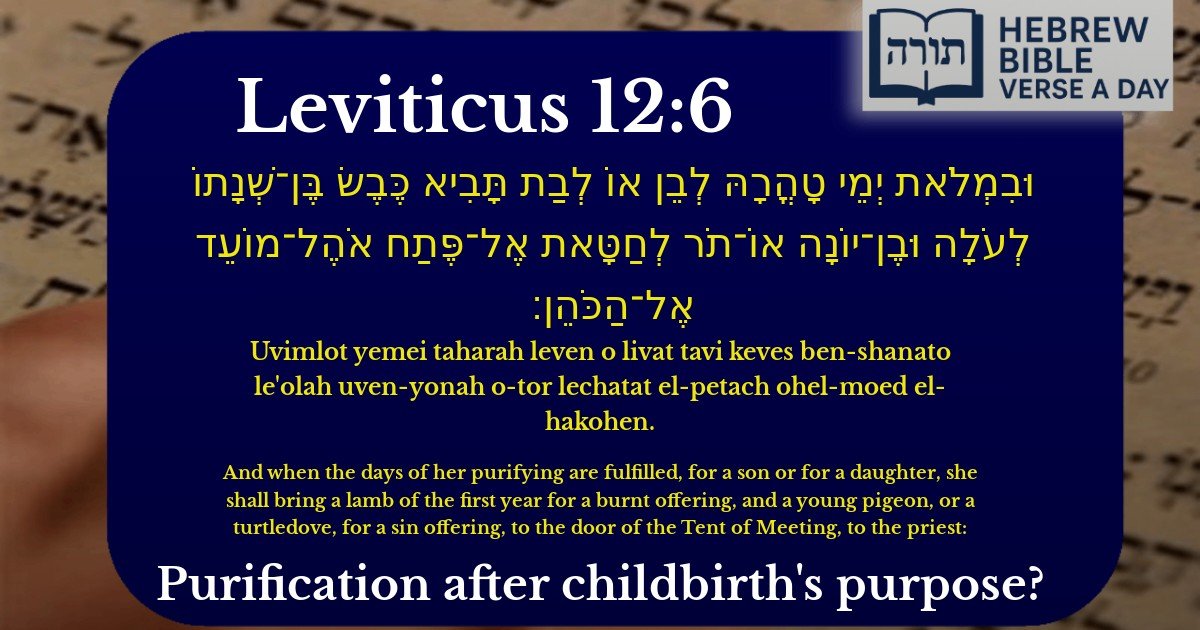

Leviticus 12:6 - Purification after childbirth's purpose?

Leviticus 12:6 - ויקרא 12:6

Hebrew Text

וּבִמְלֹאת יְמֵי טָהֳרָהּ לְבֵן אוֹ לְבַת תָּבִיא כֶּבֶשׂ בֶּן־שְׁנָתוֹ לְעֹלָה וּבֶן־יוֹנָה אוֹ־תֹר לְחַטָּאת אֶל־פֶּתַח אֹהֶל־מוֹעֵד אֶל־הַכֹּהֵן׃

English Translation

And when the days of her purifying are fulfilled, for a son or for a daughter, she shall bring a lamb of the first year for a burnt offering, and a young pigeon, or a turtledove, for a sin offering, to the door of the Tent of Meeting, to the priest:

Transliteration

Uvimlot yemei taharah leven o livat tavi keves ben-shanato le'olah uven-yonah o-tor lechatat el-petach ohel-moed el-hakohen.

Hebrew Leining Text

וּבִמְלֹ֣את ׀ יְמֵ֣י טׇהֳרָ֗הּ לְבֵן֮ א֣וֹ לְבַת֒ תָּבִ֞יא כֶּ֤בֶשׂ בֶּן־שְׁנָתוֹ֙ לְעֹלָ֔ה וּבֶן־יוֹנָ֥ה אוֹ־תֹ֖ר לְחַטָּ֑את אֶל־פֶּ֥תַח אֹֽהֶל־מוֹעֵ֖ד אֶל־הַכֹּהֵֽן׃

🎵 Listen to leining

Parasha Commentary

The Obligation of Korbanot After Childbirth

The verse (Vayikra 12:6) describes the requirement for a woman to bring korbanot (sacrifices) after the completion of her taharah (purification) period following childbirth. This mitzvah applies whether she gave birth to a son or daughter, though the duration of tum'ah (ritual impurity) differs between them (7 days for a son, 14 for a daughter, as stated in Vayikra 12:2-5).

The Korbanot: Olah and Chatat

The verse specifies two korbanot:

  • Olah (Burnt Offering): A one-year-old lamb, symbolizing complete dedication to Hashem (Rashi). The Olah is entirely consumed on the altar, representing the mother's renewed commitment to divine service after childbirth.
  • Chatat (Sin Offering): A young pigeon or turtledove, atoning for possible unintentional sins during childbirth (Rambam, Hilchot Mechusrei Kaparah 1:2). The Chatat acknowledges human imperfection and the need for spiritual purification.

Symbolism and Halachic Insights

The Midrash (Vayikra Rabbah 14:5) explains that the Chatat atones for the mother's possible oath during labor (e.g., vowing never to have children again due to pain). The Olah represents gratitude for surviving childbirth, which carries inherent danger (Talmud Niddah 31b).

The Role of the Kohen

The verse emphasizes bringing the korbanot "to the entrance of the Tent of Meeting, to the Kohen" - highlighting that only the Kohen may perform the sacrificial service. This teaches the importance of proper channels for divine service (Sforno).

Economic Considerations

The Torah later (Vayikra 12:8) allows a poor woman to bring two birds instead of a lamb, demonstrating Hashem's compassion for those of limited means (Chizkuni). This reflects the principle that spiritual obligations are proportionate to one's financial capacity.

📚 Talmud Citations

This verse is quoted in the Talmud.

📖 Keritot 8b
The verse is cited in a discussion about the sacrifices required after childbirth, specifically addressing the types of offerings to be brought.
📖 Niddah 31b
The verse is referenced in a broader discussion about the laws of purity and the obligations of a woman after childbirth.

Frequently Asked Questions

Q: What does Leviticus 12:6 mean?
A: Leviticus 12:6 describes the purification process for a woman after childbirth. After completing her days of purification (40 days for a son, 80 days for a daughter), she must bring two offerings to the Kohen (priest) at the entrance of the Tent of Meeting: a lamb as a burnt offering (olah) and a dove or pigeon as a sin offering (chatat). This teaches us about the importance of spiritual renewal after the physical process of childbirth.
Q: Why does a woman bring sacrifices after childbirth?
A: According to Jewish tradition (as explained in Rashi and the Talmud Niddah 31b), childbirth involves intense physical and spiritual transitions. The sacrifices serve to reconnect the mother with Hashem after this major life event. The sin offering atones not for any specific sin, but for possible distractedness from prayer during labor pains (as per Rambam). The burnt offering expresses gratitude for surviving childbirth.
Q: Why are there different purification periods for sons and daughters?
A: The Torah specifies different purification periods (40 days for a son, 80 days for a daughter). The Talmud (Niddah 31b) explains this difference based on the mother's body needing more time to recover after a female birth. Some commentaries suggest it relates to the different spiritual influences of male and female souls. However, the exact reason remains part of the Torah's divine wisdom.
Q: Do these laws about childbirth purity apply today?
A: While we no longer bring sacrifices without the Temple, the concept of taharah (purity) after childbirth remains important in Jewish law. Today, a woman observes niddah laws after childbirth and immerses in a mikveh when her purification period ends (based on Leviticus 12:4). Many also maintain the custom to recite special prayers (like the Shalom Zachar for boys) marking this transition.
Q: Why were doves/pigeons used for the sin offering?
A: The Torah permits either a dove or pigeon for the chatat (sin offering) because they were accessible even to poorer individuals (as noted in Rashi on Leviticus 5:7). This shows Hashem's compassion - even those who couldn't afford a lamb could fulfill their obligation. The Midrash (Vayikra Rabbah) also sees the dove's gentle nature as symbolic of the Jewish people's relationship with Hashem.