

Join Our Newsletter To Be Informed When New Videos Are Posted
Hebrew Text
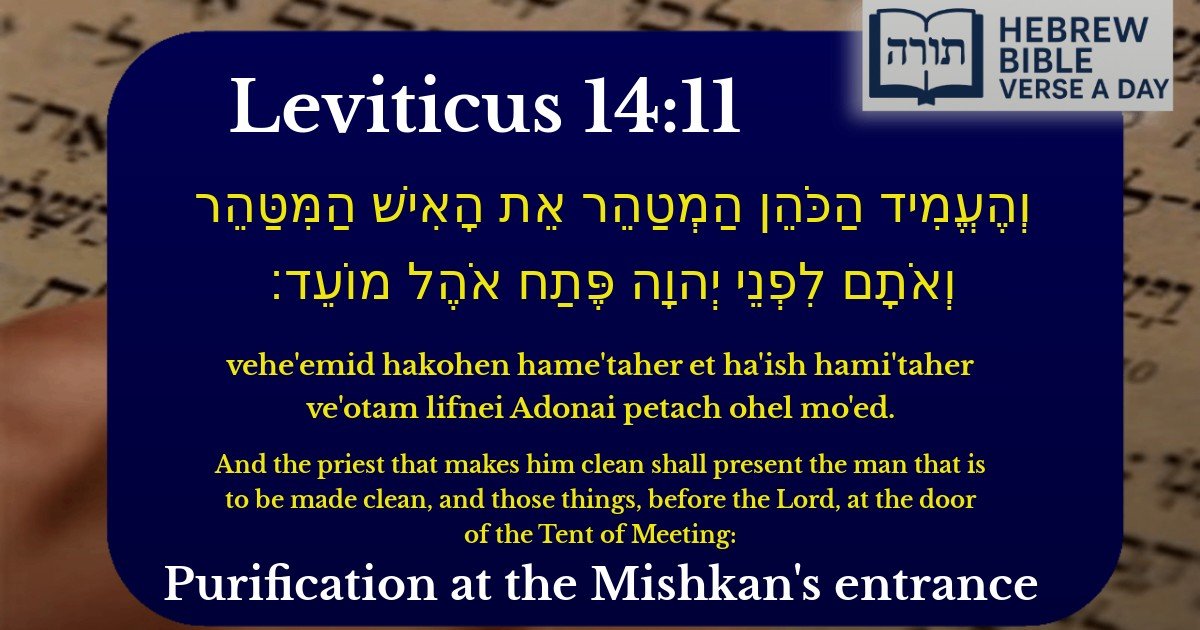
וְהֶעֱמִיד הַכֹּהֵן הַמְטַהֵר אֵת הָאִישׁ הַמִּטַּהֵר וְאֹתָם לִפְנֵי יְהוָה פֶּתַח אֹהֶל מוֹעֵד׃
English Translation
And the priest that makes him clean shall present the man that is to be made clean, and those things, before the Lord, at the door of the Tent of Meeting:
Transliteration
Vehe'emid hakohen hame'taher et ha'ish hami'taher ve'otam lifnei Adonai petach ohel mo'ed.
Hebrew Leining Text
וְהֶעֱמִ֞יד הַכֹּהֵ֣ן הַֽמְטַהֵ֗ר אֵ֛ת הָאִ֥ישׁ הַמִּטַּהֵ֖ר וְאֹתָ֑ם לִפְנֵ֣י יְהֹוָ֔ה פֶּ֖תַח אֹ֥הֶל מוֹעֵֽד׃
🎵 Listen to leining
Parasha Commentary
📚 Talmud Citations
This verse is quoted in the Talmud.
📖 Nega'im 14b
The verse is discussed in the context of the purification process for a metzora (leper), particularly regarding the presentation before the priest at the entrance of the Tent of Meeting.
📖 Sotah 15a
Referenced in a discussion about the procedures for purification and the role of the priest in the process.
Context in the Torah
This verse (Vayikra 14:11) appears in the section detailing the purification process for a metzora (one afflicted with tzara'at, often translated as leprosy). The purification involves a series of rituals performed by the kohen (priest) at the entrance of the Ohel Moed (Tent of Meeting).
Rashi's Commentary
Rashi explains that the phrase "וְאֹתָם" ("and those things") refers to the three items mentioned earlier in the passage: the two live clean birds, the cedar wood, the scarlet thread, and the hyssop (Vayikra 14:4). The kohen presents both the person undergoing purification and these items before Hashem at the entrance of the Ohel Moed as part of the atonement process.
Symbolism of the Location
The Mishkan (Tabernacle) represents the dwelling place of the Divine Presence. Bringing the metzora to the entrance signifies reintegration into the community and spiritual renewal. The Sforno notes that this act demonstrates the individual's renewed commitment to holiness after being separated due to tzara'at, which our Sages associate with sins such as lashon hara (evil speech).
The Role of the Kohen
Midrashic Insight
The Midrash Tanchuma connects this verse to the broader theme of repentance. Just as the metzora is brought to the entrance of the Ohel Moed, a sinner must "approach" Hashem through sincere teshuvah (repentance). The public nature of the ritual underscores that spiritual recovery often requires communal support.