Frequently Asked Questions
Q: What does Leviticus 14:18 mean in the purification process?
A: Leviticus 14:18 describes part of the purification process for someone who had tzara'at (often mistranslated as leprosy). The kohen (priest) would place some of the remaining oil on the person's head as part of their atonement before Hashem. According to Rashi, this symbolizes the person's complete return to purity and their renewed connection with the community and Hashem.
Q: Why is oil used in the purification process in Leviticus 14:18?
A: Oil symbolizes richness, healing, and dedication in Jewish tradition. The Rambam explains that using oil in the purification process represents the person being anointed and restored to their former status. Just as oil was used to anoint kings and priests, here it signifies the person's renewed spiritual wholeness.
Q: What can we learn from the purification ritual in Leviticus 14:18 today?
A: Although we no longer have the Temple service today, we learn from this verse the importance of spiritual cleansing and repentance. The Talmud (Arachin 16a) teaches that tzara'at came as a consequence of negative speech (lashon hara), reminding us to be mindful of our words and to seek atonement through sincere teshuvah (repentance).
Q: Why does the priest perform the atonement in Leviticus 14:18?
A: The kohen acts as an intermediary between the person and Hashem during the purification process. As Rashi explains, the kohen's role is essential because he represents the spiritual authority and connection to the Divine service in the Mishkan (Tabernacle) or Temple. His actions help facilitate the person's return to purity.
Q: How does the placement of oil on the head in Leviticus 14:18 relate to atonement?
A: The Midrash (Vayikra Rabbah 16:9) teaches that placing oil on the head symbolizes the person's thoughts and actions being purified. Since the head represents leadership and decision-making, the oil signifies a renewal of proper intentions and alignment with Hashem's will, which is central to the atonement process.

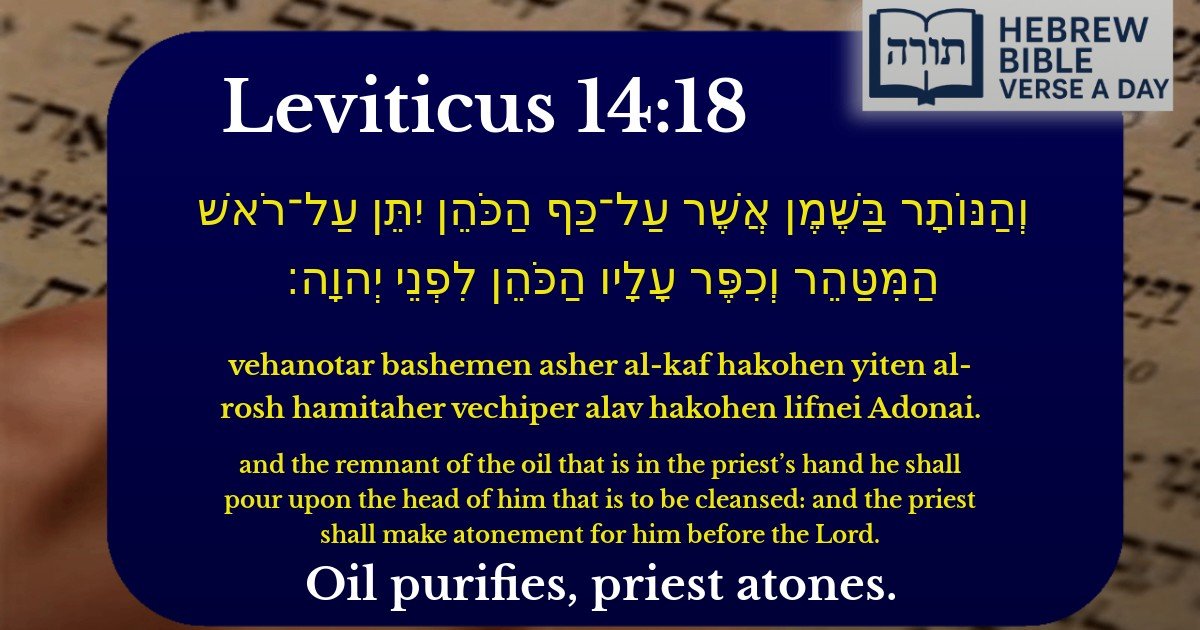

Context of the Verse
This verse (Vayikra 14:18) is part of the Torah's detailed instructions regarding the purification process of a metzora (one afflicted with tzara'at, often mistranslated as leprosy). The purification involves a series of rituals performed by the Kohen, including the application of oil to the metzora's head.
Explanation of the Ritual
Rashi explains that the oil symbolizes divine blessing and abundance. The act of pouring the remaining oil on the metzora's head signifies the restoration of their spiritual and physical well-being after their period of impurity. The Rambam (Hilchot Tumat Tzara'at 11:1) emphasizes that this ritual is a crucial step in the atonement process, demonstrating that the individual has been cleansed and is ready to rejoin the community.
Symbolism of the Oil
The Role of the Kohen
The verse states that the Kohen "shall make atonement for him before the Lord." The Kli Yakar explains that the Kohen acts as an intermediary, facilitating the metzora's return to a state of purity. The Talmud (Arachin 16a) teaches that tzara'at often results from sins such as lashon hara (evil speech), and the Kohen's role is to guide the individual toward repentance.
Spiritual Lessons
The Ritva (commentary on Arachin) highlights that the oil's placement on the head—the seat of intellect—teaches that true atonement requires introspection and a commitment to ethical improvement. The process underscores the Torah's emphasis on both physical and spiritual restoration.