Frequently Asked Questions
Q: Why does the priest pour oil into his left hand in Leviticus 14:26?
A: According to Rashi and the Talmud (Menachot 11a), the priest uses his left hand for this action because the main service in the Temple (like sprinkling the oil) is done with the right hand. Pouring the oil into the left hand is a preparatory step, not the main service, so it doesn't require the right hand.
Q: What is the significance of the oil in Leviticus 14:26?
A: The oil mentioned here is part of the purification process for someone recovering from tzara'at (a spiritual skin affliction). The Rambam explains in Hilchot Tumat Tzara'at that the oil symbolizes renewal and purity, as oil was also used to anoint kings and priests, representing a fresh start.
Q: Why is this verse about the purification process important?
A: This verse teaches us about the detailed care Judaism takes in spiritual purity. The Midrash (Vayikra Rabbah 16) explains that every step in the purification process—including how the priest handles the oil—has deep meaning, showing how physical actions can reflect spiritual realities.
Q: How does Leviticus 14:26 apply to us today without the Temple?
A: While we no longer have the Temple service, the Talmud (Sotah 15a) teaches that studying these laws keeps their memory alive. The principle of careful attention to mitzvot (commandments) and spiritual growth, symbolized by the oil, remains relevant in daily Jewish practice.
Q: What can we learn from the priest using his left hand for this action?
A: The Mishnah (Zevachim 2:1) and commentaries explain that this teaches the importance of proper procedure in holy matters. Even secondary actions (like using the left hand) must be done correctly to honor the mitzvah. It reminds us to be mindful in all aspects of our service to Hashem.

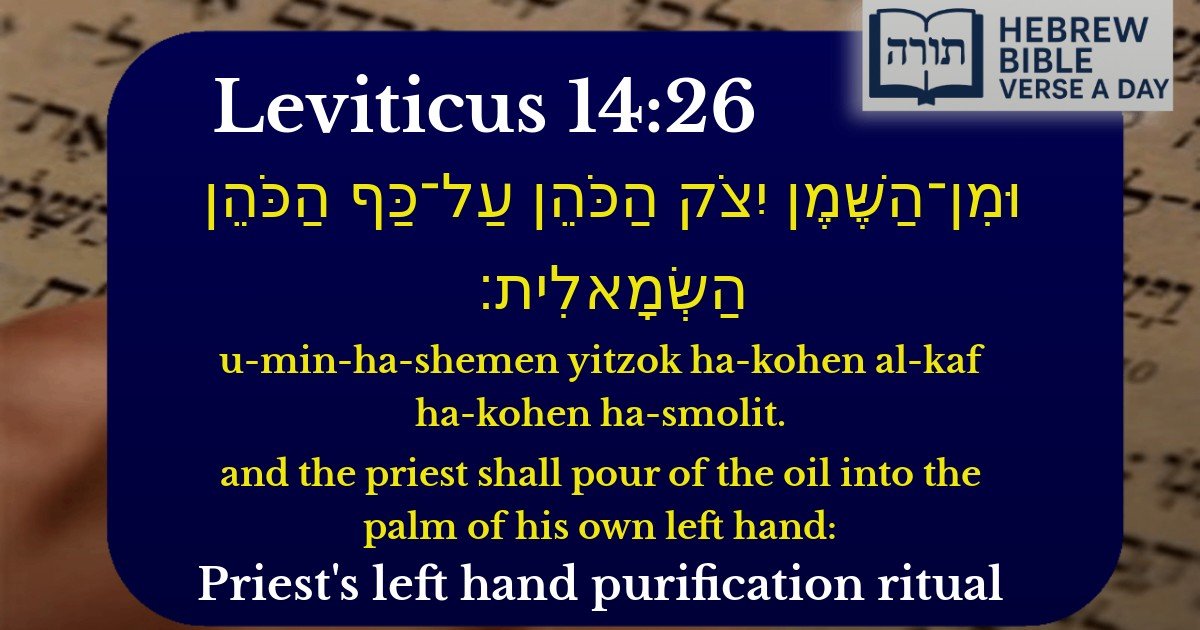

Explanation of the Verse
The verse (Vayikra 14:26) describes part of the purification process for a metzora (a person afflicted with tzara'at, often translated as leprosy). Here, the kohen (priest) pours oil into the palm of his left hand as part of the ritual. This act is significant in the context of the metzora's atonement and purification.
Rashi's Commentary
Rashi (Vayikra 14:26) explains that the oil is poured into the kohen's left hand because the right hand is reserved for more sacred actions, such as sprinkling the oil before Hashem. The left hand serves as a preparatory vessel, emphasizing the hierarchical sanctity of the priestly duties. This distinction between right and left is a recurring theme in halachah, where the right side is often given precedence in matters of kedushah (holiness).
Rambam's Perspective
In Hilchot Tumat Tzara'at (10:6), the Rambam codifies this procedure, noting that the oil must be poured specifically into the kohen's own left hand, not the hand of another person. This underscores the personal responsibility of the kohen in performing the mitzvah and ensures the proper execution of the ritual.
Symbolism of the Oil
The Midrash (Vayikra Rabbah 17:6) connects the use of oil to the concept of atonement and renewal. Oil, which rises above other liquids, symbolizes the elevation of the metzora from a state of impurity to purity. The act of pouring into the left hand may also allude to the idea of teshuvah (repentance), as the left side often represents gevurah (strength or restraint), suggesting the need for self-control and correction of one's ways.
Halachic Implications