

Join Our Newsletter To Be Informed When New Videos Are Posted
Hebrew Text
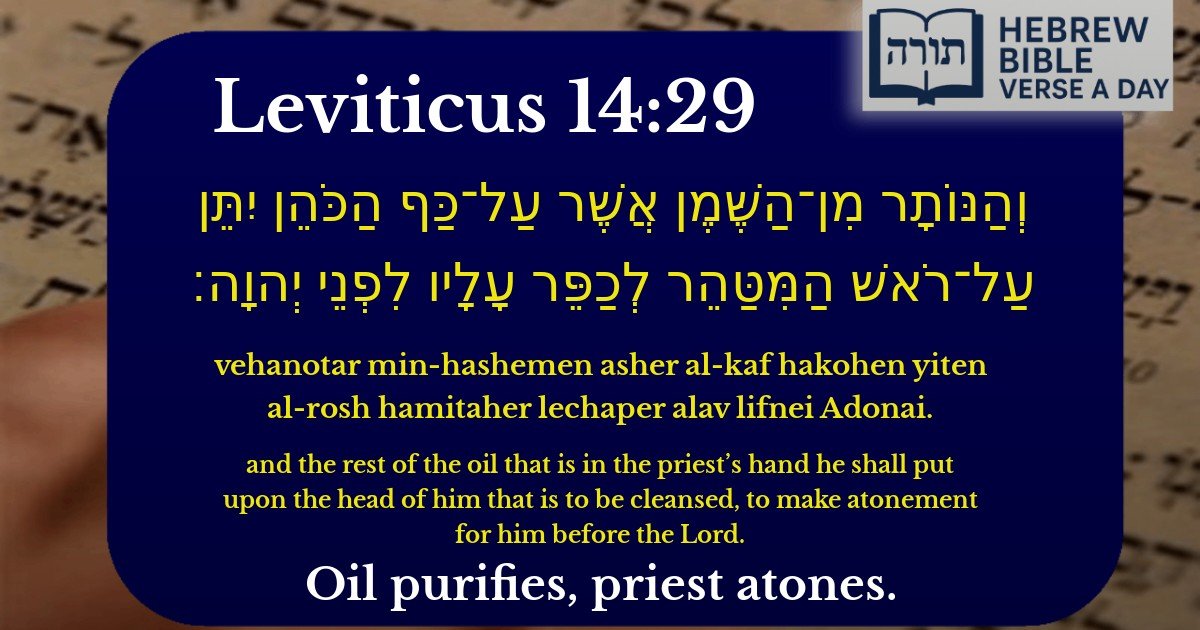
וְהַנּוֹתָר מִן־הַשֶּׁמֶן אֲשֶׁר עַל־כַּף הַכֹּהֵן יִתֵּן עַל־רֹאשׁ הַמִּטַּהֵר לְכַפֵּר עָלָיו לִפְנֵי יְהוָה׃
English Translation
and the rest of the oil that is in the priest’s hand he shall put upon the head of him that is to be cleansed, to make atonement for him before the Lord.
Transliteration
Vehanotar min-hashemen asher al-kaf hakohen yiten al-rosh hamitaher lechaper alav lifnei Adonai.
Hebrew Leining Text
וְהַנּוֹתָ֗ר מִן־הַשֶּׁ֙מֶן֙ אֲשֶׁר֙ עַל־כַּ֣ף הַכֹּהֵ֔ן יִתֵּ֖ן עַל־רֹ֣אשׁ הַמִּטַּהֵ֑ר לְכַפֵּ֥ר עָלָ֖יו לִפְנֵ֥י יְהֹוָֽה׃
🎵 Listen to leining
Parasha Commentary
📚 Talmud Citations
This verse is quoted in the Talmud.
📖 Keritot 5a
The verse is referenced in a discussion about the atonement process and the role of the priest in the purification ritual.
📖 Sotah 15b
The verse is cited in a broader discussion about the laws of purification and the significance of the oil in the ritual.
Context of the Verse
This verse (Vayikra 14:29) appears in the Torah portion discussing the purification process of a metzora (one afflicted with tzara'at, often translated as leprosy). The verse describes the final step of the purification ritual, where the Kohen applies the remaining oil from his hand onto the head of the individual being cleansed, as an act of atonement before Hashem.
Rashi's Explanation
Rashi (Vayikra 14:29) explains that the placement of the oil on the head of the metzora serves as a form of kaparah (atonement). He emphasizes that this act parallels the anointment of kings and Kohanim, symbolizing the restored spiritual status of the individual. The oil represents divine favor, and its application signifies the person's reintegration into the community after their period of isolation.
Rambam’s Perspective
In Hilchot Tumat Tzara’at (10:6), the Rambam (Maimonides) elaborates on the purification process, noting that the oil serves as a physical representation of spiritual renewal. The act of placing the oil on the head is a public declaration that the individual has repented from the sins (such as lashon hara, evil speech) that may have led to their affliction.
Midrashic Insights
Symbolism of the Oil
Oil (shemen) in Jewish tradition often symbolizes wisdom, purity, and divine blessing (see Talmud, Menachot 85b). Its use here underscores that the atonement process is not merely physical but also spiritual, restoring the individual’s connection to Hashem.
Practical Halachic Implications
The Mishnah (Negaim 14:9) details the precise manner in which the Kohen applies the oil, ensuring it is done with intention (kavanah) for the sake of the mitzvah. This highlights the importance of proper ritual execution in achieving atonement.