
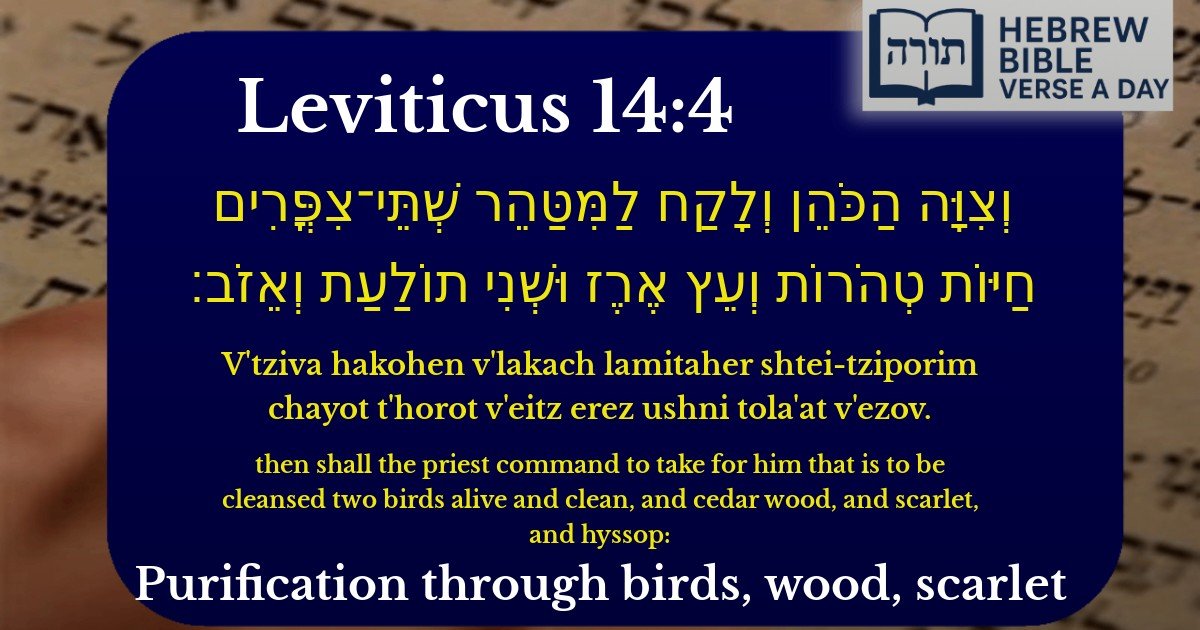

Leviticus 14:4 - Purification through birds, wood, scarlet

Leviticus 14:4 - ויקרא 14:4

Hebrew Text

וְצִוָּה הַכֹּהֵן וְלָקַח לַמִּטַּהֵר שְׁתֵּי־צִפֳּרִים חַיּוֹת טְהֹרוֹת וְעֵץ אֶרֶז וּשְׁנִי תוֹלַעַת וְאֵזֹב׃

English Translation

then shall the priest command to take for him that is to be cleansed two birds alive and clean, and cedar wood, and scarlet, and hyssop:

Transliteration

V'tziva hakohen v'lakach lamitaher shtei-tziporim chayot t'horot v'eitz erez ushni tola'at v'ezov.

Hebrew Leining Text

וְצִוָּה֙ הַכֹּהֵ֔ן וְלָקַ֧ח לַמִּטַּהֵ֛ר שְׁתֵּֽי־צִפֳּרִ֥ים חַיּ֖וֹת טְהֹר֑וֹת וְעֵ֣ץ אֶ֔רֶז וּשְׁנִ֥י תוֹלַ֖עַת וְאֵזֹֽב׃

🎵 Listen to leining

Parasha Commentary

Overview of the Verse

The verse (Vayikra 14:4) describes the purification process for a metzora (one afflicted with tzara'at, often translated as leprosy). The Kohen commands the use of two live, clean birds, cedar wood, scarlet wool (shani tola'at), and hyssop (ezov) as part of the purification ritual. This procedure is rich with symbolic meaning, as explained by classical Jewish commentators.

Symbolism of the Components

  • Two Birds: Rashi (Vayikra 14:4) explains that birds are chosen because their chattering represents the idle speech (lashon hara) that often leads to tzara'at. The two birds—one slaughtered and one set free—symbolize the sinner's transition from impurity to purity.
  • Cedar Wood: The cedar, a tall and proud tree, represents arrogance, which the Sages (Talmud Arachin 16a) associate with the sin of lashon hara. The afflicted person must humble themselves, as symbolized by the lowly hyssop.
  • Scarlet Wool (Shani Tola'at): The Midrash (Vayikra Rabbah 16:4) connects the scarlet color to sin ("though your sins be as scarlet, they shall be as white as snow"—Yeshayahu 1:18), emphasizing repentance and purification.
  • Hyssop (Ezov): The humble hyssop contrasts with the cedar, teaching that humility is essential for atonement (Rambam, Hilchot Tumat Tzara'at 16:10).

The Purification Process

The slaughtered bird represents the eradication of sin, while the released bird signifies the sinner's renewed freedom after repentance (Chizkuni, Vayikra 14:7). The cedar, scarlet, and hyssop are tied together and dipped in the blood of the slaughtered bird, then sprinkled on the metzora—a symbolic cleansing (Talmud Yoma 67a).

Moral Lessons

The Sages (Midrash Tanchuma, Metzora 3) teach that this ritual underscores the need for humility and self-reflection. Just as the metzora must undergo a physical purification, one who speaks lashon hara must rectify their behavior through sincere repentance and ethical refinement.

📚 Talmud Citations

This verse is quoted in the Talmud.

📖 Nega'im 14a
The verse is discussed in the context of the purification process for a metzora (leper), detailing the requirements for the offerings and materials used in the ritual.
📖 Moed Katan 7b
The verse is referenced in a discussion about the types of birds that can be used for purification, emphasizing the requirement for them to be 'alive and clean.'

Frequently Asked Questions

Q: Why does the Torah require two birds for purification from tzara'at (skin affliction)?
A: According to Rashi (Leviticus 14:4), the two birds symbolize the chattering and idle speech that often leads to tzara'at (as taught in the Talmud, Arachin 16b). One bird is slaughtered, representing the cessation of sinful speech, while the other is set free, symbolizing the person's renewed commitment to proper speech.
Q: What is the significance of the cedar wood, scarlet thread, and hyssop in this purification process?
A: The Midrash (Vayikra Rabbah 16:6) explains that these items represent humility. The tall cedar symbolizes haughtiness (often associated with the sin of lashon hara), while the lowly hyssop represents humility. The scarlet thread, which is dyed red, reminds us that sin stains like red dye, but through repentance, we can become pure again.
Q: Why are the birds specified to be 'alive and clean' (חַיּוֹת טְהֹרוֹת)?
A: The Rambam (Hilchot Tumat Tzara'at 11:1) explains that the birds must be alive to symbolize renewal and purity. They must also be from kosher species (טְהֹרוֹת) to teach that purification comes through elevating oneself to higher spiritual standards, just as kosher animals represent higher levels of purity in Jewish law.
Q: How does this purification process apply to us today when we don't have the Temple?
A: The Talmud (Berachot 5a) teaches that while we no longer have the Temple service, the lessons remain relevant. The process reminds us to guard our speech (avoiding lashon hara), practice humility (symbolized by the hyssop), and seek atonement through prayer and repentance, which replace the sacrifices in our time.
Q: What does this verse teach us about the role of the Kohen (priest) in purification?
A: Rashi (Leviticus 14:3) emphasizes that the Kohen plays an essential role in determining purity and guiding the purification process. This teaches us the importance of seeking guidance from Torah scholars (who are the spiritual successors to the Kohanim) when working on personal growth and repentance.