

Join Our Newsletter To Be Informed When New Videos Are Posted
Hebrew Text
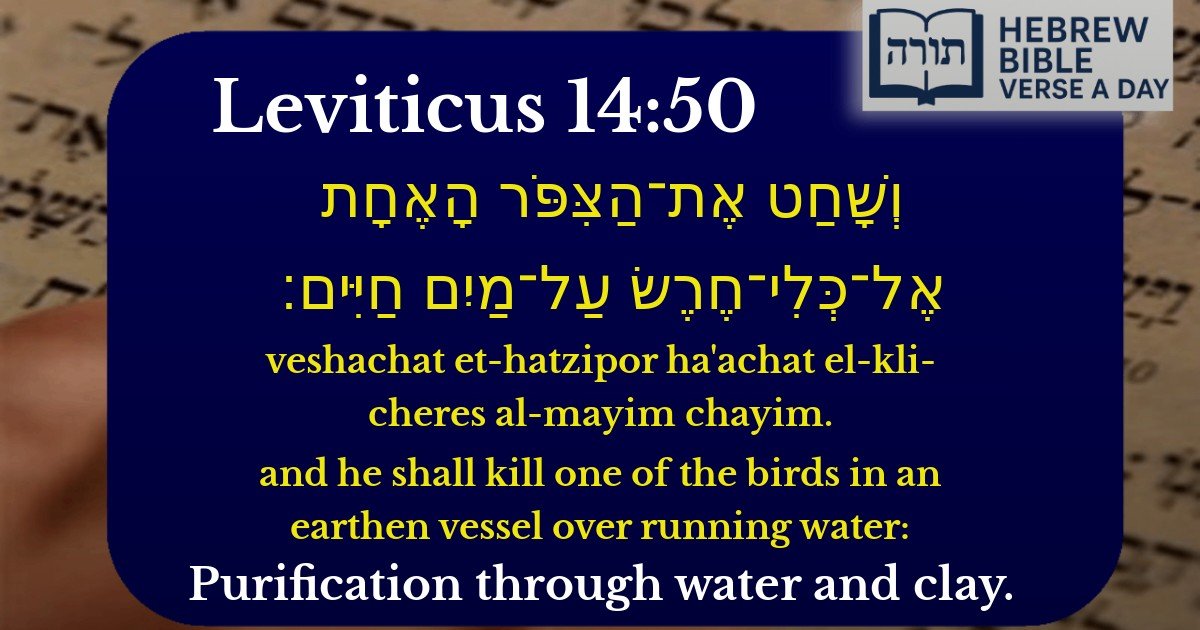
וְשָׁחַט אֶת־הַצִּפֹּר הָאֶחָת אֶל־כְּלִי־חֶרֶשׂ עַל־מַיִם חַיִּים׃
English Translation
and he shall kill one of the birds in an earthen vessel over running water:
Transliteration
Veshachat et-hatzipor ha'achat el-kli-cheres al-mayim chayim.
Hebrew Leining Text
וְשָׁחַ֖ט אֶת־הַצִּפֹּ֣ר הָאֶחָ֑ת אֶל־כְּלִי־חֶ֖רֶשׂ עַל־מַ֥יִם חַיִּֽים׃
🎵 Listen to leining
Parasha Commentary
📚 Talmud Citations
This verse is quoted in the Talmud.
📖 Chullin 28a
The verse is discussed in the context of the laws of slaughtering birds for purification rituals, particularly focusing on the method and vessel used for slaughter.
📖 Niddah 71a
The verse is referenced in a discussion about the requirements for purification, emphasizing the use of running water and the specific type of vessel mentioned in the verse.
Context of the Verse
The verse (Vayikra 14:5) describes part of the purification process for a metzora (one afflicted with tzara'at, often translated as leprosy). The ritual involves two birds, cedar wood, scarlet thread, and hyssop. One bird is slaughtered over an earthen vessel containing "living water" (mayim chayim), while the other is set free.
Symbolism of the Earthen Vessel (Kli Cheres)
Rashi (Vayikra 14:5) explains that an earthen vessel is used because it is inexpensive and can be broken afterward, ensuring no secondary use of a vessel that has absorbed impurity. The Ramban adds that earthenware, being fragile, symbolizes humility—a necessary trait for repentance, as tzara'at is often associated with sins like lashon hara (evil speech).
Significance of "Living Water" (Mayim Chayim)
The Talmud (Chullin 27b) defines "living water" as water from a natural, flowing source (e.g., a spring or river). The Midrash (Vayikra Rabbah 16:4) connects this to spiritual renewal, as flowing water represents constant movement and the opportunity for teshuvah (repentance). The Metzora, who was isolated due to impurity, is thus reintegrated through a process symbolizing rebirth.
The Slaughter of the Bird
Practical Halachic Insights
The Mishnah (Negaim 14:1) details the technical requirements for the slaughter, emphasizing that the blood of the bird must mix with the "living water" in the earthen vessel. The Shulchan Aruch (Yoreh De'ah 206:1) later codifies these laws, noting that the vessel must be new to avoid any prior contamination.