

Join Our Newsletter To Be Informed When New Videos Are Posted
Hebrew Text
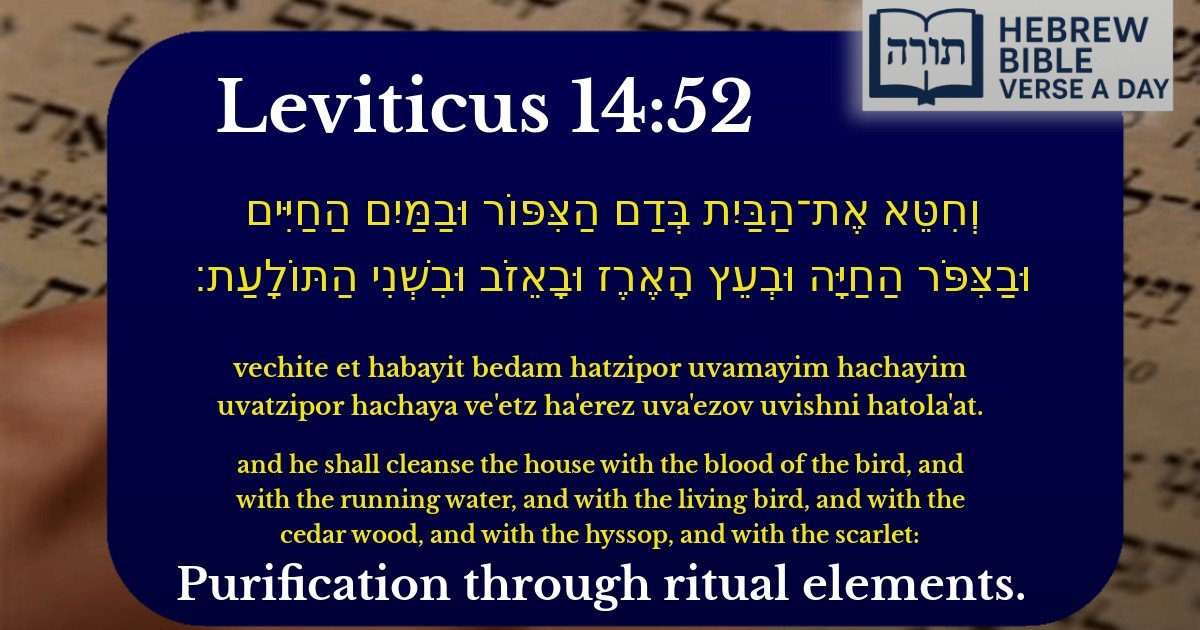
וְחִטֵּא אֶת־הַבַּיִת בְּדַם הַצִּפּוֹר וּבַמַּיִם הַחַיִּים וּבַצִּפֹּר הַחַיָּה וּבְעֵץ הָאֶרֶז וּבָאֵזֹב וּבִשְׁנִי הַתּוֹלָעַת׃
English Translation
and he shall cleanse the house with the blood of the bird, and with the running water, and with the living bird, and with the cedar wood, and with the hyssop, and with the scarlet:
Transliteration
Vechite et habayit bedam hatzipor uvamayim hachayim uvatzipor hachaya ve'etz ha'erez uva'ezov uvishni hatola'at.
Hebrew Leining Text
וְחִטֵּ֣א אֶת־הַבַּ֔יִת בְּדַם֙ הַצִּפּ֔וֹר וּבַמַּ֖יִם הַֽחַיִּ֑ים וּבַצִּפֹּ֣ר הַחַיָּ֗ה וּבְעֵ֥ץ הָאֶ֛רֶז וּבָאֵזֹ֖ב וּבִשְׁנִ֥י הַתּוֹלָֽעַת׃
🎵 Listen to leining
Parasha Commentary
📚 Talmud Citations
This verse is quoted in the Talmud.
📖 Negaim 14a
The verse is discussed in the context of the purification process for a house afflicted with leprosy, detailing the use of the bird, cedar wood, hyssop, and scarlet wool as part of the ritual.
📖 Moed Katan 28a
Referenced in a discussion about the timing and procedures for purification rituals, emphasizing the symbolic elements mentioned in the verse.
Context of the Verse
This verse (Vayikra 14:52) is part of the Torah's detailed instructions for the purification process of a house afflicted with tzara'at (often mistranslated as "leprosy"), a spiritual malady resulting from sins such as lashon hara (evil speech). The purification ritual involves symbolic elements to atone and restore spiritual purity to the home.
Symbolism of the Ritual Components
Spiritual Lessons
The Sforno (Vayikra 14:52) highlights that this ritual teaches the homeowner to recognize the consequences of their actions and actively engage in teshuvah (repentance). The combination of these elements serves as a physical and spiritual remedy, reinforcing the Torah's emphasis on humility, speech ethics, and the possibility of spiritual renewal.
Practical Halachic Implications
The Mishnah (Negaim 14:1) and Gemara (Arachin 16a) discuss the detailed procedures for this purification, emphasizing that the Kohen must oversee the process. The Rambam (Hilchot Tum'at Tzara'at 11:2) codifies these laws, noting that the ritual underscores the Kohen's role in guiding the people toward purity and atonement.