

Join Our Newsletter To Be Informed When New Videos Are Posted
Hebrew Text
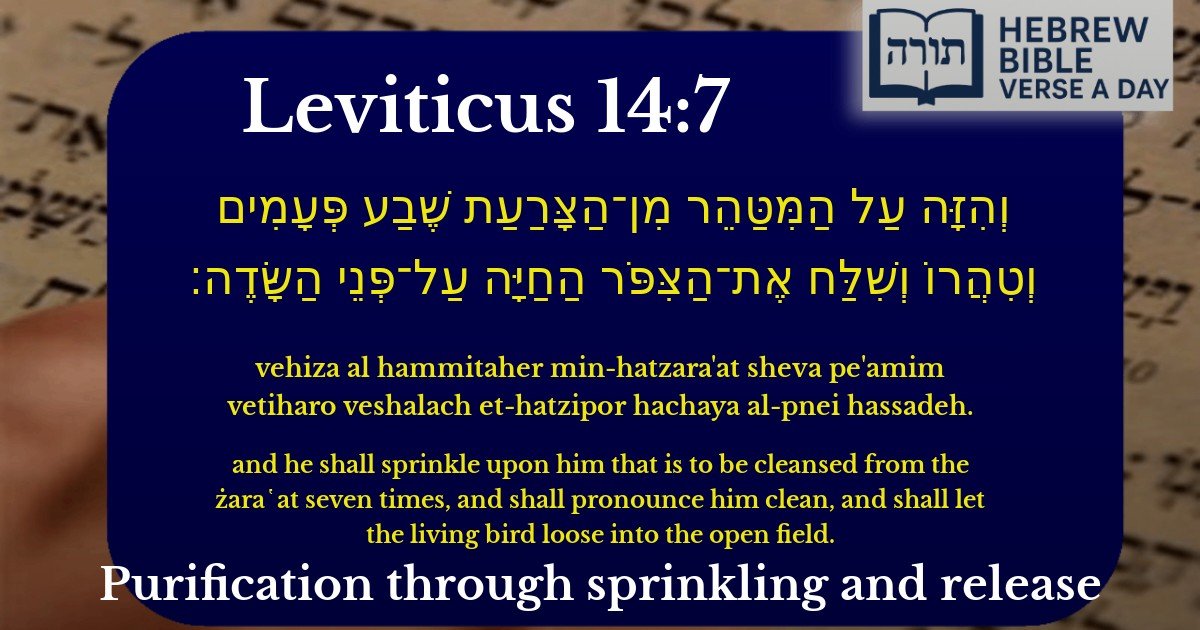
וְהִזָּה עַל הַמִּטַּהֵר מִן־הַצָּרַעַת שֶׁבַע פְּעָמִים וְטִהֲרוֹ וְשִׁלַּח אֶת־הַצִּפֹּר הַחַיָּה עַל־פְּנֵי הַשָּׂדֶה׃
English Translation
and he shall sprinkle upon him that is to be cleansed from the żara῾at seven times, and shall pronounce him clean, and shall let the living bird loose into the open field.
Transliteration
Vehiza al hammitaher min-hatzara'at sheva pe'amim vetiharo veshalach et-hatzipor hachaya al-pnei hassadeh.
Hebrew Leining Text
וְהִזָּ֗ה עַ֧ל הַמִּטַּהֵ֛ר מִן־הַצָּרַ֖עַת שֶׁ֣בַע פְּעָמִ֑ים וְטִ֣הֲר֔וֹ וְשִׁלַּ֛ח אֶת־הַצִּפֹּ֥ר הַֽחַיָּ֖ה עַל־פְּנֵ֥י הַשָּׂדֶֽה׃
🎵 Listen to leining
Parasha Commentary
📚 Talmud Citations
This verse is quoted in the Talmud.
📖 Nega'im 14:4
The verse is referenced in the Mishnah discussing the purification process for a metzora (person afflicted with leprosy), specifically detailing the sprinkling and the release of the live bird as part of the ritual.
📖 Arakhin 16b
The verse is cited in a discussion about the laws of leprosy and the procedures for purification, emphasizing the symbolic act of releasing the live bird into the open field.
Purification from Tzara'at
The verse (Vayikra 14:7) describes part of the purification process for a metzora (one afflicted with tzara'at, often translated as leprosy). According to Rashi, the sprinkling seven times symbolizes completeness, as the number seven represents wholeness in the natural order (e.g., seven days of creation). The metzora requires this thorough purification because tzara'at is traditionally understood as a physical manifestation of spiritual failings, particularly lashon hara (evil speech), as discussed in the Talmud (Arachin 15b).
The Symbolism of the Living Bird
The release of the living bird into the open field is interpreted by the Midrash (Vayikra Rabbah 16:6) as a symbolic act of freedom, contrasting with the confinement the metzora endured during their impurity. Rambam (Hilchot Tumat Tzara'at 11:1) explains that this act signifies the person's return to a state of purity and reintegration into society. The bird, which is free to roam, represents the metzora's renewed ability to move freely after isolation.
Seven Sprinklings and Spiritual Renewal