Frequently Asked Questions
Q: What does Leviticus 1:6 mean?
A: Leviticus 1:6 describes part of the process for preparing a burnt offering (olah) in the Temple. The kohen (priest) must first remove the animal's skin (flay it) and then cut it into pieces before offering it on the altar. This was done in a precise, respectful manner as part of the sacrificial service.
Q: Why was the burnt offering skinned and cut into pieces?
A: According to Rashi and other commentaries, skinning and cutting the animal into pieces served several purposes: 1) It showed honor to the sacrifice by preparing it properly, 2) It made the offering easier to arrange on the altar, and 3) The skinning process removed the outer layer that came in contact with the outside world, making the sacrifice more pure. The Talmud (Zevachim) discusses these procedures in detail.
Q: What can we learn from Leviticus 1:6 today?
A: While we don't bring sacrifices today, we learn important lessons: 1) The care taken with sacrifices teaches us to approach mitzvot with precision and respect, 2) Just as the kohen prepared the offering properly, we should prepare properly for prayer and mitzvot, and 3) The removal of the skin symbolizes removing superficial layers to reach deeper spiritual meaning.
Q: Who performed the actions in Leviticus 1:6?
A: The verse uses the singular 'he' referring to the kohen (priest). The Rambam explains in Hilchot Maaseh Hakorbanot that only properly trained kohanim could perform these sacred Temple services. The owner bringing the sacrifice would lean his hands on the animal (semicha), but the actual slaughtering and preparation was done by the kohen.
Q: Why is the burnt offering important in Judaism?
A: The burnt offering (olah) was unique because it was completely consumed on the altar, symbolizing total dedication to Hashem. The Talmud teaches it atoned for improper thoughts and served as an expression of complete commitment. Today, our prayers (especially the morning Shacharit service) take the place of the daily burnt offerings that were brought in the Temple.

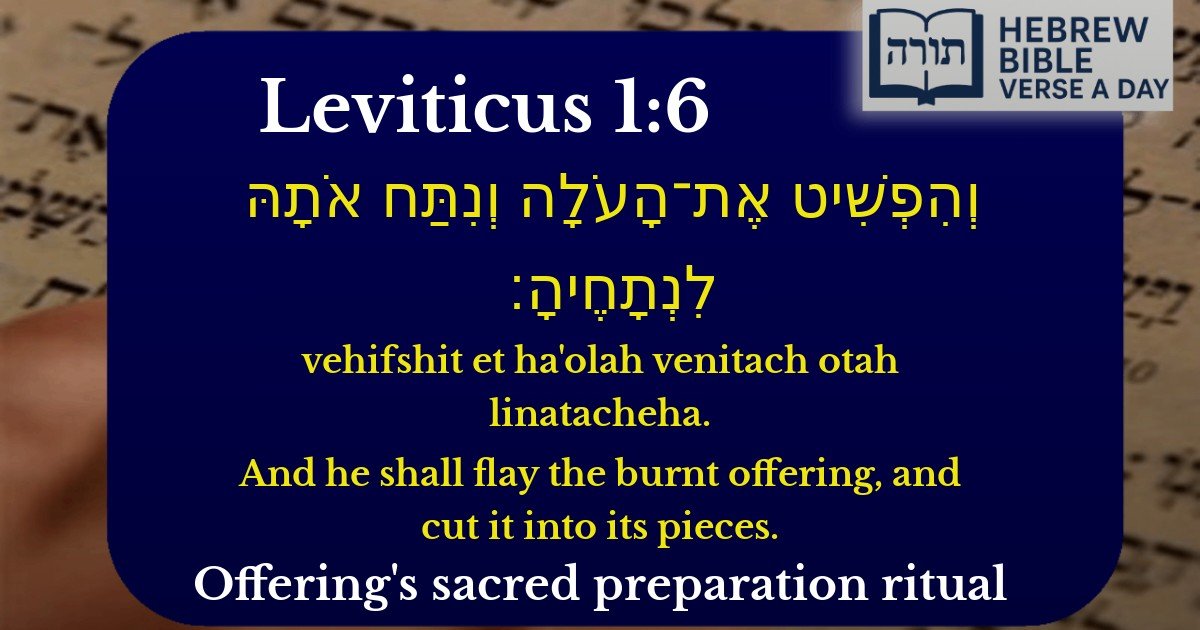

Explanation of the Verse
The verse (Vayikra 1:6) describes the procedure for preparing the olah (burnt offering) after it has been slaughtered. The two key actions mentioned are:
Rashi's Commentary
Rashi (Vayikra 1:6) explains that the flaying of the hide must be done with care, ensuring that the skin is removed without damaging the flesh beneath. This is derived from the precise wording of the verse, which emphasizes proper handling of the sacrifice. Additionally, Rashi notes that the cutting into pieces follows a specific order, as detailed in later verses, where the limbs are arranged on the altar in a particular manner.
Rambam's Perspective
In Hilchos Maaseh HaKorbanos (Laws of Sacrificial Procedure 5:1), the Rambam (Maimonides) elaborates on the technical aspects of this process. He states that the flaying must be done by a Kohen (priest) and that the animal is divided into specific sections—head, limbs, and body—each prepared separately before being placed on the altar. This structured approach reflects the sanctity of the offering and ensures that every part is treated with reverence.
Midrashic Insight
The Midrash (Vayikra Rabbah 3:5) draws a parallel between the dissection of the olah and the need for introspection in human service to Hashem. Just as the sacrifice is carefully examined and divided, a person must "dissect" their own actions, ensuring that their deeds are pure and aligned with divine will. The removal of the hide symbolizes stripping away external distractions to focus on inner devotion.
Halachic Considerations
The Talmud (Zevachim 35a) discusses the requirement that the flaying and cutting must be performed in the northern part of the Temple courtyard, the designated area for slaughtering and preparing sacrifices. This reinforces the idea that even the preparatory stages of the avodah (service) must adhere to strict halachic guidelines, reflecting the seriousness of the sacrificial process.