

Join Our Newsletter To Be Informed When New Videos Are Posted
Hebrew Text
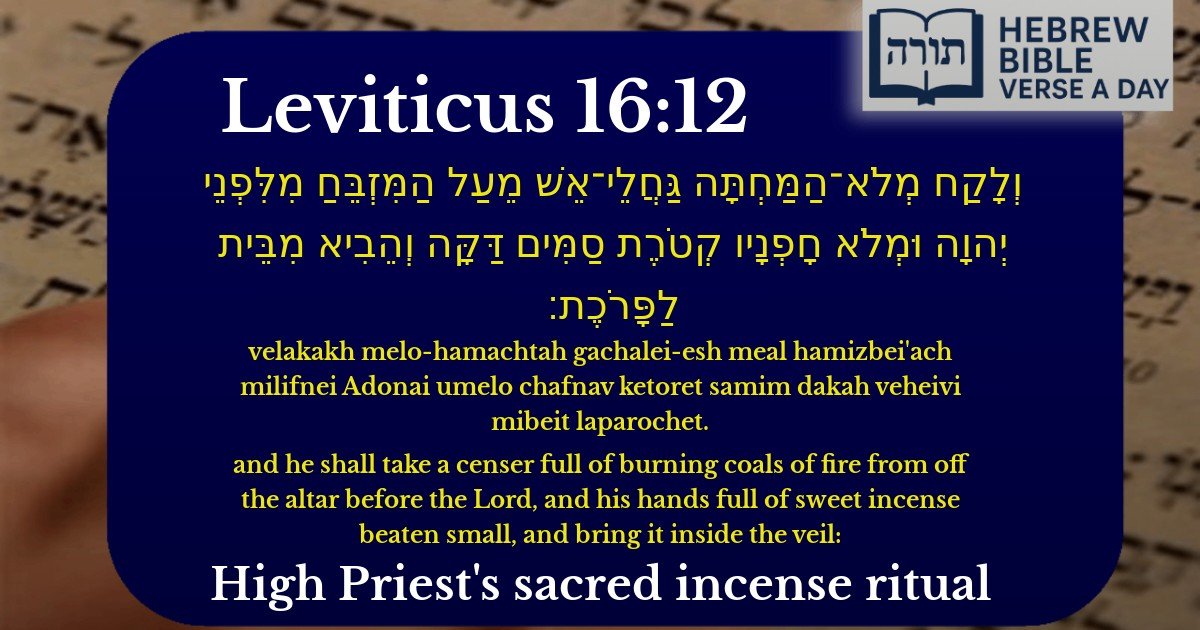
וְלָקַח מְלֹא־הַמַּחְתָּה גַּחֲלֵי־אֵשׁ מֵעַל הַמִּזְבֵּחַ מִלִּפְנֵי יְהוָה וּמְלֹא חָפְנָיו קְטֹרֶת סַמִּים דַּקָּה וְהֵבִיא מִבֵּית לַפָּרֹכֶת׃
English Translation
and he shall take a censer full of burning coals of fire from off the altar before the Lord, and his hands full of sweet incense beaten small, and bring it inside the veil:
Transliteration
Velakakh melo-hamachtah gachalei-esh meal hamizbei'ach milifnei Adonai umelo chafnav ketoret samim dakah veheivi mibeit laparochet.
Hebrew Leining Text
וְלָקַ֣ח מְלֹֽא־הַ֠מַּחְתָּ֠ה גַּֽחֲלֵי־אֵ֞שׁ מֵעַ֤ל הַמִּזְבֵּ֙חַ֙ מִלִּפְנֵ֣י יְהֹוָ֔ה וּמְלֹ֣א חׇפְנָ֔יו קְטֹ֥רֶת סַמִּ֖ים דַּקָּ֑ה וְהֵבִ֖יא מִבֵּ֥ית לַפָּרֹֽכֶת׃
🎵 Listen to leining
Parasha Commentary
📚 Talmud Citations
This verse is quoted in the Talmud.
📖 Yoma 47a
The verse is referenced in the discussion about the High Priest's service on Yom Kippur, specifically regarding the taking of incense and coals from the altar.
📖 Zevachim 19b
The verse is cited in the context of discussing the proper procedures for handling the incense and coals during sacrificial services.
Context in the Torah
This verse (Vayikra 16:12) describes part of the Yom Kippur service performed by the Kohen Gadol (High Priest) in the Mishkan (Tabernacle) and later in the Beit HaMikdash (Holy Temple). The Kohen Gadol takes burning coals from the outer altar (Mizbeach HaChitzon) along with finely ground ketoret (incense) to bring into the Kodesh HaKodashim (Holy of Holies).
Rashi's Explanation
Rashi explains that the coals must come specifically "from upon the altar before Hashem" - meaning from the outer altar where the fire descended from heaven (as described in Vayikra 9:24). The Kohen Gadol couldn't use ordinary fire, but only this sacred fire that originated from heaven.
Regarding "his hands full of sweet incense," Rashi notes this refers to the ketoret mixture which contained eleven spices as described in Shemot 30:34-36. The phrase "beaten small" indicates the incense must be very finely ground.
Rambam's Perspective
In Hilchot Avodat Yom HaKippurim (Laws of the Yom Kippur Service 2:9), Rambam details how the Kohen Gadol would scoop the coals with a special shovel (mahta) in his right hand while holding the incense in his left. The two actions - taking coals and incense - had to be done simultaneously.
Symbolism and Meaning
Halachic Details
The Talmud (Yoma 47a) discusses precise measurements: the "hands full" of incense was a specific volume equal to a kometz (about a handful). The incense had to be brought inside the parochet (veil) before being placed on the coals, as doing this in reverse would be dangerous (Yoma 53a).
The Mishnah (Yoma 5:1) describes how the Kohen Gadol would walk carefully with the coals and incense, making sure not to spill anything as he entered the Holy of Holies on this most sacred day.