

Join Our Newsletter To Be Informed When New Videos Are Posted
Hebrew Text
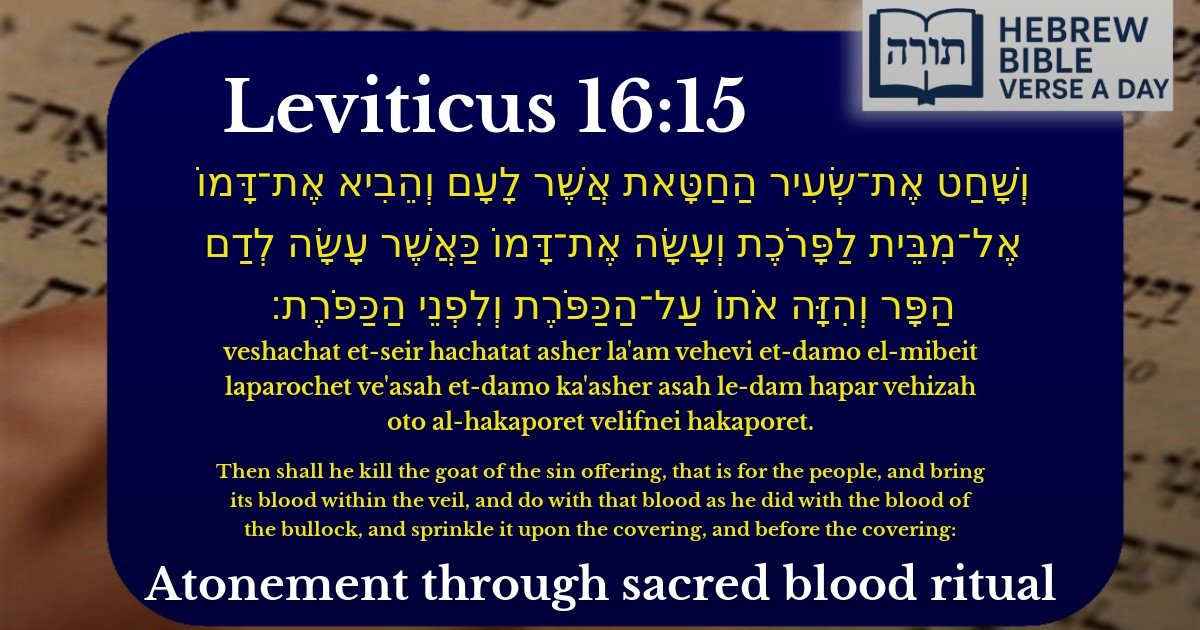
וְשָׁחַט אֶת־שְׂעִיר הַחַטָּאת אֲשֶׁר לָעָם וְהֵבִיא אֶת־דָּמוֹ אֶל־מִבֵּית לַפָּרֹכֶת וְעָשָׂה אֶת־דָּמוֹ כַּאֲשֶׁר עָשָׂה לְדַם הַפָּר וְהִזָּה אֹתוֹ עַל־הַכַּפֹּרֶת וְלִפְנֵי הַכַּפֹּרֶת׃
English Translation
Then shall he kill the goat of the sin offering, that is for the people, and bring its blood within the veil, and do with that blood as he did with the blood of the bullock, and sprinkle it upon the covering, and before the covering:
Transliteration
Veshachat et-seir hachatat asher la'am vehevi et-damo el-mibeit laparochet ve'asah et-damo ka'asher asah le-dam hapar vehizah oto al-hakaporet velifnei hakaporet.
Hebrew Leining Text
וְשָׁחַ֞ט אֶת־שְׂעִ֤יר הַֽחַטָּאת֙ אֲשֶׁ֣ר לָעָ֔ם וְהֵבִיא֙ אֶת־דָּמ֔וֹ אֶל־מִבֵּ֖ית לַפָּרֹ֑כֶת וְעָשָׂ֣ה אֶת־דָּמ֗וֹ כַּאֲשֶׁ֤ר עָשָׂה֙ לְדַ֣ם הַפָּ֔ר וְהִזָּ֥ה אֹת֛וֹ עַל־הַכַּפֹּ֖רֶת וְלִפְנֵ֥י הַכַּפֹּֽרֶת׃
🎵 Listen to leining
Parasha Commentary
📚 Talmud Citations
This verse is quoted in the Talmud.
📖 Yoma 53a
The verse is discussed in the context of the Yom Kippur service, specifically regarding the sprinkling of the blood of the goat of the sin offering within the veil and before the covering.
📖 Zevachim 49b
The verse is referenced in a discussion about the proper procedures for sacrifices, particularly the handling and sprinkling of the blood of the sin offering.
Verse Context: Yom Kippur Service
This verse (Vayikra 16:15) describes part of the Yom Kippur service performed by the Kohen Gadol in the Holy of Holies. The "goat of the sin offering" refers to the se'ir chatat (שעיר חטאת), one of two goats designated for atonement on Yom Kippur (the other being the "scapegoat" sent to Azazel).
Rashi's Explanation
Rashi (Vayikra 16:15) clarifies that the phrase "which is for the people" specifies this goat atones for the sins of all of Israel, unlike the bullock (mentioned earlier in the verse) which atoned for the Kohen Gadol and his household. The blood is brought "within the veil" (מִבֵּית לַפָּרֹכֶת) into the Kodesh HaKodashim (Holy of Holies).
Procedure of Sprinkling the Blood
Symbolism of the Blood Service
The Midrash (Torat Kohanim 16:15) teaches that the sprinkling of blood represents purification and atonement through divine mercy. The blood's placement on the kaporet (which means "atonement cover") signifies that Hashem forgives Israel when they repent sincerely.
Halachic Significance
According to the Rambam (Hilchot Teshuva 1:3), the Yom Kippur service—including this blood ritual—only atones when accompanied by teshuva (repentance). The physical act of sprinkling blood is ineffective without sincere remorse and commitment to change (Yoma 85b).