

Leviticus 16:17 - Kohen alone on Yom Kippur

Leviticus 16:17 - ויקרא 16:17

Hebrew Text

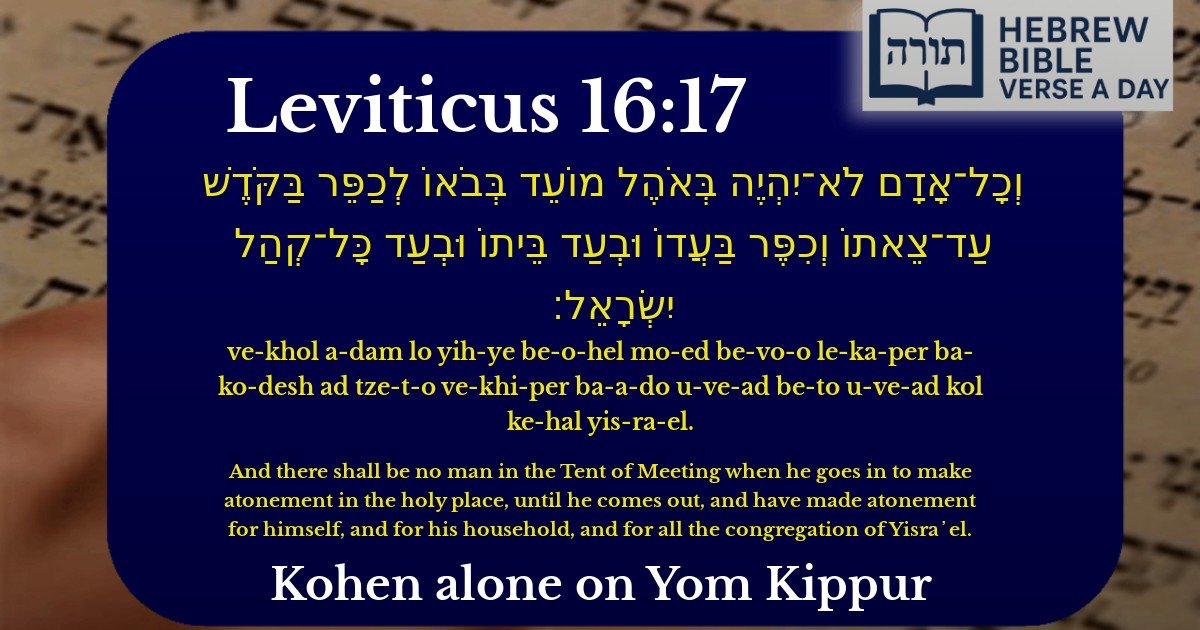
וְכָל־אָדָם לֹא־יִהְיֶה בְּאֹהֶל מוֹעֵד בְּבֹאוֹ לְכַפֵּר בַּקֹּדֶשׁ עַד־צֵאתוֹ וְכִפֶּר בַּעֲדוֹ וּבְעַד בֵּיתוֹ וּבְעַד כָּל־קְהַל יִשְׂרָאֵל׃

English Translation

And there shall be no man in the Tent of Meeting when he goes in to make atonement in the holy place, until he comes out, and have made atonement for himself, and for his household, and for all the congregation of Yisra᾽el.

Transliteration

Ve-khol a-dam lo yih-ye be-o-hel mo-ed be-vo-o le-ka-per ba-ko-desh ad tze-t-o ve-khi-per ba-a-do u-ve-ad be-to u-ve-ad kol ke-hal yis-ra-el.

Hebrew Leining Text

וְכׇל־אָדָ֞ם לֹא־יִהְיֶ֣ה ׀ בְּאֹ֣הֶל מוֹעֵ֗ד בְּבֹא֛וֹ לְכַפֵּ֥ר בַּקֹּ֖דֶשׁ עַד־צֵאת֑וֹ וְכִפֶּ֤ר בַּעֲדוֹ֙ וּבְעַ֣ד בֵּית֔וֹ וּבְעַ֖ד כׇּל־קְהַ֥ל יִשְׂרָאֵֽל׃

🎵 Listen to leining

Parasha Commentary

Exclusivity of the Kohen Gadol on Yom Kippur

The verse (Vayikra 16:17) emphasizes the absolute solitude required for the Kohen Gadol when performing the avodah (service) in the Kodesh HaKodashim (Holy of Holies) on Yom Kippur. Rashi explains that this prohibition includes even angels—no being may be present during this sacred moment. The Rambam (Hilchot Avodat Yom HaKippurim 2:3) codifies this as halacha, stating that the Kohen Gadol must be entirely alone when entering to atone for himself, his household, and all of Klal Yisrael.

The Threefold Atonement

The verse outlines the three levels of kaparah (atonement) achieved by the Kohen Gadol's service:

  • For himself: The Kohen Gadol must first attain purity before seeking atonement for others (Yoma 44a). This follows the principle of "קדש עצמך ואחר כך קדש אחרים" (Sanctify yourself first, then sanctify others).
  • For his household: This refers specifically to his wife and family, as the Kohen Gadol serves as their representative (Ramban on Vayikra 16:6).
  • For all of Yisrael: The entire nation's atonement depends on this moment, as the Yerushalmi (Yoma 1:1) teaches that Yom Kippur effects kaparah even without teshuvah for communal sins.

The Seclusion as a Model of Divine Service

The Midrash (Torat Kohanim 16:17) compares this solitude to Moshe's ascent on Har Sinai—both represent the ultimate encounter with the Divine that requires complete separation from physicality. The Seforno adds that this exclusivity demonstrates that true atonement comes only from Hashem, without intermediaries.

Halachic Implications

The Gemara (Yoma 19b) derives from this verse that if another person enters during this service, the Kohen Gadol must restart the entire avodah. This underscores the gravity of maintaining the sanctity of the Kodesh HaKodashim during this pivotal moment of national atonement.

📚 Talmud Citations

This verse is quoted in the Talmud.

📖 Yoma 44a
The verse is discussed in the context of the High Priest's service on Yom Kippur, particularly regarding the prohibition of anyone being present in the Tent of Meeting during the atonement process.
📖 Zevachim 19b
The verse is referenced in a discussion about the laws of the Temple service and the sanctity of the holy place during the atonement rituals.

Frequently Asked Questions

Q: What does Leviticus 16:17 mean when it says 'no man shall be in the Tent of Meeting'?
A: This verse refers to the Yom Kippur (Day of Atonement) service, when the Kohen Gadol (High Priest) would enter the Kodesh HaKodashim (Holy of Holies) to atone for the Jewish people. Rashi explains that no one else was permitted to be present in the Ohel Moed (Tent of Meeting) during this sacred moment to ensure the Kohen Gadol's complete focus on the atonement process and to maintain the sanctity of the service.
Q: Why was the Kohen Gadol alone during the Yom Kippur service?
A: The Rambam (Hilchot Avodat Yom HaKippurim 2:3) teaches that the Kohen Gadol had to be alone to perform this holy service because it required intense concentration and purity. The absence of others ensured no distractions and emphasized that atonement comes directly from Hashem. The Talmud (Yoma 44b) also notes that this solitude reflected the unique relationship between the Kohen Gadol and Hashem during this sacred time.
Q: What three groups did the Kohen Gadol atone for in Leviticus 16:17?
A: The verse states that the Kohen Gadol made atonement for himself, his household (other Kohanim), and all of Klal Yisrael (the congregation of Israel). Rashi explains that this shows the hierarchy of atonement: first, the Kohen Gadol had to purify himself, then his fellow priests, and finally the entire Jewish people. This teaches us the importance of personal growth before helping others.
Q: How does Leviticus 16:17 apply to us today without the Temple?
A: Although we no longer have the Beit HaMikdash (Temple), the Talmud (Rosh Hashanah 18a) teaches that the spiritual lessons of Yom Kippur remain. The solitude of the Kohen Gadol reminds us to approach repentance with focus and sincerity. Just as the Kohen Gadol atoned for all Israel, we too are interconnected - our individual teshuva (repentance) affects the entire Jewish people.
Q: Why does the verse mention the Kohen Gadol exiting before completing atonement?
A: The Midrash (Torat Kohanim) explains that the phrase 'until he comes out' teaches that the atonement process wasn't complete until the Kohen Gadol safely exited the Holy of Holies. This showed that the service was accepted only if performed exactly according to Hashem's commandments. It also symbolizes that true atonement must lead to positive change in our outward actions in the world.