

Join Our Newsletter To Be Informed When New Videos Are Posted
Hebrew Text
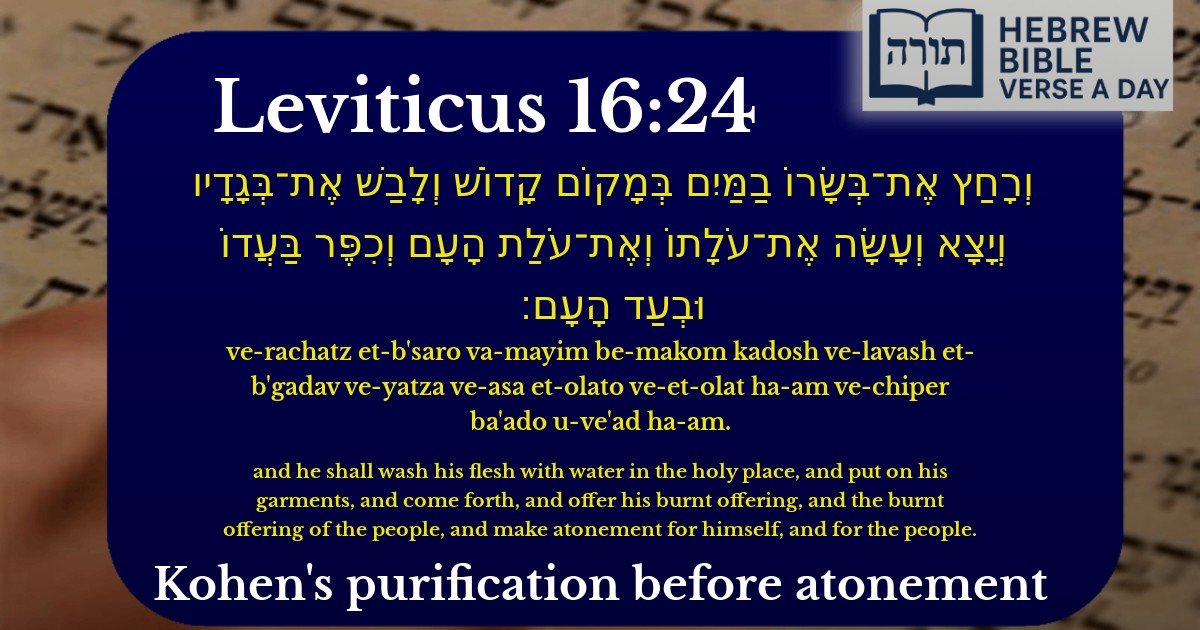
וְרָחַץ אֶת־בְּשָׂרוֹ בַמַּיִם בְּמָקוֹם קָדוֹשׁ וְלָבַשׁ אֶת־בְּגָדָיו וְיָצָא וְעָשָׂה אֶת־עֹלָתוֹ וְאֶת־עֹלַת הָעָם וְכִפֶּר בַּעֲדוֹ וּבְעַד הָעָם׃
English Translation
and he shall wash his flesh with water in the holy place, and put on his garments, and come forth, and offer his burnt offering, and the burnt offering of the people, and make atonement for himself, and for the people.
Transliteration
Ve-rachatz et-b'saro va-mayim be-makom kadosh ve-lavash et-b'gadav ve-yatza ve-asa et-olato ve-et-olat ha-am ve-chiper ba'ado u-ve'ad ha-am.
Hebrew Leining Text
וְרָחַ֨ץ אֶת־בְּשָׂר֤וֹ בַמַּ֙יִם֙ בְּמָק֣וֹם קָד֔וֹשׁ וְלָבַ֖שׁ אֶת־בְּגָדָ֑יו וְיָצָ֗א וְעָשָׂ֤ה אֶת־עֹֽלָתוֹ֙ וְאֶת־עֹלַ֣ת הָעָ֔ם וְכִפֶּ֥ר בַּעֲד֖וֹ וּבְעַ֥ד הָעָֽם׃
🎵 Listen to leining
Parasha Commentary
📚 Talmud Citations
This verse is quoted in the Talmud.
📖 Yoma 30a
The verse is discussed in the context of the High Priest's purification rituals on Yom Kippur, particularly regarding the sequence of washing, changing garments, and offering sacrifices.
📖 Zevachim 19b
The verse is referenced in a discussion about the proper procedures for sacrificial offerings, emphasizing the importance of the priest's purity and the sequence of rituals.
Context of the Verse
This verse (Vayikra 16:24) describes part of the Yom Kippur service performed by the Kohen Gadol (High Priest) in the Beit HaMikdash (Holy Temple). It follows the detailed rituals of the day, including the sacrifices, the lottery between the two goats, and the entry into the Kodesh HaKodashim (Holy of Holies). Here, the Kohen Gadol transitions from the inner sanctum to complete the remaining avodah (service).
Washing in the Holy Place
The phrase "וְרָחַץ אֶת־בְּשָׂרוֹ בַמַּיִם בְּמָקוֹם קָדוֹשׁ" ("he shall wash his flesh with water in the holy place") refers to the Kohen Gadol's ritual immersion. Rashi (on Vayikra 16:24) explains that this washing takes place in the Beit HaMikva (immersion chamber) located in the Azarah (Temple courtyard), specifically designated for the Kohanim. The Rambam (Hilchot Avodat Yom HaKippurim 4:1) elaborates that this immersion is one of five required on Yom Kippur, emphasizing the purity necessary for each stage of the service.
Changing Garments
The instruction "וְלָבַשׁ אֶת־בְּגָדָיו" ("and put on his garments") refers to the Kohen Gadol switching from the special white linen garments worn during the inner sanctum service back to his bigdei zahav (golden vestments). The Talmud (Yoma 23b) notes that these golden garments are required for the remaining sacrifices, as they symbolize the regular priestly role. The Midrash (Torat Kohanim 16:24) highlights that each change of garments represents a shift in spiritual focus—from personal atonement to communal service.
Completion of the Offerings
The verse concludes with "וְיָצָא וְעָשָׂה אֶת־עֹלָתוֹ וְאֶת־עֹלַת הָעָם וְכִפֶּר בַּעֲדוֹ וּבְעַד הָעָם" ("and come forth, and offer his burnt offering, and the burnt offering of the people, and make atonement for himself, and for the people"). The Rambam (Hilchot Maaseh HaKorbanot 10:2) explains that these offerings—the Kohen Gadol's personal olah and the communal olah—finalize the atonement process. The Talmud (Yoma 70a) teaches that this sequence ensures the Kohen Gadol first achieves his own kaparah (atonement) before effecting it for Klal Yisrael (the Jewish people).
Key Themes