Frequently Asked Questions
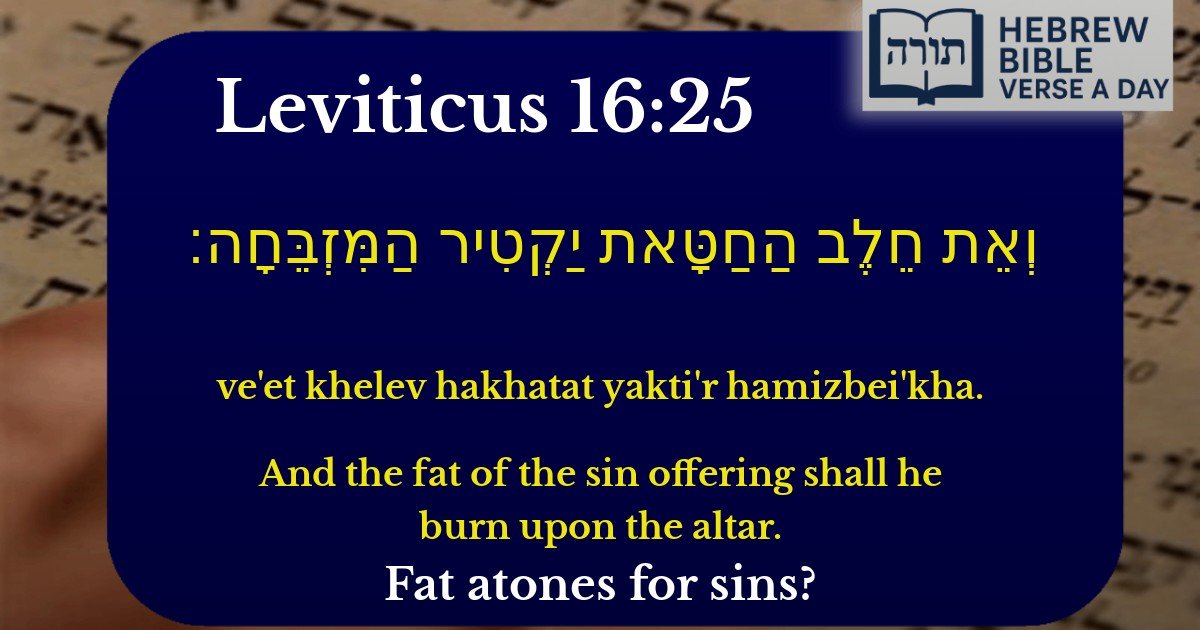
Q: What does 'the fat of the sin offering shall he burn upon the altar' mean?
A: This verse refers to the process of offering a korban chatat (sin offering) in the Beit HaMikdash (Holy Temple). The fat portions of the animal, which were considered the choicest parts, were burned on the altar as part of the atonement process. Rashi explains that this act symbolizes giving the best to Hashem, even when seeking forgiveness.
Q: Why is burning the fat of the sin offering important?
A: Burning the fat on the altar is important because it represents complete dedication to Hashem. The Rambam teaches that the korbanot (offerings) were meant to inspire repentance and closeness to G-d. By offering the fat—the richest part—we demonstrate our commitment to spiritual growth and atonement.
Q: What can we learn from this verse today if we don't have the Beit HaMikdash?
A: Although we no longer bring korbanot, the Talmud (Berachot 17a) teaches that prayer replaces sacrifices. Just as the fat was offered wholeheartedly, we should approach tefillah (prayer) with sincerity and devotion. The Midrash also emphasizes that acts of kindness and Torah study serve as spiritual substitutes for offerings.
Q: Why was the fat specifically chosen to be burned?
A: The fat was chosen because it represents vitality and abundance. The Torah (Vayikra 3:16) states that all fat belongs to Hashem, teaching us that even our material blessings must be sanctified. Rashi notes that this reminds us to use our physical resources for holiness, not just personal enjoyment.
Q: How does this verse connect to the Yom Kippur service?
A: This verse is part of the Yom Kippur avodah (service) described in Leviticus 16. The High Priest would offer special sin offerings, and their fats were burned to atone for the people. The Mishnah (Yoma 4:2) details how this was done meticulously, showing the seriousness of seeking forgiveness on this holy day.


Explanation of the Verse
The verse "וְאֵת חֵלֶב הַחַטָּאת יַקְטִיר הַמִּזְבֵּחָה" (Vayikra 4:26) describes the requirement to burn the fat of the chatat (sin offering) upon the altar. This mitzvah is part of the detailed laws of sacrifices outlined in Sefer Vayikra.
Rashi's Commentary
Rashi (Vayikra 4:26) explains that the term "חֵלֶב" (fat) refers specifically to the fatty portions designated for burning on the altar, as detailed earlier in Vayikra (3:3-4). These include the fat covering the innards, the kidneys, and the lobe of the liver. Rashi emphasizes that this burning is a crucial part of the atonement process for the sin offering, symbolizing the elevation of the sacrifice to Hashem.
Rambam's Perspective
The Rambam (Hilchot Ma'aseh HaKorbanot 5:13) discusses the practical halachic details of burning the fat. He notes that the fat must be completely consumed by the fire of the altar, as it is considered kodesh kodashim (most holy). The burning must be done in the prescribed manner, ensuring no part of the fat remains unburnt.
Midrashic Insights
The Midrash (Vayikra Rabbah 7:3) connects the burning of the fat to the idea of refining one's character. Just as the fat is consumed by fire, a person must "burn away" their negative traits through repentance and spiritual refinement. The chatat offering, brought for unintentional sins, teaches that even inadvertent wrongdoing requires atonement and self-improvement.
Symbolism of the Fat