

Join Our Newsletter To Be Informed When New Videos Are Posted
Hebrew Text
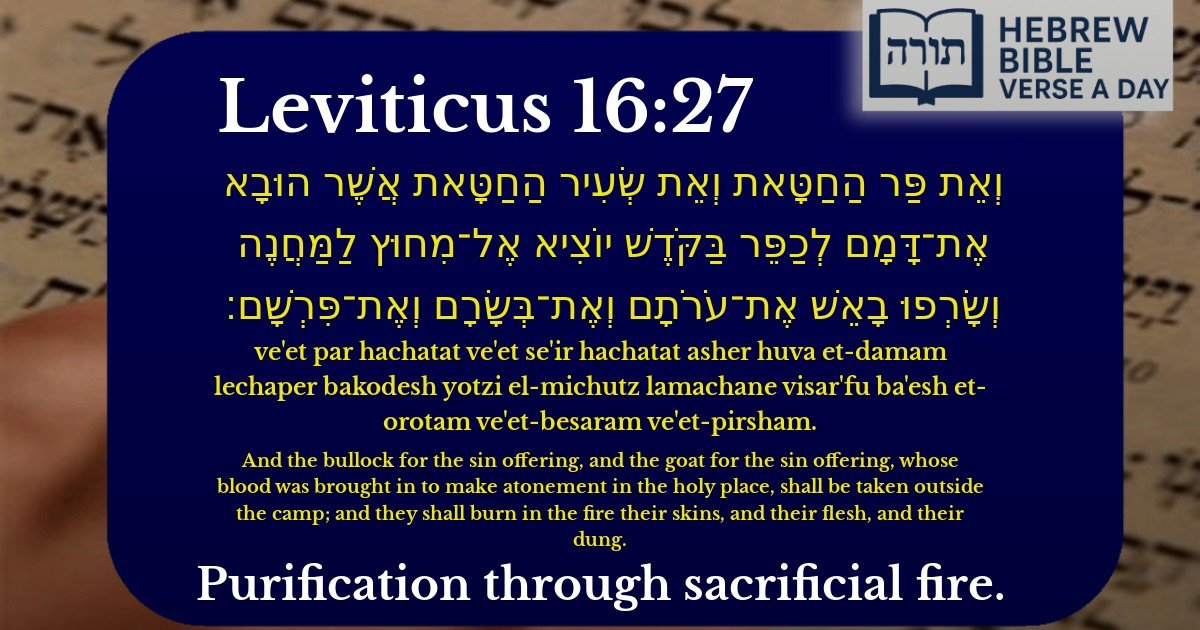
וְאֵת פַּר הַחַטָּאת וְאֵת שְׂעִיר הַחַטָּאת אֲשֶׁר הוּבָא אֶת־דָּמָם לְכַפֵּר בַּקֹּדֶשׁ יוֹצִיא אֶל־מִחוּץ לַמַּחֲנֶה וְשָׂרְפוּ בָאֵשׁ אֶת־עֹרֹתָם וְאֶת־בְּשָׂרָם וְאֶת־פִּרְשָׁם׃
English Translation
And the bullock for the sin offering, and the goat for the sin offering, whose blood was brought in to make atonement in the holy place, shall be taken outside the camp; and they shall burn in the fire their skins, and their flesh, and their dung.
Transliteration
Ve'et par hachatat ve'et se'ir hachatat asher huva et-damam lechaper bakodesh yotzi el-michutz lamachane visar'fu ba'esh et-orotam ve'et-besaram ve'et-pirsham.
Hebrew Leining Text
וְאֵת֩ פַּ֨ר הַֽחַטָּ֜את וְאֵ֣ת ׀ שְׂעִ֣יר הַֽחַטָּ֗את אֲשֶׁ֨ר הוּבָ֤א אֶת־דָּמָם֙ לְכַפֵּ֣ר בַּקֹּ֔דֶשׁ יוֹצִ֖יא אֶל־מִח֣וּץ לַֽמַּחֲנֶ֑ה וְשָׂרְפ֣וּ בָאֵ֔שׁ אֶת־עֹרֹתָ֥ם וְאֶת־בְּשָׂרָ֖ם וְאֶת־פִּרְשָֽׁם׃
🎵 Listen to leining
Parasha Commentary
📚 Talmud Citations
This verse is quoted in the Talmud.
📖 Yoma 67b
The verse is discussed in the context of the laws regarding the burning of the sin offerings outside the camp, particularly in relation to the Yom Kippur service.
📖 Zevachim 105a
The verse is referenced in a discussion about the proper disposal of the remains of sin offerings and the requirement to burn them outside the camp.
Source and Context
The verse (Vayikra 16:27) appears in the context of the Yom Kippur service, detailing the disposal of the remains of the sin offerings—the bull (פַּר הַחַטָּאת) and the goat (שְׂעִיר הַחַטָּאת)—whose blood was brought into the Kodesh HaKodashim (Holy of Holies) for atonement. These remains are to be taken outside the camp and burned entirely.
Rashi's Explanation
Rashi (Vayikra 16:27) clarifies that this verse refers specifically to the bull and goat of Yom Kippur, whose blood was brought inside the Kodesh HaKodashim. He notes that these offerings are distinct from other sin offerings because their remains are burned outside the camp, emphasizing their unique sanctity and the need for complete destruction to prevent any misuse.
Rambam's Perspective
In Hilchot Ma'aseh HaKorbanot (7:6), the Rambam explains that burning these remains outside the camp serves as a symbolic act of purification. Since these offerings atoned for the most severe sins (particularly those of the Kohen Gadol and the nation), their complete destruction signifies the removal of impurity from the community.
Midrashic Insights
Halachic Implications
The Gemara (Yoma 67b) derives from this verse that the burning must occur in a designated place outside the camp (later, outside Jerusalem). The Mishnah (Yoma 7:3) further specifies that this was performed in the Beis HaDeshen (the Place of Ashes), ensuring proper respect for the sanctity of the offerings even in their disposal.
Symbolic Meaning
Rabbi Samson Raphael Hirsch (Vayikra 16:27) explains that the burning of the entire animal—skin, flesh, and dung—symbolizes the total eradication of sin. Unlike other offerings where parts are eaten or kept, these are wholly consumed by fire, representing the complete rejection of wrongdoing and the need for absolute atonement on Yom Kippur.