

Join Our Newsletter To Be Informed When New Videos Are Posted
Hebrew Text
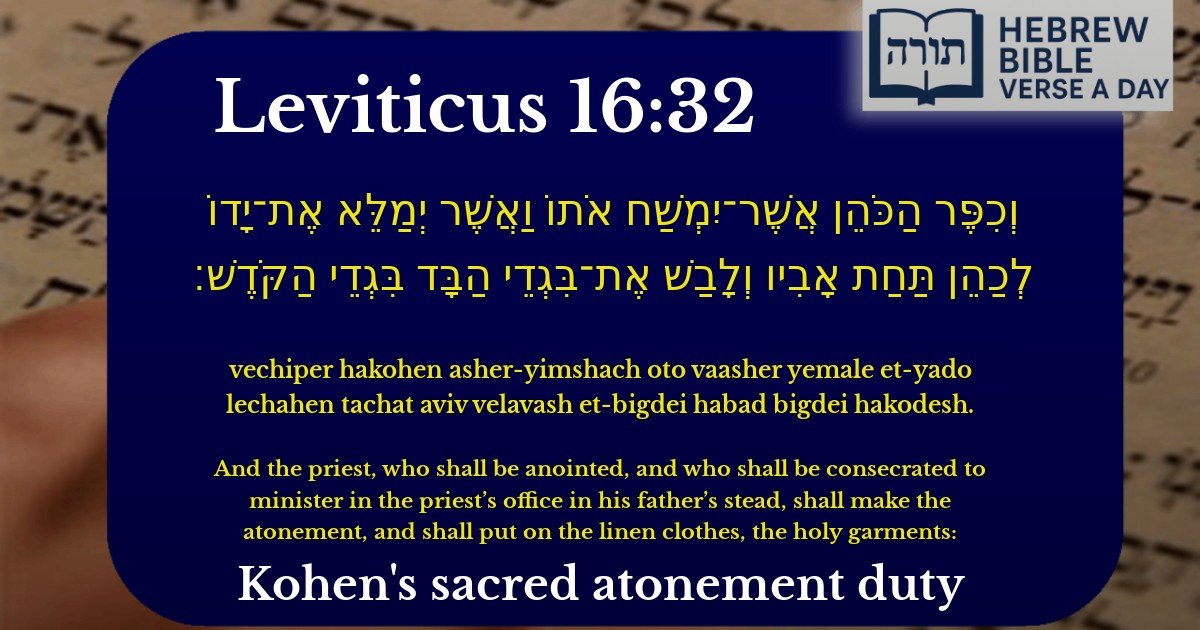
וְכִפֶּר הַכֹּהֵן אֲשֶׁר־יִמְשַׁח אֹתוֹ וַאֲשֶׁר יְמַלֵּא אֶת־יָדוֹ לְכַהֵן תַּחַת אָבִיו וְלָבַשׁ אֶת־בִּגְדֵי הַבָּד בִּגְדֵי הַקֹּדֶשׁ׃
English Translation
And the priest, who shall be anointed, and who shall be consecrated to minister in the priest’s office in his father’s stead, shall make the atonement, and shall put on the linen clothes, the holy garments:
Transliteration
Vechiper hakohen asher-yimshach oto vaasher yemale et-yado lechahen tachat aviv velavash et-bigdei habad bigdei hakodesh.
Hebrew Leining Text
וְכִפֶּ֨ר הַכֹּהֵ֜ן אֲשֶׁר־יִמְשַׁ֣ח אֹת֗וֹ וַאֲשֶׁ֤ר יְמַלֵּא֙ אֶת־יָד֔וֹ לְכַהֵ֖ן תַּ֣חַת אָבִ֑יו וְלָבַ֛שׁ אֶת־בִּגְדֵ֥י הַבָּ֖ד בִּגְדֵ֥י הַקֹּֽדֶשׁ׃
🎵 Listen to leining
Parasha Commentary
📚 Talmud Citations
This verse is not quoted in the Talmud.
Context and Overview
The verse (Vayikra 16:32) describes the role of the Kohen Gadol (High Priest) on Yom Kippur, specifically regarding the atonement service and the wearing of special linen garments. This is part of the detailed instructions for the Yom Kippur avodah (service) in the Beit HaMikdash.
The Anointed Priest
Rashi explains that the phrase "הַכֹּהֵן אֲשֶׁר־יִמְשַׁח אֹתוֹ" ("the priest who shall be anointed") refers specifically to the Kohen Gadol, who was anointed with the sacred anointing oil during the consecration ceremony (Shemot 29:7). The Rambam (Hilchot Klei HaMikdash 1:7) elaborates that this anointing was a unique ritual performed only for the first Kohanim Gedolim; later appointments were made through miluim (investiture) by wearing the special garments.
Consecration and Succession
The phrase "וַאֲשֶׁר יְמַלֵּא אֶת־יָדוֹ לְכַהֵן תַּחַת אָבִיו" ("who shall be consecrated to minister in the priest’s office in his father’s stead") refers to the transfer of the priesthood to a successor. The Talmud (Yoma 73a) discusses that the son of a Kohen Gadol has priority in succeeding his father, provided he is worthy. The term miluim (filling of the hands) symbolizes the priestly authority and responsibility being transferred.
The Linen Garments
The verse specifies that the Kohen Gadol must wear "בִּגְדֵי הַבָּד בִּגְדֵי הַקֹּדֶשׁ" ("the linen clothes, the holy garments"). On Yom Kippur, unlike other days, the Kohen Gadol wore special white linen garments (not his usual golden vestments) when performing certain parts of the service. The Midrash (Vayikra Rabbah 21:11) teaches that these white garments symbolize purity and humility before Hashem, appropriate for the day of atonement.
The Atonement Service
The phrase "וְכִפֶּר" ("shall make the atonement") refers to the unique Yom Kippur avodah that only the Kohen Gadol could perform. The Rambam (Hilchot Avodat Yom HaKippurim 1:1-2) details how this atonement included multiple offerings, confessions, and the special service in the Kodesh HaKodashim (Holy of Holies). The Talmud (Yoma 39b) emphasizes that the Kohen Gadol's service on this day atoned for the entire Jewish people.