Frequently Asked Questions
Q: What is the significance of the two goats in Leviticus 16:7?
A: The two goats in Leviticus 16:7 are central to the Yom Kippur (Day of Atonement) service. According to Rashi and the Talmud (Yoma 62a), one goat is offered as a sacrifice to Hashem, while the other (the 'scapegoat') is sent to the wilderness, symbolizing the removal of sins. This teaches us about repentance and atonement.
Q: Why were the goats presented at the entrance of the Tent of Meeting?
A: The goats were presented at the entrance of the Tent of Meeting (Ohel Moed) because this was the sacred space where Hashem's presence dwelled. The Mishnah (Yoma 6:2) explains that this location emphasized the solemnity and holiness of the Yom Kippur rituals, connecting the people's repentance directly to the Divine presence.
Q: What lesson can we learn from the two goats in this verse?
A: The two goats teach us about the dual aspects of atonement: taking responsibility for our actions (the sacrificed goat) and actively removing sin from our lives (the scapegoat). The Rambam (Hilchot Teshuvah 1:2) highlights that true repentance requires both confession and a commitment to change.
Q: How does Leviticus 16:7 relate to Yom Kippur today?
A: Although we no longer have the Temple service, the message of Leviticus 16:7 remains relevant. On Yom Kippur, we focus on repentance (teshuvah), prayer (tefillah), and charity (tzedakah) as substitutes for the goat offerings, as taught by the Talmud (Berachot 32b) and later Jewish tradition.
Q: What does 'presenting before Hashem' mean in this verse?
A: Rashi explains that 'presenting before Hashem' means placing the goats in a designated spot near the entrance of the Tent of Meeting, where the Kohen Gadol (High Priest) would perform the sacred lottery (goral) to determine their roles (Yoma 62a). This act showed that the atonement process was directed by Divine will.

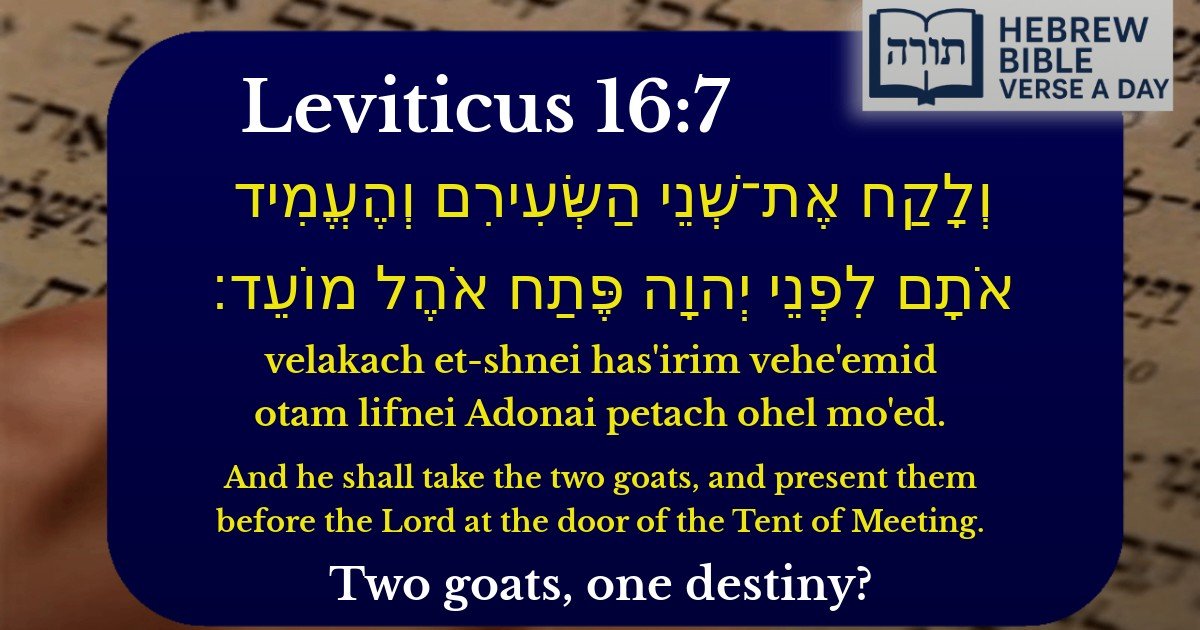

The Two Goats on Yom Kippur
The verse describes a central ritual of the Yom Kippur service performed by the Kohen Gadol (High Priest) in the Mishkan (Tabernacle) and later in the Beit HaMikdash (Temple). The two goats are identical in appearance, size, and value, as derived from the Talmud (Yoma 62b), emphasizing the impartiality of the atonement process.
Rashi's Explanation
Rashi (Vayikra 16:7) explains that the two goats must be presented together at the entrance of the Ohel Moed (Tent of Meeting) before the lottery is cast to determine their fates. One would be designated "for Hashem" as a korban (offering), while the other would be the "scapegoat" (Azazel) sent to the wilderness.
Symbolism of the Two Goats
Halachic Details from the Mishnah
The Mishnah (Yoma 4:1) describes how the Kohen Gadol would place his hands on the goats while standing in the courtyard, facing the people, showing that this was a national atonement for all of Israel. The goats had to be purchased from communal funds (Shekalim), not from individual donations.
The Location at the Tent Opening
The presentation "before Hashem at the door of the Tent of Meeting" signifies that this was a public ceremony witnessed by the people, as the entrance was accessible to the priests and leaders (Ibn Ezra). The Kli Yakar adds that this location represents the interface between the Divine Presence and the people.