Frequently Asked Questions
Q: What is the meaning of the goat 'upon which the Lord's lot fell' in Leviticus 16:9?
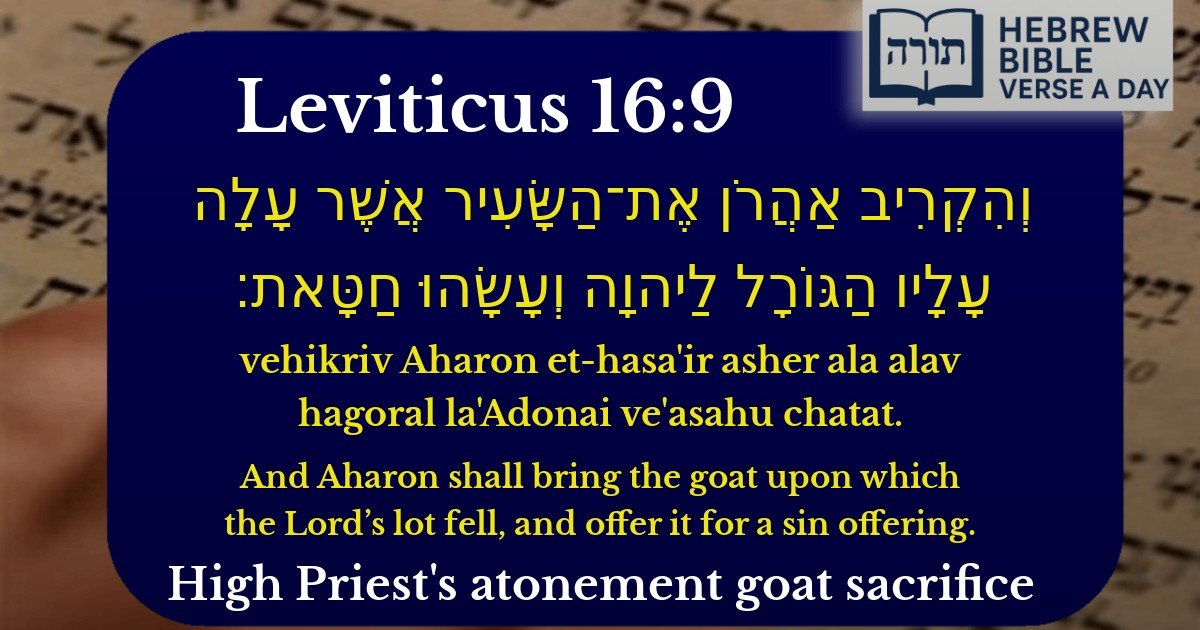
A: This verse refers to the Yom Kippur (Day of Atonement) service in the Temple, where two goats were presented. One was chosen by lot for Hashem (to be offered as a sin offering), and the other was the 'scapegoat' (sent away). Rashi explains that the lottery determined which goat would serve each purpose, showing that the selection was directed by Divine will.
Q: Why was a sin offering necessary on Yom Kippur?
A: The sin offering (חַטָּאת) atoned for the sins of the Jewish people. The Rambam teaches in Hilchot Teshuva that Yom Kippur provides atonement when combined with repentance. The goat offered to Hashem symbolized the people's desire to return to Him and cleanse themselves from wrongdoing.
Q: What lesson can we learn from the lottery system for the goats?
A: The lottery teaches that atonement is not random but guided by Hashem's will. The Talmud (Yoma 62a) discusses how the lottery was a crucial part of the Yom Kippur service, emphasizing that true repentance and Divine mercy—not human effort alone—bring forgiveness.
Q: How does this verse apply today without the Temple?
A: Although we no longer have the Temple service, the themes of repentance (תשובה), prayer (תפילה), and charity (צדקה) replace the sacrifices, as taught by the Rabbis. On Yom Kippur, we reflect on this verse to remember the seriousness of atonement and our commitment to improving our ways.
Q: Why did Aharon (Aaron) perform this offering and not someone else?
A: Aharon, as the Kohen Gadol (High Priest), had the unique role of entering the Holy of Holies on Yom Kippur. The Midrash (Vayikra Rabbah 21:7) explains that this service required the highest level of purity and devotion, which is why only the High Priest could perform it.


Context in the Yom Kippur Service
This verse (Vayikra 16:9) describes a critical component of the Yom Kippur service performed by the Kohen Gadol (High Priest) in the Beit HaMikdash (Holy Temple). The "goat upon which the Lord’s lot fell" refers to the Sa'ir LaHashem (the goat designated for Hashem), one of two identical goats chosen by lottery. The other goat, the Sa'ir La'Azazel, was sent into the wilderness as part of the atonement process.
Rashi's Explanation
Rashi (Vayikra 16:9) clarifies that the phrase "which the Lord’s lot fell" refers to the divine selection process. Though the lots were cast by human hands, the outcome was directed by Hashem to indicate His will. The goat designated for Hashem was sacrificed as a chatat (sin offering), symbolizing atonement for the impurities of the Mishkan (Tabernacle) and the Kohanim (priests).
Rambam's Perspective
In Hilchot Avodat Yom HaKippurim (1:7), the Rambam (Maimonides) explains that the Sa'ir LaHashem served to atone for the most severe transgressions—those committed be'mezid (intentionally) and beshogeg (unintentionally). Its blood was brought into the Kodesh HaKodashim (Holy of Holies), emphasizing the gravity of the day’s atonement.
Symbolism of the Two Goats
The Midrash (Vayikra Rabbah 21:9) teaches that the two goats represent the duality of human nature—one dedicated to Hashem, the other to Azazel (symbolizing the yetzer hara, the evil inclination). By offering one goat and sending the other away, the service reflects the struggle between spiritual devotion and earthly temptations.
The Role of Aharon
Halachic Implications
The Mishnah (Yoma 4:1) details the precise procedure for the lottery and the subsequent sacrifices, underscoring the meticulousness required in the Avodah (service). The chatat offering of the goat paralleled other sin offerings but was unique in its role for national atonement on Yom Kippur.