

Join Our Newsletter To Be Informed When New Videos Are Posted
Hebrew Text
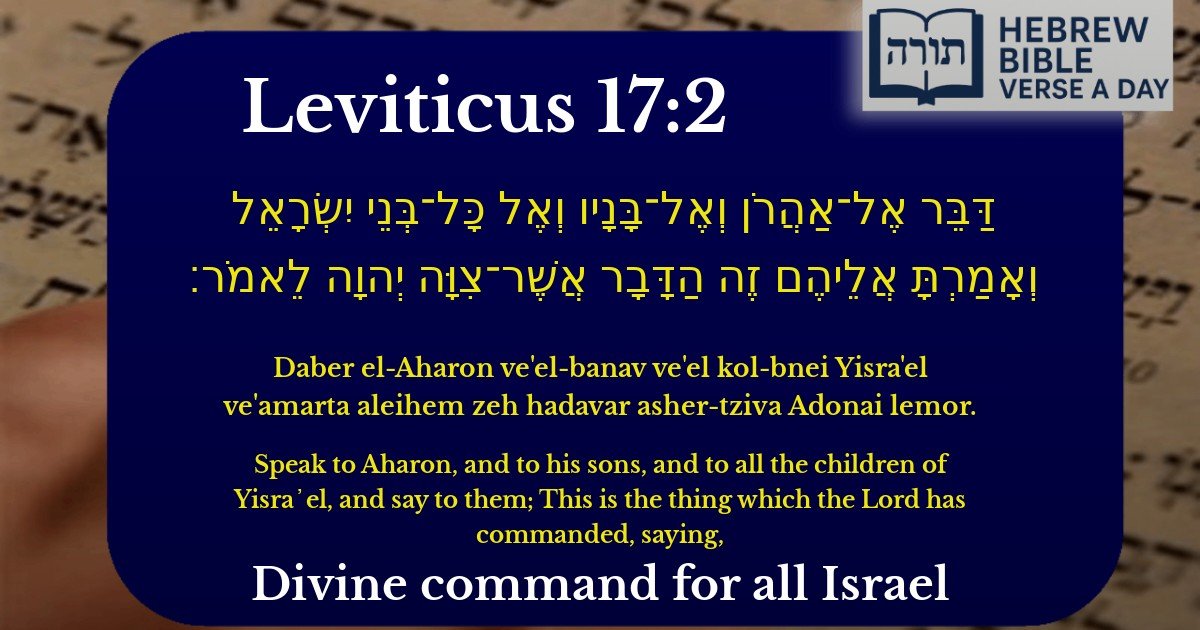
דַּבֵּר אֶל־אַהֲרֹן וְאֶל־בָּנָיו וְאֶל כָּל־בְּנֵי יִשְׂרָאֵל וְאָמַרְתָּ אֲלֵיהֶם זֶה הַדָּבָר אֲשֶׁר־צִוָּה יְהוָה לֵאמֹר׃
English Translation
Speak to Aharon, and to his sons, and to all the children of Yisra᾽el, and say to them; This is the thing which the Lord has commanded, saying,
Transliteration
Daber el-Aharon ve'el-banav ve'el kol-bnei Yisra'el ve'amarta aleihem zeh hadavar asher-tziva Adonai lemor.
Hebrew Leining Text
דַּבֵּ֨ר אֶֽל־אַהֲרֹ֜ן וְאֶל־בָּנָ֗יו וְאֶל֙ כׇּל־בְּנֵ֣י יִשְׂרָאֵ֔ל וְאָמַרְתָּ֖ אֲלֵיהֶ֑ם זֶ֣ה הַדָּבָ֔ר אֲשֶׁר־צִוָּ֥ה יְהֹוָ֖ה לֵאמֹֽר׃
🎵 Listen to leining
Parasha Commentary
📚 Talmud Citations
This verse is not quoted in the Talmud.
Context in the Torah
This verse appears in Vayikra (Leviticus) 17:2, introducing laws concerning the proper slaughter of animals and the prohibition of consuming blood. The phrase "זֶה הַדָּבָר" ("This is the thing") signals a new and significant commandment from Hashem to Bnei Yisrael.
Addressing Aharon, His Sons, and All of Israel
Rashi (Vayikra 17:2) notes that the command is directed first to Aharon and his sons (the Kohanim), and then to all of Israel. This teaches that the Kohanim must be diligent in teaching these laws to the people, as they bear responsibility for ensuring proper observance in matters of korbanot (sacrifices) and dietary laws.
The Significance of "זֶה הַדָּבָר"
The Midrash (Sifra, Acharei Mot 2:1) explains that "זֶה הַדָּבָר" emphasizes the precision and unchanging nature of the mitzvah. Unlike human decrees, which may be subject to interpretation or alteration, divine commandments are absolute and eternal.
Rambam's Perspective on the Command
In Moreh Nevuchim (3:46), Rambam explains that these laws were given to distance Bnei Yisrael from idolatrous practices common among neighboring nations, particularly the consumption of blood, which was associated with pagan rituals. The commandment reinforces ethical and spiritual boundaries.
Hierarchy of Transmission
Practical Implications
The Sefer HaChinuch (Mitzvah 187) connects this verse to the broader principle of shechitah (ritual slaughter), teaching that even permitted animals must be slaughtered in a manner that respects life and acknowledges Hashem's dominion over creation.