
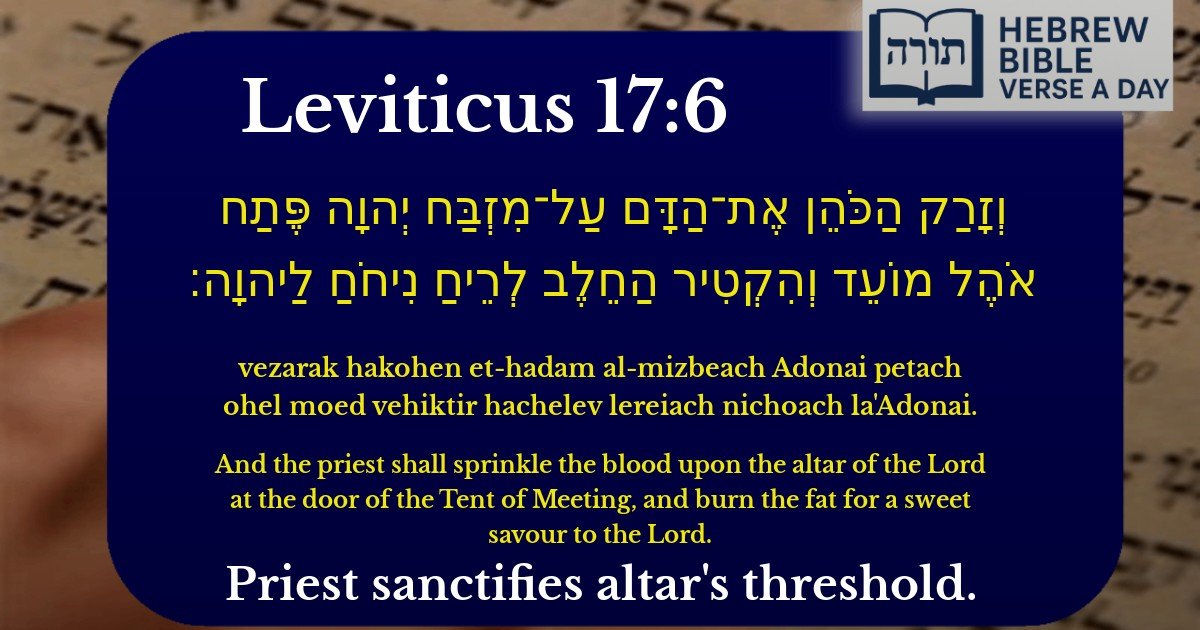

Leviticus 17:6 - Priest sanctifies altar's threshold.

Leviticus 17:6 - ויקרא 17:6

Hebrew Text

וְזָרַק הַכֹּהֵן אֶת־הַדָּם עַל־מִזְבַּח יְהוָה פֶּתַח אֹהֶל מוֹעֵד וְהִקְטִיר הַחֵלֶב לְרֵיחַ נִיחֹחַ לַיהוָה׃

English Translation

And the priest shall sprinkle the blood upon the altar of the Lord at the door of the Tent of Meeting, and burn the fat for a sweet savour to the Lord.

Transliteration

Vezarak hakohen et-hadam al-mizbeach Adonai petach ohel moed vehiktir hachelev lereiach nichoach la'Adonai.

Hebrew Leining Text

וְזָרַ֨ק הַכֹּהֵ֤ן אֶת־הַדָּם֙ עַל־מִזְבַּ֣ח יְהֹוָ֔ה פֶּ֖תַח אֹ֣הֶל מוֹעֵ֑ד וְהִקְטִ֣יר הַחֵ֔לֶב לְרֵ֥יחַ נִיחֹ֖חַ לַיהֹוָֽה׃

🎵 Listen to leining

Parasha Commentary

Verse Context and Overview

This verse (Vayikra 3:2) describes part of the sacrificial service for the zevach shelamim (peace offering), detailing the priestly actions of sprinkling the blood and burning the fat on the altar. The service takes place at the entrance of the Ohel Moed (Tent of Meeting), emphasizing the sanctity of the Mishkan as the dwelling place of the Divine Presence.

Rashi's Commentary on the Blood Sprinkling

Rashi explains that the sprinkling of the blood (zerikat hadam) is performed specifically on the outer altar (mizbeach hachitzon), not the inner one. He notes that the phrase "al mizbach Hashem" (upon the altar of the Lord) refers to the copper altar in the courtyard, as opposed to the golden altar inside the Mishkan. The blood is sprinkled "petach Ohel Moed" (at the entrance of the Tent of Meeting) to signify that the offering is brought before Hashem's presence.

Symbolism of the Fat Burning

The burning of the fat (helev) is described as "rei'ach nichoach laHashem" (a sweet savor to the Lord). The Rambam (Moreh Nevuchim 3:46) explains that this phrase denotes Divine acceptance of the offering when performed with proper intent. The fat, representing the choicest part of the animal, symbolizes the donor's complete devotion to Hashem.

Talmudic and Halachic Insights

  • The Mishnah (Zevachim 5:3) details the precise manner of blood sprinkling: it must be done with two applications that constitute four (sprinkling diagonally on two opposite corners).
  • The Gemara (Menachot 110a) teaches that "rei'ach nichoach" applies even to the simplest flour offering, showing that sincerity matters more than the offering's monetary value.
  • Rambam (Hilchos Ma'aseh HaKorbanos 5:13) rules that the priest must face the altar's opening while performing the service, reinforcing the verse's emphasis on "petach Ohel Moed."

Midrashic Interpretation

The Sifra (Torat Kohanim) connects this verse to the broader theme of drawing near to Hashem through korbanot (offerings). The term "korban" (from the root karov, meaning "near") reflects how these rituals facilitate spiritual closeness. The blood represents life (Devarim 12:23), and its sprinkling symbolizes the donor's renewed commitment to Divine service.

📚 Talmud Citations

This verse is quoted in the Talmud.

📖 Zevachim 37b
The verse is discussed in the context of the laws regarding the sprinkling of blood on the altar and the proper procedures for sacrifices.
📖 Menachot 110a
Referenced in a discussion about the significance of the fat being burned as a sweet savour to the Lord, relating to the acceptance of sacrifices.

Frequently Asked Questions

Q: What does it mean that the priest sprinkles the blood on the altar?
A: According to Rashi and the Talmud (Zevachim), the sprinkling of the blood on the altar is a key part of the sacrificial service (avodah) in the Mishkan (Tabernacle) and later the Beit HaMikdash (Temple). It symbolizes atonement and the dedication of the offering to Hashem. The blood represents life (as stated in Leviticus 17:11), and sprinkling it on the altar signifies returning life to its Divine source.
Q: Why does the verse mention burning the fat as a 'sweet savour to the Lord'?
A: The Rambam (Moreh Nevuchim 3:46) explains that the burning of the fat (helev) produces a pleasant aroma, symbolizing that the offering is pleasing to Hashem when done with proper intent. The Talmud (Menachot 110a) teaches that 'sweet savour' refers to the satisfaction Hashem derives from His children fulfilling His commandments with devotion.
Q: Why is the altar placed at the entrance of the Tent of Meeting?
A: Rashi (on this verse) explains that the altar's placement at the entrance of the Ohel Moed (Tent of Meeting) signifies that the sacrificial service brings one closer to Hashem. The Midrash (Tanchuma Tzav 14) adds that just as the altar stands at the entrance, so too should acts of kindness and repentance be the 'entrance' to one's relationship with Hashem.
Q: How does this verse apply to us today without the Temple?
A: The Rambam (Hilchot Ma'aseh HaKorbanot) teaches that prayer (tefillah) has replaced sacrifices in our time, as the verse states (Hosea 14:3) 'We will offer the words of our lips instead of calves.' Additionally, the Talmud (Berachot 17a) explains that studying the laws of sacrifices can be considered as if we brought them, and acts of charity and kindness also serve as substitutes.
Q: What is the significance of the priest performing this service?
A: The Torah assigns this role specifically to the kohanim (priests) because they were chosen for Divine service (avodah) in the Mishkan and Beit HaMikdash. The Rambam (Hilchot Klei HaMikdash 4) explains that the kohanim serve as intermediaries between the Jewish people and Hashem in matters of atonement and offerings, following the sanctity passed down from Aharon HaKohen.