

Join Our Newsletter To Be Informed When New Videos Are Posted
Hebrew Text
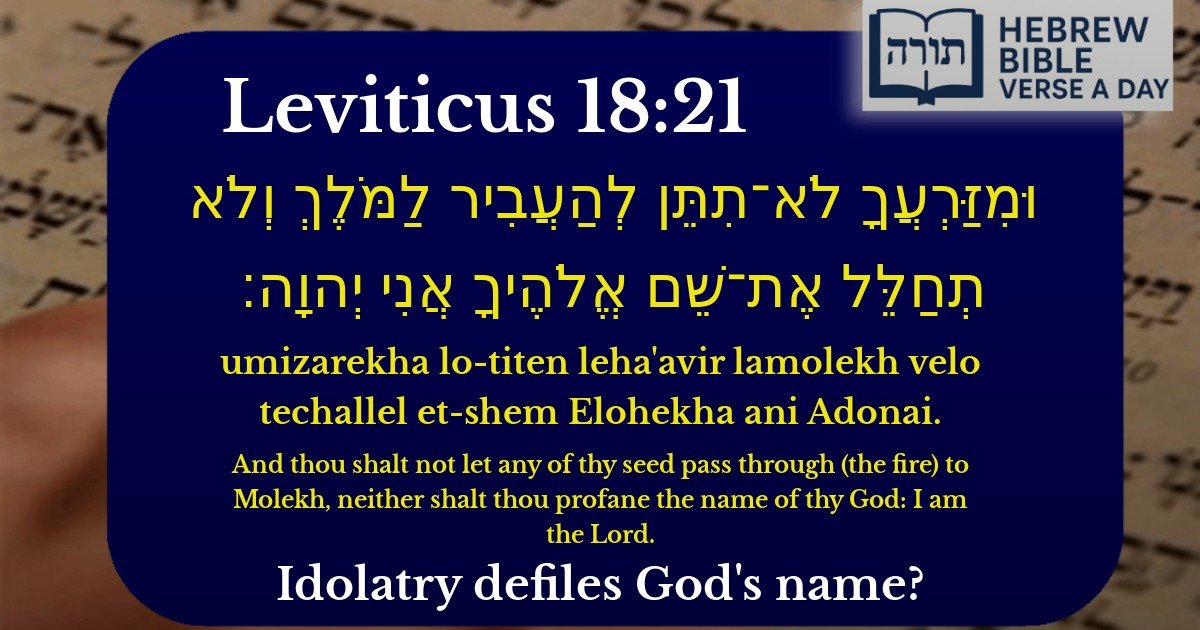
וּמִזַּרְעֲךָ לֹא־תִתֵּן לְהַעֲבִיר לַמֹּלֶךְ וְלֹא תְחַלֵּל אֶת־שֵׁם אֱלֹהֶיךָ אֲנִי יְהוָה׃
English Translation
And thou shalt not let any of thy seed pass through (the fire) to Molekh, neither shalt thou profane the name of thy God: I am the Lord.
Transliteration
Umizarekha lo-titen leha'avir lamolekh velo techallel et-shem Elohekha ani Adonai.
Hebrew Leining Text
וּמִֽזַּרְעֲךָ֥ לֹא־תִתֵּ֖ן לְהַעֲבִ֣יר לַמֹּ֑לֶךְ וְלֹ֧א תְחַלֵּ֛ל אֶת־שֵׁ֥ם אֱלֹהֶ֖יךָ אֲנִ֥י יְהֹוָֽה׃
🎵 Listen to leining
Parasha Commentary
📚 Talmud Citations
This verse is quoted in the Talmud.
📖 Sanhedrin 64a
The verse is discussed in the context of the prohibition against passing children through fire to Molekh, emphasizing the severity of the transgression.
📖 Megillah 25a
The verse is referenced in a discussion about the sanctity of God's name and the prohibition against profaning it.
Prohibition of Molekh Worship
The verse (Vayikra 18:21) contains two prohibitions: 1) giving one's offspring to Molekh, and 2) profaning Hashem's name. Rashi explains that "passing through to Molekh" refers to the idolatrous practice of causing children to pass through fire as part of Molekh worship. The Rambam (Hilchot Avodah Zarah 6:3) elaborates that this was a form of child sacrifice practiced by ancient idolaters.
Severity of the Transgression
The Talmud (Sanhedrin 64b) discusses this prohibition at length, noting it carries the death penalty. The Midrash (Sifra Kedoshim 9:14) emphasizes that this sin is particularly abhorrent because it destroys the future generations of the Jewish people while simultaneously rejecting Hashem's sovereignty.
Connection to Profaning Hashem's Name
The juxtaposition of these prohibitions teaches, as the Ramban explains, that idolatry inherently profanes Hashem's name. When Jews engage in such practices, it causes a desecration of the Divine name (Chilul Hashem) by associating the holy nation with abominable idolatry.
Contemporary Applications
Conclusion with "I am Hashem"
The verse concludes with "I am Hashem" - the Kli Yakar explains this reminds us that only Hashem has true authority over life and death, not false deities like Molekh. This affirmation of Divine sovereignty forms the basis for rejecting all forms of idolatry.