

Join Our Newsletter To Be Informed When New Videos Are Posted
Hebrew Text
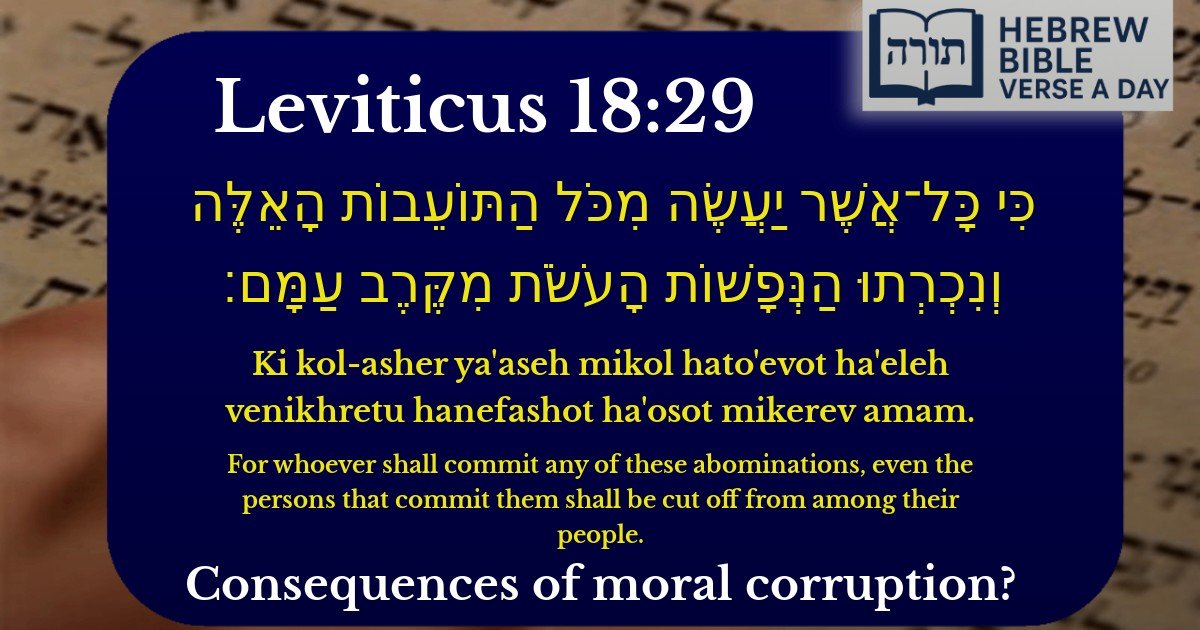
כִּי כָּל־אֲשֶׁר יַעֲשֶׂה מִכֹּל הַתּוֹעֵבוֹת הָאֵלֶּה וְנִכְרְתוּ הַנְּפָשׁוֹת הָעֹשֹׂת מִקֶּרֶב עַמָּם׃
English Translation
For whoever shall commit any of these abominations, even the persons that commit them shall be cut off from among their people.
Transliteration
Ki kol-asher ya'aseh mikol hato'evot ha'eleh venikhretu hanefashot ha'osot mikerev amam.
Hebrew Leining Text
כִּ֚י כׇּל־אֲשֶׁ֣ר יַעֲשֶׂ֔ה מִכֹּ֥ל הַתּוֹעֵבֹ֖ת הָאֵ֑לֶּה וְנִכְרְת֛וּ הַנְּפָשׁ֥וֹת הָעֹשֹׂ֖ת מִקֶּ֥רֶב עַמָּֽם׃
🎵 Listen to leining
Parasha Commentary
📚 Talmud Citations
This verse is quoted in the Talmud.
📖 Sanhedrin 64b
The verse is referenced in the context of discussing the severity of certain sins and the concept of being 'cut off' (karet) from one's people as a divine punishment.
📖 Yevamot 63b
The verse is cited in a discussion about the consequences of immoral behavior and the concept of karet (being cut off) as a punishment for such actions.
Context in the Torah
The verse appears in Vayikra (Leviticus) 18:29, concluding a section detailing forbidden relationships and immoral acts. The Torah emphasizes the severity of these transgressions by stating that those who commit them will be "cut off" (karet) from their people.
Meaning of "Karet" (כרת)
Rashi explains that karet refers to a divine punishment where the soul is severed from its spiritual source, either in this world or the next. Rambam (Hilchot Teshuva 8:1) elaborates that karet entails the soul's excision from the World to Come unless the sinner repents before death.
Severity of the Transgressions
The Talmud (Yevamot 55a) notes that the term "abominations" (to'evot) underscores the repulsive nature of these sins in the eyes of Hashem. The Sifra (a halachic Midrash on Vayikra) teaches that these acts corrupt the moral fabric of society, warranting such a severe penalty.
Spiritual and Communal Consequences
Repentance and Atonement
The Rambam (Hilchot Teshuva 1:4) emphasizes that sincere repentance can nullify the decree of karet. The Midrash Tanchuma (Parshat Acharei Mot) adds that fasting on Yom Kippur and genuine remorse serve as remedies for such severe sins.