

Join Our Newsletter To Be Informed When New Videos Are Posted
Hebrew Text
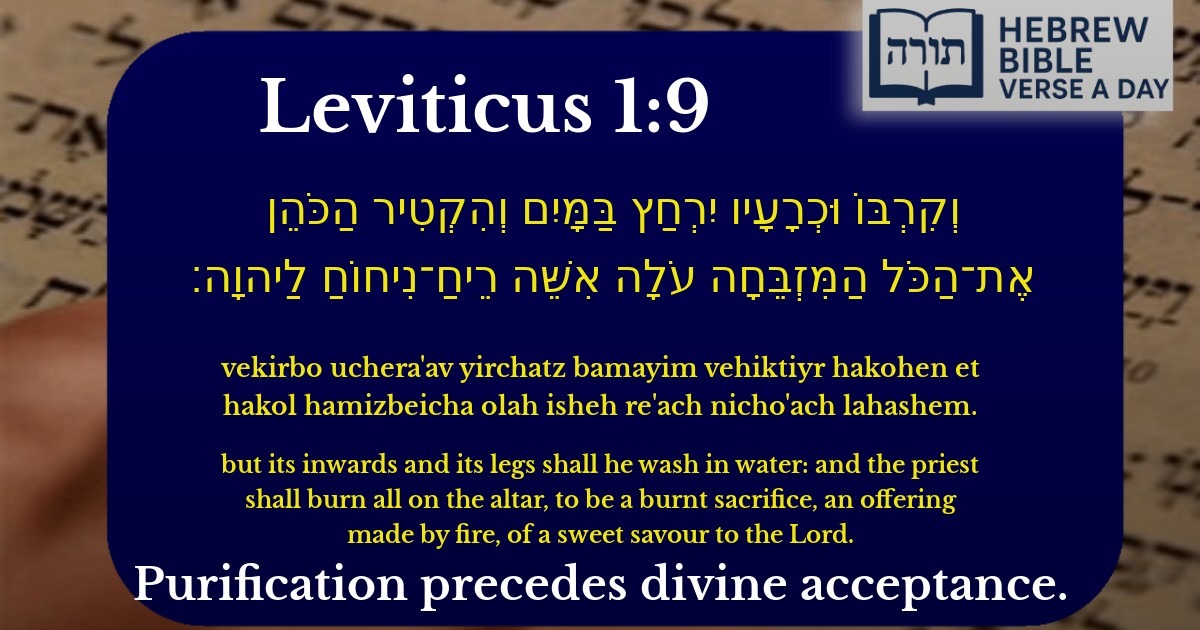
וְקִרְבּוֹ וּכְרָעָיו יִרְחַץ בַּמָּיִם וְהִקְטִיר הַכֹּהֵן אֶת־הַכֹּל הַמִּזְבֵּחָה עֹלָה אִשֵּׁה רֵיחַ־נִיחוֹחַ לַיהוָה׃
English Translation
but its inwards and its legs shall he wash in water: and the priest shall burn all on the altar, to be a burnt sacrifice, an offering made by fire, of a sweet savour to the Lord.
Transliteration
Vekirbo uchera'av yirchatz bamayim vehiktiyr hakohen et hakol hamizbeicha olah isheh re'ach nicho'ach lahashem.
Hebrew Leining Text
וְקִרְבּ֥וֹ וּכְרָעָ֖יו יִרְחַ֣ץ בַּמָּ֑יִם וְהִקְטִ֨יר הַכֹּהֵ֤ן אֶת־הַכֹּל֙ הַמִּזְבֵּ֔חָה עֹלָ֛ה אִשֵּׁ֥ה רֵֽיחַ־נִיח֖וֹחַ לַֽיהֹוָֽה׃ {ס}
🎵 Listen to leining
Parasha Commentary
📚 Talmud Citations
This verse is quoted in the Talmud.
📖 Zevachim 20a
The verse is cited in the discussion of the proper procedure for washing the innards and legs of a sacrifice before offering it on the altar.
📖 Menachot 49b
Referenced in the context of discussing the requirements for various types of offerings and the importance of following the prescribed rituals.
Verse Context
The verse (Vayikra 1:9) describes part of the procedure for offering an olah (burnt offering) in the Beit HaMikdash. The olah is unique in that it is entirely consumed by the fire on the altar, symbolizing complete devotion to Hashem.
Washing the Inwards and Legs
Rashi explains that the washing of the innards (kerev) and legs (kera'ayim) serves to remove any filth or residue. The Rambam (Hilchot Ma'aseh HaKorbanot 5:15) elaborates that this teaches us the importance of purity in divine service—just as we cleanse the physical offering, we must cleanse our hearts in serving Hashem.
Burning on the Altar
The phrase "והקטיר הכהן את הכל המזבחה" ("the priest shall burn all on the altar") emphasizes the completeness of the olah offering. The Sforno notes that unlike other sacrifices where parts are eaten, the olah is entirely given to Hashem, representing total submission.
Reiach Nichoach LaShem
The concluding phrase "אשה ריח ניחוח לה'" ("a sweet savour to the Lord") is understood by the Ramban as an expression of divine pleasure when Jews fulfill His will with proper intent. The Talmud (Menachot 110a) teaches that whether one offers much or little, what matters is directing one's heart to Heaven.
Halachic Insights