

Join Our Newsletter To Be Informed When New Videos Are Posted
Hebrew Text
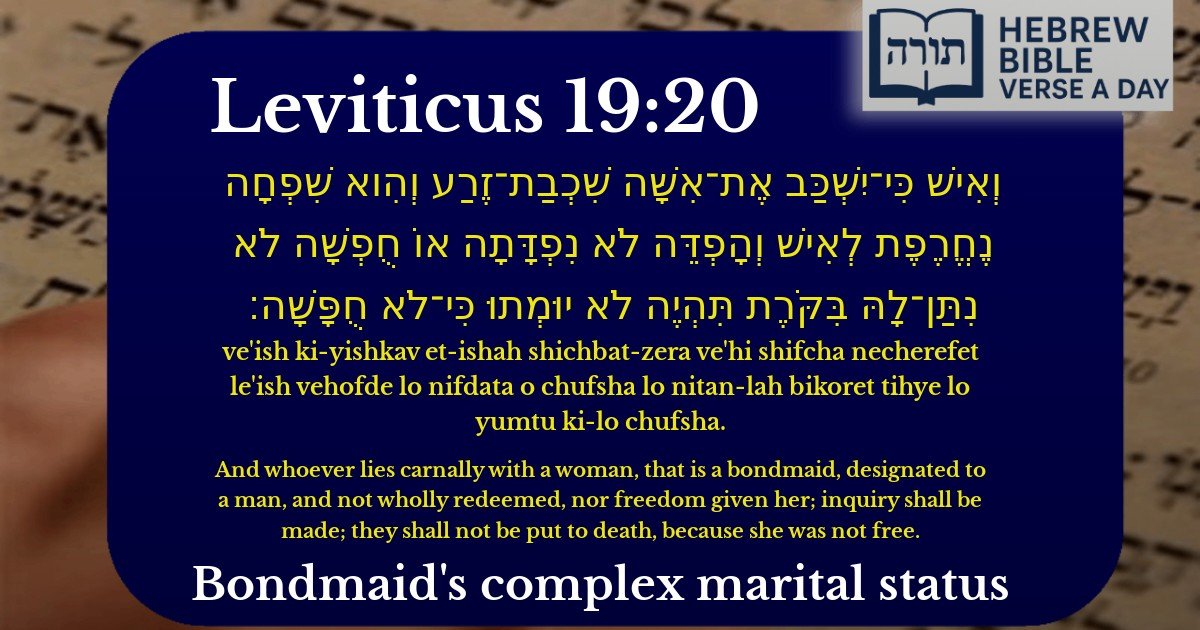
וְאִישׁ כִּי־יִשְׁכַּב אֶת־אִשָּׁה שִׁכְבַת־זֶרַע וְהִוא שִׁפְחָה נֶחֱרֶפֶת לְאִישׁ וְהָפְדֵּה לֹא נִפְדָּתָה אוֹ חֻפְשָׁה לֹא נִתַּן־לָהּ בִּקֹּרֶת תִּהְיֶה לֹא יוּמְתוּ כִּי־לֹא חֻפָּשָׁה׃
English Translation
And whoever lies carnally with a woman, that is a bondmaid, designated to a man, and not wholly redeemed, nor freedom given her; inquiry shall be made; they shall not be put to death, because she was not free.
Transliteration
Ve'ish ki-yishkav et-ishah shichbat-zera ve'hi shifcha necherefet le'ish vehofde lo nifdata o chufsha lo nitan-lah bikoret tihye lo yumtu ki-lo chufsha.
Hebrew Leining Text
וְ֠אִ֠ישׁ כִּֽי־יִשְׁכַּ֨ב אֶת־אִשָּׁ֜ה שִׁכְבַת־זֶ֗רַע וְהִ֤וא שִׁפְחָה֙ נֶחֱרֶ֣פֶת לְאִ֔ישׁ וְהׇפְדֵּה֙ לֹ֣א נִפְדָּ֔תָה א֥וֹ חֻפְשָׁ֖הֿ לֹ֣א נִתַּן־לָ֑הּ בִּקֹּ֧רֶת תִּהְיֶ֛ה לֹ֥א יוּמְת֖וּ כִּי־לֹ֥א חֻפָּֽשָׁה׃
🎵 Listen to leining
Parasha Commentary
📚 Talmud Citations
This verse is quoted in the Talmud.
📖 Keritot 11a
The verse is discussed in the context of the laws regarding a bondmaid who is designated to a man but not fully redeemed or given freedom, focusing on the legal implications of her status.
📖 Sanhedrin 52b
The verse is referenced in a discussion about the circumstances under which capital punishment is or is not applied, particularly in cases involving a bondmaid.
Overview of the Verse
The verse (Vayikra 19:20) discusses the case of a man who engages in relations with a shifcha necherefet (a designated bondmaid) who has not been fully redeemed or granted her freedom. The Torah prescribes that an inquiry must be made, but the parties are not subject to the death penalty, as the woman was not a free woman at the time.
Key Terms and Their Meanings
Legal Implications
According to the Rambam (Hilchos Issurei Bi'ah 12:10-11), this case is distinct from adultery (ni'uf) because the bondmaid is not fully free, and thus the death penalty does not apply. However, the Torah requires an inquiry (bikores) to determine whether the act was consensual or forced, as this affects the consequences.
Why No Death Penalty?
The Talmud (Sanhedrin 52b) explains that since the woman was not entirely free, her status is akin to a half-slave, half-free individual, and thus the full severity of the law does not apply. Rashi further notes that the Torah shows compassion here, recognizing the diminished legal capacity of a bondmaid who has not yet attained full freedom.
Midrashic Insight
The Midrash (Toras Kohanim) connects this law to the broader theme of justice and mercy in the Torah. Even in cases where strict justice might demand severe punishment, the Torah considers mitigating circumstances—such as the bondmaid’s incomplete legal status—to ensure fairness.
Practical Halachic Outcome
According to Choshen Mishpat (laws of damages and personal status), if the act was consensual, the man must bring a korban asham (guilt offering) as atonement. If it was forced, he is liable for additional penalties, but capital punishment is still not imposed due to the bondmaid’s status.