

Join Our Newsletter To Be Informed When New Videos Are Posted
Hebrew Text
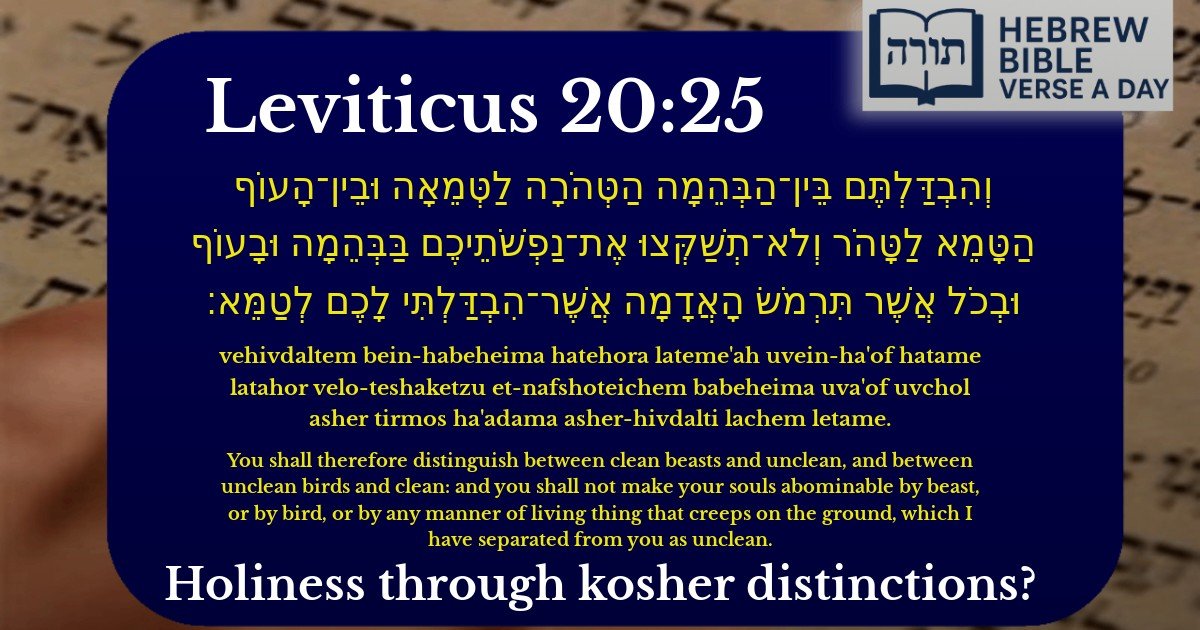
וְהִבְדַּלְתֶּם בֵּין־הַבְּהֵמָה הַטְּהֹרָה לַטְּמֵאָה וּבֵין־הָעוֹף הַטָּמֵא לַטָּהֹר וְלֹא־תְשַׁקְּצוּ אֶת־נַפְשֹׁתֵיכֶם בַּבְּהֵמָה וּבָעוֹף וּבְכֹל אֲשֶׁר תִּרְמֹשׂ הָאֲדָמָה אֲשֶׁר־הִבְדַּלְתִּי לָכֶם לְטַמֵּא׃
English Translation
You shall therefore distinguish between clean beasts and unclean, and between unclean birds and clean: and you shall not make your souls abominable by beast, or by bird, or by any manner of living thing that creeps on the ground, which I have separated from you as unclean.
Transliteration
Vehivdaltem bein-habeheima hatehora lateme'ah uvein-ha'of hatame latahor velo-teshaketzu et-nafshoteichem babeheima uva'of uvchol asher tirmos ha'adama asher-hivdalti lachem letame.
Hebrew Leining Text
וְהִבְדַּלְתֶּ֞ם בֵּֽין־הַבְּהֵמָ֤ה הַטְּהֹרָה֙ לַטְּמֵאָ֔ה וּבֵין־הָע֥וֹף הַטָּמֵ֖א לַטָּהֹ֑ר וְלֹֽא־תְשַׁקְּצ֨וּ אֶת־נַפְשֹֽׁתֵיכֶ֜ם בַּבְּהֵמָ֣ה וּבָע֗וֹף וּבְכֹל֙ אֲשֶׁ֣ר תִּרְמֹ֣שׂ הָֽאֲדָמָ֔ה אֲשֶׁר־הִבְדַּ֥לְתִּי לָכֶ֖ם לְטַמֵּֽא׃
🎵 Listen to leining
Parasha Commentary
📚 Talmud Citations
This verse is quoted in the Talmud.
📖 Chullin 42a
The verse is cited in the discussion about the distinctions between clean and unclean animals, particularly in the context of the laws of kashrut.
📖 Niddah 51b
The verse is referenced in a discussion about the purity laws and the separation between clean and unclean creatures.
Distinguishing Between Pure and Impure Animals
The verse (Vayikra 20:25) commands the Jewish people to distinguish between pure (טהורה) and impure (טמאה) animals, birds, and creeping creatures. Rashi explains that this mitzvah is not merely about avoiding certain foods but is deeply connected to maintaining spiritual purity. The Torah emphasizes that consuming impure creatures defiles the soul (נפש), making it abominable (תשקצו).
The Purpose of Separation
Rambam (Hilchot Ma'achalot Asurot 17:28-29) teaches that the laws of kosher animals are divine decrees (חוקים) beyond human comprehension, intended to refine the Jewish people. The Sforno adds that these distinctions elevate the soul by distancing it from base physicality, aligning with the holiness required of Bnei Yisrael.
Spiritual Consequences of Transgression
The phrase "וְלֹא־תְשַׁקְּצוּ אֶת־נַפְשֹׁתֵיכֶם" ("you shall not make your souls abominable") is interpreted by the Kli Yakar as a warning that consuming impure creatures damages the soul's connection to kedusha (holiness). The Talmud (Yoma 39a) states that transgressing these laws diminishes spiritual sensitivity.
Divine Separation as a Model
The concluding words "אֲשֶׁר־הִבְדַּלְתִּי לָכֶם לְטַמֵּא" ("which I have separated from you as unclean") are highlighted by the Midrash (Vayikra Rabbah 22:10) as demonstrating that just as Hashem separates between holy and profane, so must we emulate this separation in our dietary choices. This reflects the principle of "והלכת בדרכיו" (walking in His ways).
Practical Halachic Implications