
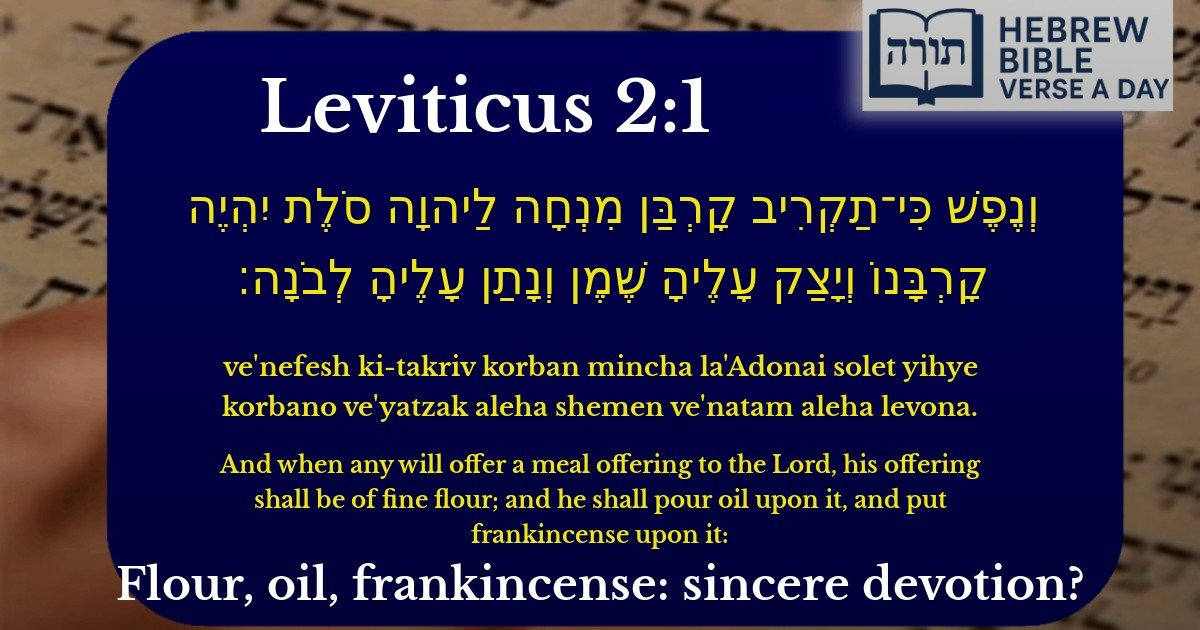

Leviticus 2:1 - Flour, oil, frankincense: sincere devotion?

Leviticus 2:1 - ויקרא 2:1

Hebrew Text

וְנֶפֶשׁ כִּי־תַקְרִיב קָרְבַּן מִנְחָה לַיהוָה סֹלֶת יִהְיֶה קָרְבָּנוֹ וְיָצַק עָלֶיהָ שֶׁמֶן וְנָתַן עָלֶיהָ לְבֹנָה׃

English Translation

And when any will offer a meal offering to the Lord, his offering shall be of fine flour; and he shall pour oil upon it, and put frankincense upon it:

Transliteration

Ve'nefesh ki-takriv korban mincha la'Adonai solet yihye korbano ve'yatzak aleha shemen ve'natam aleha levona.

Hebrew Leining Text

וְנֶ֗פֶשׁ כִּֽי־תַקְרִ֞יב קׇרְבַּ֤ן מִנְחָה֙ לַֽיהֹוָ֔ה סֹ֖לֶת יִהְיֶ֣ה קׇרְבָּנ֑וֹ וְיָצַ֤ק עָלֶ֙יהָ֙ שֶׁ֔מֶן וְנָתַ֥ן עָלֶ֖יהָ לְבֹנָֽה׃

🎵 Listen to leining

Parasha Commentary

Overview of the Verse

The verse (Vayikra 2:1) discusses the laws of the mincha (meal offering), a voluntary sacrifice consisting of fine flour, oil, and frankincense. Unlike animal offerings, the mincha is unique in that it is entirely plant-based, making it accessible even to those who cannot afford animal sacrifices. The Torah emphasizes the ingredients and preparation method, highlighting the importance of intent and proper procedure in divine service.

Key Components of the Mincha Offering

  • Fine Flour (סֹלֶת): Rashi explains that solet refers to the highest quality flour, meticulously sifted to remove impurities. This reflects the principle that offerings to Hashem must be of the finest quality, symbolizing the donor's wholehearted devotion.
  • Oil (שֶׁמֶן): The oil poured on the flour represents richness and joy, as oil is associated with anointing and sanctity (Rambam, Moreh Nevuchim). The Talmud (Menachot 86a) notes that the oil must be pure olive oil, underscoring the need for purity in worship.
  • Frankincense (לְבֹנָה): The incense adds fragrance, symbolizing the spiritual elevation of the offering. The Midrash (Vayikra Rabbah 3:1) compares the levonah to the righteous, whose deeds are pleasing before Hashem.

Spiritual Significance

The mincha teaches that even a modest offering, when given with sincerity, is cherished by Hashem. The Talmud (Menachot 110a) states that whether one brings a large or small offering, what matters is that the heart is directed toward heaven. This aligns with the principle of ratzon (divine favor), where the intention behind the mitzvah is paramount.

Halachic Insights

Rambam (Hilchot Maaseh HaKorbanot 13:1-2) details the precise measurements and procedures for the mincha, emphasizing that deviations invalidate the offering. The requirement for solet, oil, and levonah is absolute, teaching that divine service must adhere to Torah law without compromise.

📚 Talmud Citations

This verse is quoted in the Talmud.

📖 Menachot 104b
The verse is discussed in the context of the laws regarding meal offerings, specifically the requirement of fine flour, oil, and frankincense.
📖 Keritot 6a
The verse is referenced in a discussion about the proper preparation and components of meal offerings.

Frequently Asked Questions

Q: What does Leviticus 2:1 teach about meal offerings?
A: Leviticus 2:1 describes the basic requirements for a meal offering (mincha) brought to Hashem: fine flour (solet), oil (shemen), and frankincense (levonah). Rashi explains that the flour must be of the finest quality, symbolizing the importance of offering our best to Hashem.
Q: Why is oil and frankincense added to the meal offering?
A: Oil represents richness and joy (as per Talmud Menachot 86a), while frankincense adds a pleasant fragrance. The Rambam teaches that these ingredients elevate the offering, showing that our service to Hashem should be done with joy and a 'pleasant' attitude.
Q: Who could bring a meal offering according to Jewish tradition?
A: Unlike animal sacrifices which were often brought by those with means, the meal offering (mincha) could be brought by anyone, even the poor (as noted in Vayikra Rabbah 3:1). This teaches that every person, regardless of wealth, can connect to Hashem through sincere offerings.
Q: What lesson can we learn today from the meal offering?
A: The Sages teach (Menachot 104b) that just as the meal offering didn't require expensive animals but simple flour, our prayers and mitzvot don't need grand gestures—sincere, heartfelt service with what we have is precious to Hashem. The oil and frankincense remind us to add joy and sweetness to our worship.
Q: Why is fine flour specified for the offering?
A: Fine flour (solet) undergoes thorough sifting and refinement (Talmud Menachot 76b). The Midrash (Sifra) compares this to refining our character—just as the flour is purified, we must 'sift' our intentions and strive for purity in serving Hashem.