Frequently Asked Questions
Q: What does Leviticus 2:14 mean?
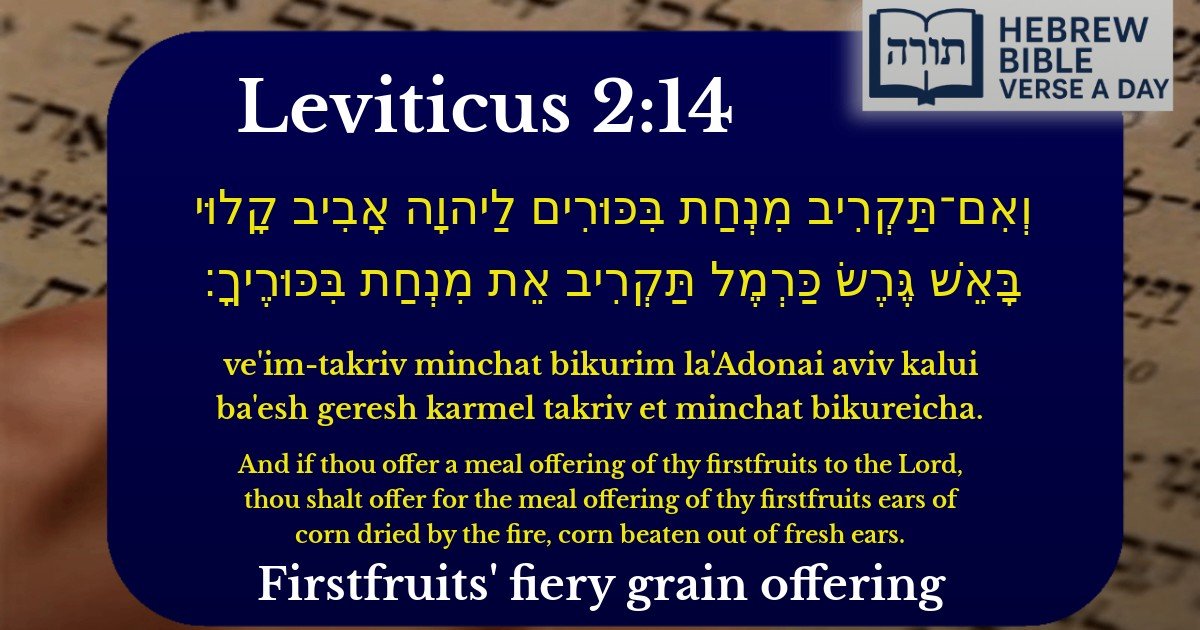
A: Leviticus 2:14 describes the proper way to bring a 'minchat bikkurim' (meal offering of firstfruits) to Hashem. It specifies that the offering must be made from freshly ripened barley ('aviv'), roasted over fire, and ground into coarse flour ('geres karmel'). This was a special offering brought during the time of the Beit Hamikdash (Holy Temple) to express gratitude for the new harvest.
Q: Why is the offering of firstfruits important in Judaism?
A: The offering of firstfruits ('bikkurim') is important because it acknowledges that all produce comes from Hashem and expresses gratitude for His blessings. The Rambam (Hilchot Bikkurim 3:1) explains that bringing the firstfruits demonstrates our recognition that everything belongs to Hashem, and we are merely returning a portion of what He has given us. This mitzvah also connects us to the Land of Israel and its agricultural cycles.
Q: What can we learn from Leviticus 2:14 today?
A: Even though we cannot bring offerings today without the Beit Hamikdash, we learn the importance of expressing gratitude to Hashem for our sustenance. The verse teaches us to acknowledge the Source of our blessings with the first and best of what we have, not just the leftovers. Many have the custom today to recite special blessings (like 'Birkat HaShachar' and 'Modim') that express this gratitude daily.
Q: Why does the Torah specify 'aviv' (fresh ears) for this offering?
A: Rashi explains that 'aviv' refers to grain that is still soft and moist, not fully dried. This represents the very first stage of the harvest, showing that we dedicate our very first produce to Hashem. The Talmud (Menachot 66b) discusses how this offering was brought specifically during the Omer period between Pesach and Shavuot, marking the beginning of the barley harvest in Israel.
Q: What is the significance of roasting the grain over fire for this offering?
A: The roasting process ('kalui ba'eish') serves both practical and symbolic purposes. Practically, it prepares the grain for grinding. Symbolically, fire represents purification (as in Malachi 3:2-3). The Kli Yakar explains that just as fire removes impurities from metal, our service to Hashem should refine and elevate our material possessions by using them for holy purposes.


Context of the Verse
This verse (Vayikra 2:14) discusses the minchat bikkurim (meal offering of firstfruits), a special type of grain offering brought from the first ripened barley during the festival of Pesach. Unlike other meal offerings, this one is made from freshly harvested grain, emphasizing gratitude to Hashem for the new produce.
Explanation of Key Terms
Halachic Insights
The minchat bikkurim differs from standard meal offerings in preparation and timing. The Talmud (Menachot 66b) states that this offering could only be brought after the Omer offering on the second day of Pesach, marking the start of the new grain harvest. The requirement to roast the grain (as opposed to using raw flour) ensures it is fully detached from its natural state, symbolizing human effort in dedicating the firstfruits to Hashem.
Symbolic Meaning
The Midrash (Vayikra Rabbah 3:1) connects this offering to the idea of hakarhat hatov (acknowledging kindness). By bringing the very first produce, one demonstrates that all blessings come from Hashem. The roasting process also teaches that one must refine their material possessions (represented by grain) through fire (effort and sanctification) before offering them in divine service.
Agricultural and Historical Significance
Rambam (Hilchot Temidin uMusafin 7:9) emphasizes that this mitzvah reinforced the bond between the Jewish people and Eretz Yisrael, as it could only be fulfilled with grain grown in the Land. The offering of aviv (barley) specifically reflects the early spring harvest, aligning with the Exodus narrative, where barley was the first crop to ripen after the plague of hail (Shemot 9:31).