Frequently Asked Questions
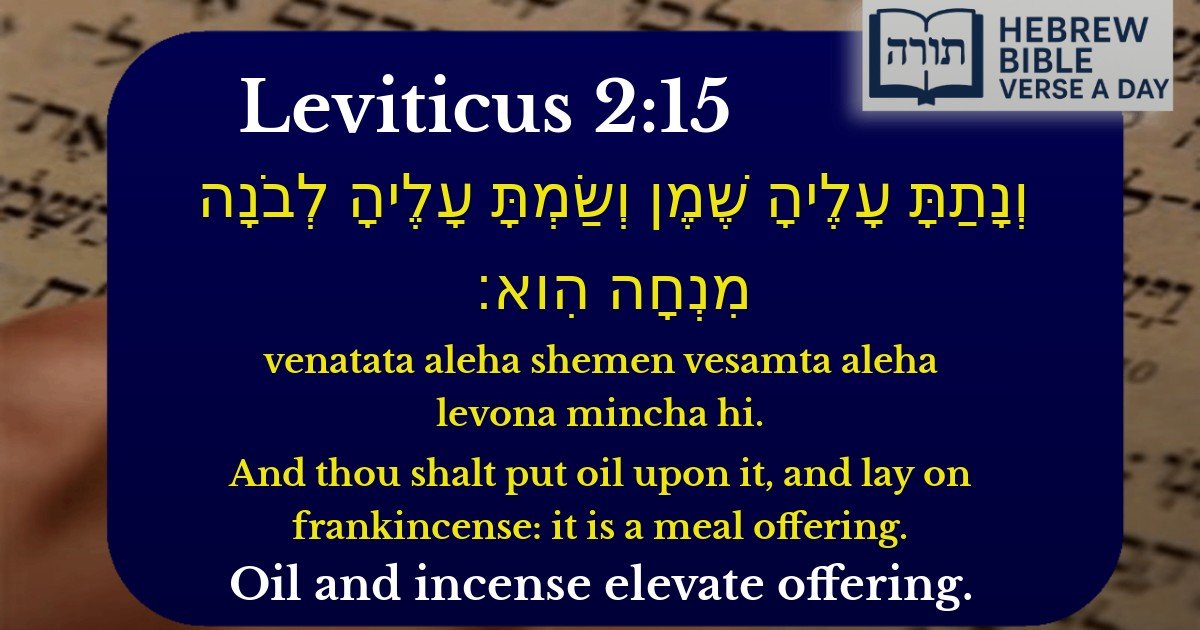
Q: What does Leviticus 2:15 mean in the context of the meal offering?
A: Leviticus 2:15 describes part of the process for preparing a 'mincha' (meal offering) brought in the Temple. According to Rashi, this verse refers specifically to the 'minchat ha-omer' (the barley offering brought on Passover) or other grain offerings. The oil represents richness and joy, while the frankincense adds a pleasant fragrance, symbolizing that our service to Hashem should be done with beauty and sincerity.
Q: Why is oil and frankincense added to the meal offering?
A: The oil, as explained by the Rambam in Hilchot Ma'aseh HaKorbanot, enhances the taste, while the frankincense provides a pleasant smell. The Talmud (Menachot 20a) teaches that these additions elevate the simple flour offering, showing that even a modest offering can become precious when prepared with care and devotion to Hashem.
Q: What can we learn today from the meal offering described in Leviticus 2:15?
A: The Sages teach (Midrash Vayikra Rabbah) that the meal offering represents humility, as it is made from simple flour. Adding oil and frankincense teaches that even small acts of kindness or mitzvot, when done with sincerity and joy (symbolized by oil) and with a 'pleasant fragrance' (good intentions), are precious before Hashem. Today, we apply this by performing mitzvot with enthusiasm and a pure heart.
Q: Does Leviticus 2:15 apply to any grain offering, or just specific ones?
A: Rashi clarifies that this verse primarily refers to the 'minchat ha-omer' (barley offering) and 'mincha choteh' (sin offering of flour for the poor). However, the Talmud (Menachot 75b) discusses variations—some grain offerings require oil and frankincense, while others (like the sinner's offering) omit frankincense. The details depend on the type of offering and the person bringing it.


Explanation of the Verse
The verse (Vayikra 2:1) describes the preparation of the mincha (meal offering), specifically the requirement to add oil and frankincense to the fine flour. This offering is unique among the sacrifices as it is entirely vegetarian, symbolizing devotion and submission to Hashem.
Rashi's Commentary
Rashi explains that the oil must be poured onto the flour before the frankincense is added. The sequence is significant because the oil represents anointment and sanctification, while the frankincense symbolizes the pleasant aroma ascending to Hashem. Rashi further notes that the phrase "מִנְחָה הִוא" ("it is a meal offering") emphasizes that this specific preparation defines the offering as valid.
Rambam's Perspective
In Hilchos Maaseh HaKorbanos (Laws of Sacrificial Procedure), the Rambam elaborates on the technical requirements of the mincha. He states that the oil must be of the highest quality (olive oil) and that the frankincense must be pure, underscoring the importance of using only the finest materials in divine service.
Midrashic Insights
The Midrash (Vayikra Rabbah 3:1) connects the mincha offering to the story of Kayin and Hevel, teaching that a sincere offering, even of simple flour, is cherished by Hashem when brought with proper intent. The addition of oil and frankincense elevates the offering, representing the refinement of one's deeds and prayers.
Symbolism in Kabbalah
Halachic Implications
The Talmud (Menachos 5a) discusses the precise measurements of oil and frankincense required for the mincha, teaching that even minor deviations invalidate the offering. This highlights the Torah's emphasis on precision and attentiveness in fulfilling mitzvos.