
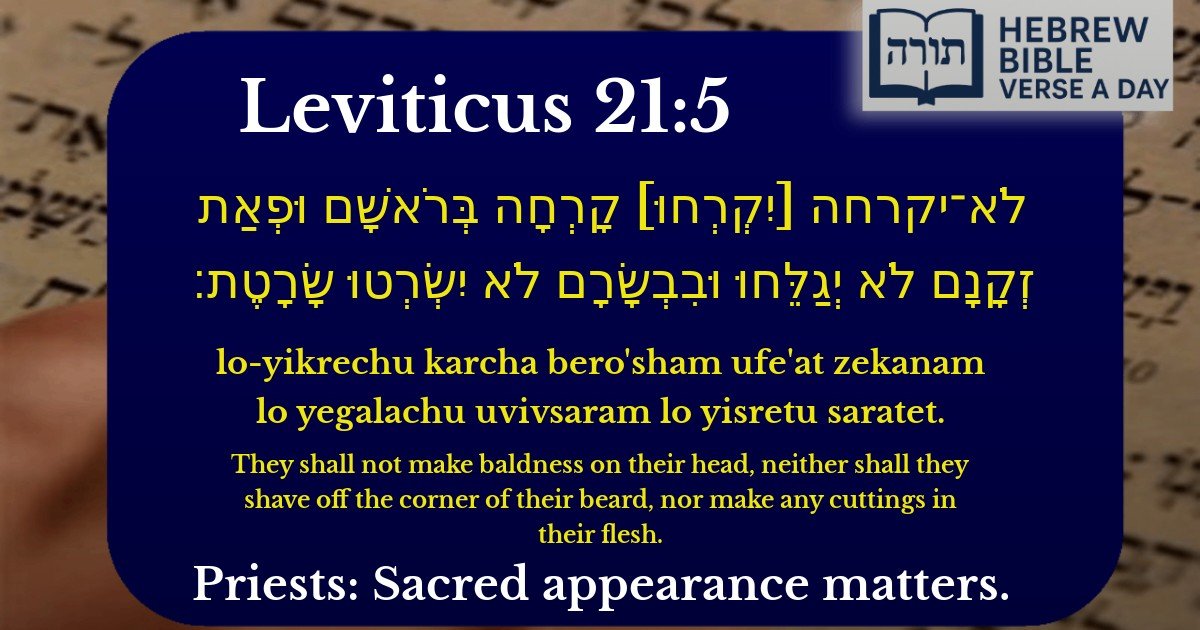

Leviticus 21:5 - Priests: Sacred appearance matters.

Leviticus 21:5 - ויקרא 21:5

Hebrew Text

לֹא־יקרחה [יִקְרְחוּ] קָרְחָה בְּרֹאשָׁם וּפְאַת זְקָנָם לֹא יְגַלֵּחוּ וּבִבְשָׂרָם לֹא יִשְׂרְטוּ שָׂרָטֶת׃

English Translation

They shall not make baldness on their head, neither shall they shave off the corner of their beard, nor make any cuttings in their flesh.

Transliteration

Lo-yikrechu karcha bero'sham ufe'at zekanam lo yegalachu uvivsaram lo yisretu saratet.

Hebrew Leining Text

לֹֽא־[יִקְרְח֤וּ] (יקרחה) קׇרְחָה֙ בְּרֹאשָׁ֔ם וּפְאַ֥ת זְקָנָ֖ם לֹ֣א יְגַלֵּ֑חוּ וּבִ֨בְשָׂרָ֔ם לֹ֥א יִשְׂרְט֖וּ שָׂרָֽטֶת׃

🎵 Listen to leining

Parasha Commentary

Prohibition Against Mourning Practices of Idolaters

The verse (Vayikra 21:5) prohibits three specific mourning practices for Kohanim: making bald patches on the head, shaving the beard, and making cuts in the flesh. Rashi explains that these were common mourning rituals among idolaters, and the Torah forbids them to distinguish Jewish practice from pagan customs. The Rambam (Hilchos Avodas Kochavim 12:1) similarly states that these prohibitions were given to separate us from the ways of the nations.

Specific Prohibitions and Their Meanings

  • Baldness on the head (יקרחה קרחה): The Talmud (Makos 20b) explains this refers to creating a bald patch between existing hair, not complete baldness. The Shulchan Aruch (Yoreh De'ah 180:1) rules this applies even to non-Kohanim during mourning.
  • Shaving the beard's corners (ופאת זקנם לא יגלחו): Rashi notes this refers to the five points of the beard mentioned in Vayikra 19:27. The Mishnah (Makos 3:5) teaches that one violates this prohibition only when using a razor, not scissors.
  • Cuttings in the flesh (ובבשרם לא ישרטו שריטת): The Sifra explains this includes any intentional wound made for mourning purposes. The Ramban adds that this prohibition applies to all Jews, not just Kohanim.

Spiritual Significance

The Sefer HaChinuch (Mitzvah 263) explains that these prohibitions teach us to accept Divine judgment with perfect faith rather than engaging in extreme mourning practices. The Kli Yakar emphasizes that these physical mutilations demonstrate a lack of belief in the afterlife and proper reward/punishment, concepts fundamental to Jewish thought.

Application to Kohanim

The Talmud (Moed Katan 14b) notes that while these prohibitions apply to all Jews, they are stated here regarding Kohanim to emphasize their special status. As servants in the Temple, Kohanim must maintain physical wholeness and spiritual purity, avoiding any practices associated with idolatry or improper mourning.

📚 Talmud Citations

This verse is quoted in the Talmud.

📖 Makkot 20b
The verse is discussed in the context of the prohibitions against making baldness on the head and shaving the beard, which are part of the laws of mourning and priestly conduct.
📖 Kiddushin 35b
The verse is referenced in a discussion about the applicability of certain commandments to women, with this verse being cited as an example of commandments that are specifically directed towards men.

Frequently Asked Questions

Q: What does Leviticus 21:5 mean?
A: Leviticus 21:5 prohibits three specific mourning practices for Jewish priests (Kohanim): making bald patches on their heads, shaving the edges of their beards, and making cuts in their flesh. These were common pagan mourning rituals, and the Torah forbids them to distinguish Jewish practices from idolatrous customs. Rashi explains that these actions were associated with idol worship and were therefore prohibited to maintain the sanctity of the priests.
Q: Why is shaving the beard forbidden in Leviticus 21:5?
A: The Torah prohibits shaving the 'corners of the beard' (pe'at hazakan) to separate Jewish practice from pagan customs. The Rambam (Hilchot Avodat Kochavim 12:7) explains that this was a way to avoid imitating idolaters. Halachically, this prohibition applies to using a razor on the five corners of the beard (as defined by Jewish law), though trimming with scissors or an electric shaver is permitted according to most opinions.
Q: Does Leviticus 21:5 apply to all Jews or just priests?
A: While Leviticus 21:5 specifically addresses priests (Kohanim), a similar prohibition appears in Leviticus 19:27-28 for all Jewish men. The Talmud (Makkot 20b) discusses these laws in detail, showing that all Jewish men must avoid certain forms of shaving and cutting, though the exact parameters differ slightly between Kohanim and other Jews.
Q: What is the reason for prohibiting cuttings in the flesh in Leviticus 21:5?
A: The Torah forbids making cuttings or gashes in the flesh (sratet) as a mourning practice because it was associated with idolatrous rituals. The Sifra (a halachic Midrash on Leviticus) explains that this prohibition teaches us that our bodies belong to Hashem and should not be mutilated, even in grief. Jewish mourning practices focus on introspection and spiritual growth rather than physical self-harm.
Q: How do these laws in Leviticus 21:5 apply today?
A: These laws remain relevant today: 1) Many observant Jewish men do not shave their beards with a razor (though methods like electric shavers are often permitted). 2) Tattoos and self-mutilation are prohibited based on these and related verses. 3) The underlying principle—maintaining Jewish distinctiveness and avoiding idolatrous practices—guides many areas of halachic practice. The Shulchan Aruch (Yoreh De'ah 180) codifies these laws for contemporary application.